Nearly 60,000 Indian students are now studying in Germany, making India the largest source of international students in the country. That number grew by over 15% in the past year alone, according to DAAD and the German Federal Statistical Office. But here's what nobody tells you before you land: the financial setup is the part that trips up more Indian students than the actual academics.
Between the Sperrkonto, health insurance, APS certificate, bank accounts, and getting your money from India to Germany without losing thousands in fees, there's a lot that can go wrong. And when it does, it can delay your visa, your enrollment, or even your ability to pay rent that first month.
This guide walks you through every financial step, in the exact order you need to do them, with real costs, provider comparisons, and tips from the ExpatNav community. Whether you're coming for a bachelor's, master's, or Studienkolleg, this is the financial roadmap you actually need.
Table of Contents
- Financial Timeline: What to Do and When
- APS Certificate: Your First Financial Checkpoint
- Blocked Account (Sperrkonto): The €11,904 Requirement
- Health Insurance: Mandatory Before You Enroll
- Opening a German Bank Account
- Transferring Money from India to Germany
- Monthly Budget Breakdown for Indian Students
- Part-Time Work and Tax Rules
- Liability Insurance and Other Must-Haves
- Common Financial Mistakes Indian Students Make
- FAQ
Financial Timeline: What to Do and When
Before you start filling out applications, you need a clear timeline. The financial setup for Germany is not something you do in a week. Indian students who start late end up missing intake deadlines, scrambling for visa appointments, or paying rush fees that add up fast.
Here's the order that works, based on what we've seen from thousands of eligibility checks on our platform:
6+ months before departure:
Apply for your APS certificate (processing takes 3 to 6 weeks, longer during peak season)
Start researching Sperrkonto providers and comparing fees
Begin gathering documents for your student visa
3 to 4 months before departure: 4. Open your Sperrkonto and initiate the deposit transfer from India (international transfers take 5 to 10 business days) 5. Get travel health insurance for your visa appointment 6. Book your visa appointment at the German consulate (slots fill up fast, especially in Delhi, Mumbai, and Bangalore)
1 to 2 months before departure: 7. Attend your visa appointment with all financial documents 8. Sign up for public health insurance through TK or another provider (you can start the process before arriving) 9. Research bank account options so you can open one quickly after arrival
First 2 weeks after arrival: 10. Complete your Anmeldung (address registration) 11. Open a German bank account (you'll need this for Sperrkonto monthly releases) 12. Activate your health insurance and get your insurance card 13. Get a German phone number for contracts and two-factor authentication
This timeline gives you breathing room. Every step feeds into the next, and delays in one area cascade into everything else.
APS Certificate: Your First Financial Checkpoint
The APS certificate (Akademische Prüfstelle) is mandatory for every Indian student applying to a German university. Since November 2022, the German Embassy in New Delhi requires this verification before your university application or visa can move forward. No APS, no admission, no visa. It's that simple.
The APS office verifies that your academic documents (Class 10, Class 12, bachelor's transcripts, and degree certificates) are authentic and meet German educational standards. Think of it as a quality check that saves both German universities and the embassy from having to verify documents individually for tens of thousands of Indian applicants each year.
What It Costs
The APS certificate fee is INR 18,000 (approximately €172) as of 2026. This fee is non-refundable, even if your application is unsuccessful. You pay online during registration through CCAvenue, and processing only begins after payment is confirmed.
How Long Does It Take
Standard processing takes 3 to 4 weeks after your documents reach the APS office in New Delhi. During peak intake months (October through January), processing can stretch to 4 to 6 weeks. The APS India office processed over 57,000 applications during a recent 16-month period, so delays during busy seasons are common.
Tips for Indian Students
Start your APS application as early as possible. Students who apply in March or April for a winter semester intake (October) give themselves enough buffer for any complications.
Upload your documents to DigiLocker before applying. The APS office now uses DigiLocker to verify Indian school board documents, which speeds up processing significantly. Make sure your Class 10 and Class 12 marksheets are available there.
Never send original documents. Only submit self-attested color photocopies on A4 paper. If you send originals and something gets lost in transit, you'll face months of delays getting replacements.
Double-check every spelling. Your name on the APS application must match your passport exactly. Even a minor spelling difference between your passport and your marksheets can slow things down or trigger additional verification.
The digital APS certificate (issued as a PDF via email) is valid for three years. You can use the same certificate for multiple university applications within that period.
For more on the documents you'll need for your overall visa process, check out our guide on what to expect at the Auslanderbehoerde.
Blocked Account (Sperrkonto): The €11,904 Requirement
A blocked account is a mandatory savings account that proves to German authorities you can financially support yourself for at least one year. As of 2026, the required minimum deposit is €11,904 (that's €992 per month for 12 months). Once you arrive in Germany and activate the account, you'll receive monthly releases of €992 into your regular German bank account.
The amount is based on the BAföG rate, which is the German government's estimate of minimum student living costs. This rate was last updated in 2024 and has remained at €992 for 2025 and 2026. Keep in mind that this is the legal minimum. If you're studying in Munich, Frankfurt, or Hamburg, you'll likely need more than €992 per month to live comfortably.
Sperrkonto Providers Compared
Three providers dominate the market for Indian students. Here's how they stack up:
Feature | Expatrio | Fintiba | Coracle |
|---|---|---|---|
Setup Fee | €49 | €89 | €59 |
Monthly Fee | €0 | €4.90/month | €0 |
Processing Time | 2 to 5 business days | 3 to 5 business days | 3 to 7 business days |
Partner Bank | Deutsche Bank | SWK Bank | Sutor Bank |
Health Insurance Bundle | Yes (TK partnership) | Yes (built-in) | Limited |
English Support | Yes | Yes | Yes |
Accepts Indian Students | Yes | Yes | Yes |
Total First-Year Cost | €49 | €147.80 (€89 + €4.90 x 12) | €59 |
Our take: For most Indian students, Expatrio offers the best combination of low fees, fast processing, and useful extras like an integrated health insurance signup through TK. Fintiba is a solid choice if you value phone support and don't mind paying a premium. Coracle sits in the middle, with no monthly fees but slightly slower processing.
Based on eligibility data from our platform, all three providers accept Indian students regardless of which Indian state you're applying from. The rejection issues some students face are almost always related to incomplete documents or incorrect transfer amounts, not nationality-based restrictions.
You can compare all Sperrkonto providers on ExpatNav to see which one matches your situation.
How to Transfer Money from India
This is where many Indian students hit their first major roadblock. Transferring €11,904 (roughly ₹10.5 to 11 lakh depending on the exchange rate) from India involves navigating both RBI regulations and international transfer logistics.
Option 1: Bank wire transfer through your Indian bank. Most Indian students use SBI, HDFC, ICICI, or Axis Bank for international wire transfers. This method is reliable but slow (5 to 10 business days) and comes with fees on both ends. Expect to pay ₹1,000 to ₹2,500 in transfer fees from your Indian bank, plus potential intermediary bank charges of €15 to €30. The exchange rate your bank offers is usually 2 to 3% worse than the mid-market rate.
Option 2: Use a specialized transfer service. Services like Wise (formerly TransferWise) offer better exchange rates and lower fees than traditional banks. A transfer of ₹11 lakh through Wise costs roughly ₹5,000 to ₹8,000 in fees, which is often less than the hidden exchange rate markup from a bank wire. The transfer typically arrives in 1 to 3 business days.
Option 3: Forex dealers. Some students use authorized forex dealers, which can offer competitive rates for large transfers. Just make sure you're using an RBI-authorized dealer and get everything documented.
Regardless of which method you use, make sure to add a small buffer (€50 to €100 extra) to your transfer amount. This covers any intermediary bank fees that get deducted along the way. If even €1 less than €11,904 arrives in your Sperrkonto, the provider won't issue your confirmation letter, and your visa application stalls.
For a detailed comparison of money transfer options, visit our money transfer comparison page.
Common Sperrkonto Mistakes Indian Students Make
After helping thousands of users on our platform, we've noticed a few patterns that specifically affect Indian students:
Waiting too long to initiate the transfer. International wire transfers from India are not instant. If you start the process two weeks before your visa appointment, you're cutting it dangerously close. Start at least 4 to 6 weeks early.
Not accounting for LRS limits. Under the RBI's Liberalized Remittance Scheme (LRS), Indian residents can remit up to $250,000 per financial year. The Sperrkonto deposit falls under this scheme. If your parents are making the transfer, the remittance needs to come from their bank account under their LRS quota. Make sure the purpose code is correctly listed as "Studies Abroad" (S0305) on the transfer form.
Forgetting that the Sperrkonto confirmation letter takes additional time. Even after your money arrives, the provider needs a few days to verify the deposit and issue the Sperrbestatigung (blocking confirmation). This document is what you bring to your visa appointment. Factor in this extra processing time.
For a full walkthrough of the Sperrkonto process, read our guide on how to open a blocked account in Germany.
Health Insurance: Mandatory Before You Enroll
Health insurance is non-negotiable in Germany. You cannot get a student visa without it, and you cannot enroll at a German university without it. There are two stages: travel health insurance for your visa appointment, and long-term student health insurance once you arrive.
Stage 1: Travel Health Insurance (For Your Visa)
For the visa appointment at the German consulate in India, you need travel health insurance (also called incoming insurance) with at least €30,000 in coverage. This is short-term coverage that protects you during your journey and your first few weeks in Germany.
Providers like DR-WALTER (PROVISIT STUDENT plan) and Care Concept offer affordable travel insurance policies starting at €30 to €40 per month. If you sign up for your Sperrkonto through Expatrio, they offer a partnership with DR-WALTER, where you can get up to 31 days of free travel insurance when you sign up for TK public health insurance. That's a nice bonus that saves you a small but real amount.
Stage 2: Student Health Insurance (Long-Term)
Once you're enrolled at a German university, you need proper student health insurance. Indian students under 30 who are enrolled in a regular degree program (bachelor's or master's) are eligible for public student health insurance (gesetzliche Krankenversicherung).
Public health insurance costs for students in 2026: Approximately €130 to €150 per month, depending on the provider and your age. This covers doctor visits, hospital stays, prescriptions, mental health care, and preventive checkups. Techniker Krankenkasse (TK) is the most popular choice among international students because of their English-language support portal and one of the lowest additional contribution rates.
When you need private insurance instead: If you're over 30, enrolled in a language course, attending Studienkolleg, or pursuing a PhD, you typically cannot access the discounted public student rate. Private student plans start at around €95 to €130 per month, depending on coverage level.
The decision is permanent during your studies. This is the part that catches many Indian students off guard. Once you choose between public and private at the time of enrollment, you generally cannot switch during your studies. If you opt out of public insurance for a private plan, there's no going back until you finish your degree or your circumstances change significantly (like starting full-time employment).
Our recommendation for most Indian students under 30: go with public health insurance through TK or AOK. The coverage is comprehensive, the price is regulated, and you won't face issues with pre-existing conditions. Compare your options on our health insurance comparison page or read the full breakdown in our health insurance for students guide.
Opening a German Bank Account
You need a German bank account (Girokonto) for your Sperrkonto monthly releases, paying rent, receiving any part-time job income, and handling everyday transactions. Without one, you're stuck. The Sperrkonto releases your €992 per month, but it sends that money to your Girokonto. No Girokonto, no access to your own money.
The Schufa Problem for Indian Students
Here's something that frustrates practically every Indian student who arrives in Germany: the Schufa score. Schufa is Germany's credit reporting system, similar to CIBIL in India. The problem is that when you arrive, you have no Schufa history at all. Some banks run a Schufa check during the application process, and since you have no data, they may reject your application or limit your account features.
This does not mean your application is denied because of bad credit. It means you have no credit history, which is different but still causes problems with certain banks.
Best Banks for Indian Students
Bank | Account Fee | Schufa Required? | Language | Accepts New Arrivals? |
|---|---|---|---|---|
N26 | €0 (Standard) | Minimal check | English app | Yes, with valid ID |
Commerzbank | €0 (student account) | Yes, but flexible for students | German (some English) | Yes, with enrollment proof |
Deutsche Bank | €0 (student) | Yes | German (limited English) | Yes |
bunq | €2.99+/month | No | English | Yes |
Revolut | €0 (Standard) | No | English | Yes, but not a full German bank |
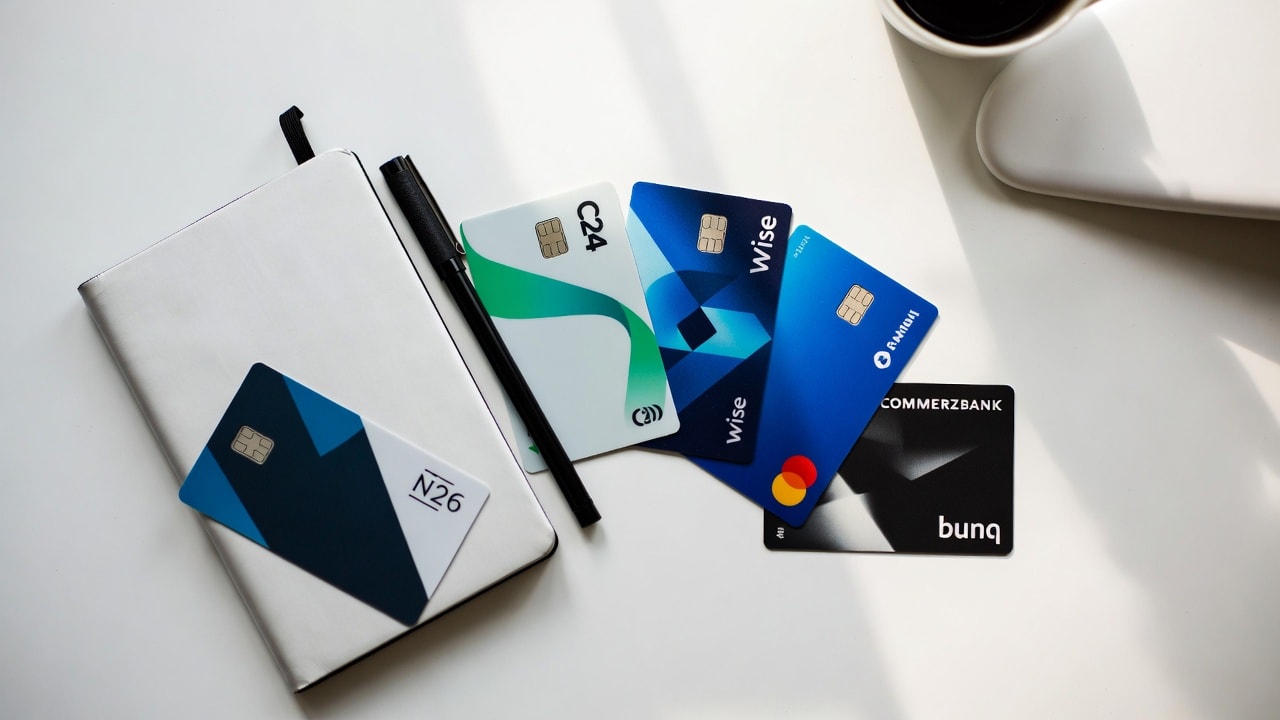
For most Indian students, N26 is the best starting point. The entire signup process is in English; you can open the account with just your passport (you'll need your Anmeldung confirmation later), and it's free. The app is intuitive, and you get a German IBAN, which is all you need for Sperrkonto releases, rent payments, and salary deposits.
If N26 doesn't work for you (some users report occasional verification issues), Commerzbank offers a solid free student account with access to physical branches, which can be helpful when you need to deal with something in person.
One thing to keep in mind: Revolut gives you a German IBAN, but it's not technically a German bank. Some landlords and employers prefer a traditional German bank account. Use Revolut as a backup for everyday spending and international transfers, not as your primary account.
Compare all your options on our bank account comparison page or read our detailed guide on the best bank accounts for expats in Germany.
Transferring Money from India to Germany
Beyond the initial Sperrkonto deposit, you'll likely need to transfer money from India regularly, whether that's for semester fees, travel, or supplementing your monthly budget. The method you use can save (or cost) you thousands of rupees over the course of your degree.
Transfer Methods Compared
Method | Transfer Fee | Exchange Rate | Speed | Best For |
|---|---|---|---|---|
Wise | ~0.5 to 1% | Mid-market rate | 1 to 3 days | Regular monthly transfers |
Indian bank wire (SBI, HDFC) | ₹1,000 to ₹2,500 + intermediary fees | 2 to 3% markup | 3 to 7 days | Large one-time transfers |
Remitly | Varies | Competitive | 1 to 3 days | Smaller, frequent transfers |
Western Union | High | Poor | Same day possible | Emergency only |
CurrencyFair | Low | Near mid-market | 2 to 5 days | Large transfers |
The math matters. On a transfer of ₹1 lakh (roughly €1,070 depending on the rate), the difference between using Wise and a traditional bank wire can be ₹2,000 to ₹3,000. Over two years of a master's program with monthly top-ups, that adds up to ₹48,000 to ₹72,000 in savings. That's a month's rent in most German cities.
RBI compliance note: All outward remittances from India fall under the Liberalized Remittance Scheme. Your bank will ask for Form A2, a self-declaration, and PAN details. The purpose code for educational expenses is S0305. Keep records of every transfer for tax purposes on both ends.
Monthly Budget Breakdown for Indian Students
The €992 monthly Sperrkonto release is the government's estimate of minimum living costs. Here's what that actually looks like in practice, broken down by city type:
Mid-Range City (Dortmund, Dresden, Leipzig)
Expense | Monthly Cost |
|---|---|
Rent (shared apartment/WG) | €300 to €400 |
Health insurance | €130 to €150 |
Food and groceries | €150 to €200 |
Public transport (semester ticket covers most) | €0 to €30 |
Phone plan | €8 to €15 |
Miscellaneous (toiletries, clothing, entertainment) | €50 to €100 |
Total | €638 to €895 |
Expensive City (Munich, Frankfurt, Hamburg)
Expense | Monthly Cost |
|---|---|
Rent (shared apartment/WG) | €500 to €700 |
Health insurance | €130 to €150 |
Food and groceries | €180 to €250 |
Public transport (semester ticket covers most) | €0 to €50 |
Phone plan | €8 to €15 |
Miscellaneous | €50 to €100 |
Total | €868 to €1,265 |
The takeaway: if you're studying in Munich or Hamburg, the €992 monthly release will barely cover your basics. You'll either need to work part-time, bring additional savings, or choose a more affordable city. Cities like Leipzig, Chemnitz, and Magdeburg offer significantly lower rents and a perfectly good student experience.
For German phone plans, which you'll need for contracts, bank verification, and daily life, check our phone plan comparison.
Part-Time Work and Tax Rules
Germany allows international students to work up to 140 full days or 280 half days per year (updated from the previous 120/240 limit). During semester breaks, you can work full-time within this annual limit. This is a significant benefit, and many Indian students use it to supplement their Sperrkonto income.
What You Need to Know
Minimum wage in 2026 is €13.90 per hour. If you're being paid less than this, your employer is breaking the law. Period. It doesn't matter if it's a restaurant, a startup, or a tutoring gig. Track your hours carefully and always get paid via bank transfer so there's a paper trail.
Common student jobs for Indian students: Research assistant (HiWi) positions at your university (€12 to €17 per hour, often flexible with your class schedule), tutoring in math, programming, or English (€15 to €25 per hour), working in restaurants or cafes (minimum wage), and freelance IT or software work (be careful with visa restrictions on freelance work).
Tax implications: If you earn under €11,604 per year (the German tax-free allowance as of recent years, check the current figure), you generally don't owe income tax. If your employer withholds taxes from your paycheck, you can file a tax return at the end of the year and likely get most of it back. Tools like Wundertax and Taxfix make this straightforward, even in English. Compare tax filing tools on our tax filing comparison page.
Do not exceed your work hour limits. Your visa specifies how many days you can work. Going over this limit can jeopardize your residence permit. The Auslanderbehoerde can and does check employment records during permit renewals.
Liability Insurance and Other Must-Haves
Personal Liability Insurance (Haftpflichtversicherung)
This is technically optional but practically essential. Personal liability insurance covers accidental damage you cause to other people or their property. Knocked over someone's laptop in the library? Accidentally damaged your landlord's bathroom sink? Left a tap running and caused water damage to the apartment below? Without liability insurance, you're personally responsible for the full cost, and in Germany, that can run into tens of thousands of euros.
Policies start at around €3 to €5 per month. For that price, it's a no-brainer. Many German landlords expect tenants to have it, and some rental contracts even require it. Compare options on our liability insurance page.
Other Costs to Budget For
Semester contribution (Semesterbeitrag): €150 to €400 per semester, depending on your university. This covers your student ID, semester ticket for public transport, and campus services. It's not tuition, but it's mandatory.
Rundfunkbeitrag (broadcasting fee): €18.36 per month. This is Germany's mandatory public media fee, and everyone who lives in a registered apartment pays it. You can apply for an exemption if you receive BAfoG, but most Indian students will need to pay it. One fee covers your entire household, so if you share an apartment, only one person pays.
Schufa entry fee: Optional but useful. Once you've been in Germany for a few months, you'll start building a Schufa history. You can check your score for free once a year through meineschufa.de. A good Schufa score makes it easier to rent apartments and get phone contracts.
Common Financial Mistakes Indian Students Make
After working with thousands of Indian students through our platform, we've seen the same mistakes come up again and again. Here are the ones that cost the most time and money:
1. Underestimating total first-year costs. The Sperrkonto deposit (€11,904) is just one piece. Add APS fees (INR 18,000), visa fees (€75), semester contributions (€300 to €400), one-time setup costs (bedding, kitchenware, winter clothing), and your first month's rent deposit (usually 2 to 3 months' rent upfront). Realistically, budget ₹15 to 17 lakh for the first year, not ₹11 lakh.
2. Choosing private health insurance to save money upfront without understanding the long-term cost. Some private plans advertise rates of €40 to €50 per month, which looks great compared to €130 for public insurance. But these budget plans often exclude pre-existing conditions, have high deductibles, and won't cover you if something serious happens. Worse, once you choose private, you can't switch to public during your studies. For most Indian students under 30, public insurance through TK is the safer and better value option.
3. Not filing a tax return. Many Indian students work part-time but never file a tax return because they assume it's too complicated or that they don't earn enough. If your employer withheld taxes from your paycheck, you could be owed hundreds of euros back. Filing is free through tools like Wundertax, and the process takes about 30 minutes.
4. Ignoring the Anmeldung deadline. You have 14 days after moving into your apartment to register your address at the Burgeramt. Without an Anmeldung confirmation, you can't open certain bank accounts, activate your health insurance properly, or get your tax ID (Steueridentifikationsnummer). Our Anmeldung guide covers the exact process and what to bring.
5. Sending all savings to Germany at once. Some students transfer their entire savings into the Sperrkonto, leaving nothing accessible for emergencies. Remember, you can only withdraw €992 per month from the Sperrkonto. Keep an accessible buffer in your Indian bank account or in a regular German account for unexpected expenses.
For a complete first two-weeks checklist, read our guide on your first 14 days in Germany.
FAQ
How much money do I need in total to study in Germany as an Indian student?
Budget approximately ₹15 to 17 lakh for the first year. This includes the Sperrkonto deposit (€11,904 or roughly ₹10.5 to 11 lakh), APS fees (INR 18,000), visa fees (€75), travel insurance, flight tickets, semester fees, initial rent deposit, and setup costs. After the first year, your annual costs depend on whether you work part-time.
Can I open a Sperrkonto from India before getting my visa?
Yes, and you should. All three major providers (Expatrio, Fintiba, and Coracle) allow you to open an account online from India. You need to open it and fund it before your visa appointment, because the Sperrbestätigung (blocking confirmation) is a required visa document.
Is public or private health insurance better for Indian students?
For most Indian students under 30 enrolled in a degree program, public health insurance is the better choice. It costs around €130 to €150 per month, covers pre-existing conditions, and provides comprehensive care. Private insurance may seem cheaper initially, but the coverage is often limited, and you can't switch back to public during your studies.
Do I need a Schufa score to open a bank account in Germany?
Not necessarily. Banks like N26 and bunq perform minimal or no Schufa checks, making them accessible to newly arrived students. Traditional banks like Deutsche Bank and Commerzbank do check Schufa, but they have provisions for students with no credit history. Having no Schufa score is different from having a bad one.
How much can I earn through part-time work as a student in Germany?
With the minimum wage at €13.90 per hour and a limit of 140 full working days per year, you could theoretically earn around €7,800 to €10,000 per year from part-time work. Many students working as research assistants (HiWis) or in retail earn €400 to €800 per month, which is a meaningful supplement to the Sperrkonto release.
Is the APS certificate mandatory for all Indian students?
Yes, since November 2022, the APS certificate has been mandatory for virtually all Indian students applying to German universities. Exceptions exist for students on certain German or EU scholarships, students attending courses shorter than 90 days, and students with international qualifications like A-Levels or IB diplomas.
Can my parents transfer the Sperrkonto deposit from their bank account?
Yes. Under the RBI's Liberalized Remittance Scheme, your parents can transfer the funds from their account. They'll need to fill out Form A2, declare the purpose as "Studies Abroad" (code S0305), and provide your admission letter and Sperrkonto details. The annual LRS limit is $250,000 per person.
What happens to my Sperrkonto money if my visa is rejected?
If your visa is denied, you can get your money back. You'll need to provide the visa rejection letter to your Sperrkonto provider, who will then unlock and return the funds minus their setup fee. The process usually takes 2 to 4 weeks.
Key Takeaways
Germany is one of the best destinations in the world for Indian students, with low tuition, strong job prospects, and an 18-month post-study work visa. But the financial setup requires careful planning, and the cost of mistakes is measured in weeks of delay and thousands of rupees in lost fees.
Start with your APS certificate early, choose a Sperrkonto provider that fits your budget, get the right health insurance from day one, and don't leave money on the table by skipping your annual tax return.
Not sure which financial products fit your specific situation? ExpatNav's eligibility filter shows you instantly which providers accept Indian students on your visa type. You can also take the ExpatNav quiz for personalized recommendations based on your city, budget, and priorities.
Affiliate disclosure: ExpatNav may earn a commission if you sign up for a product through our links. This never affects our rankings or recommendations. Non-affiliate providers are included whenever they deserve to be listed. Pricing and eligibility data in this article was verified in April 2026 and may have changed since publication.