
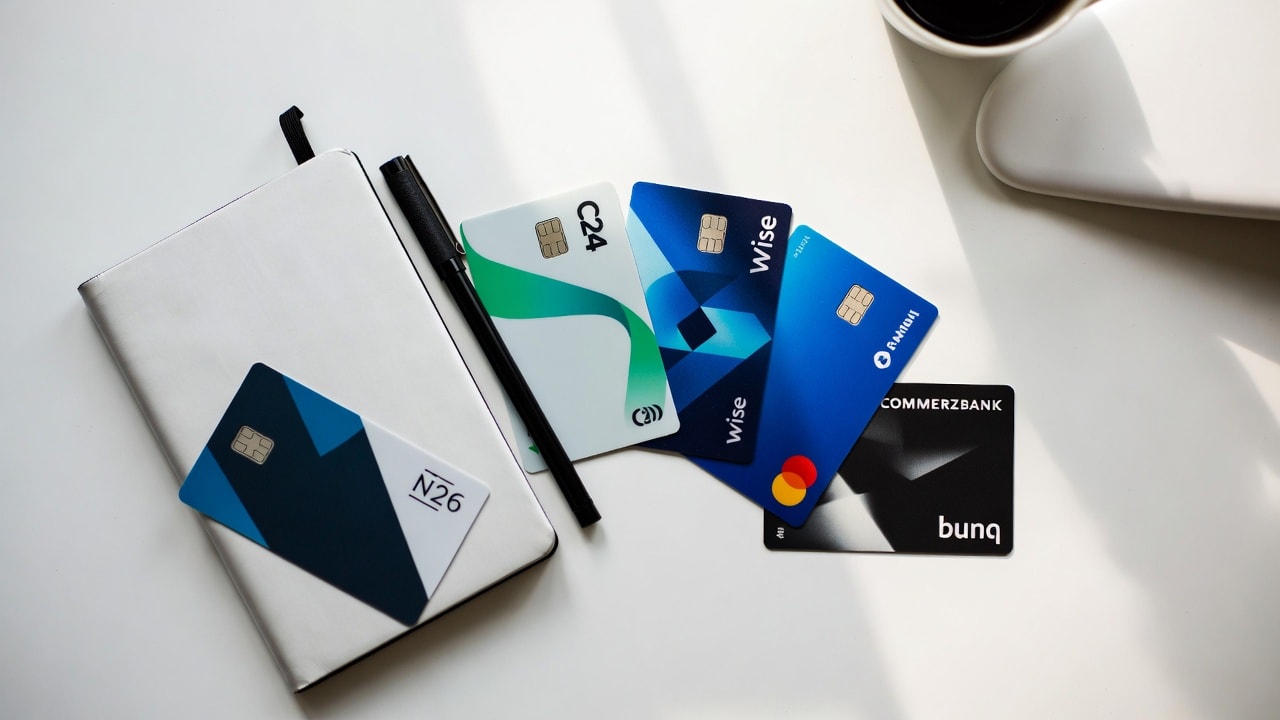
Every year, more than 100,000 internationals arrive in Germany for the first time and immediately hit the same wall: you need a bank account to rent an apartment, but many landlords want proof of a bank account before they'll sign a lease. You need an Anmeldung (address registration) to open most bank accounts, but you can't register an address without a signed lease. It's the classic German catch-22, and it trips up nearly everyone.
The good news? In 2026, several banks have figured this out and let you open an account before you have your Anmeldung, your Steuer-ID, or even a permanent address. But choosing the wrong bank can cost you €100+ per year in unnecessary fees, lock you out of Girocard payments at German bakeries and government offices, or leave you stuck with an app that only works in German.
After running ExpatNav's bank account comparison tool and collecting eligibility data from thousands of users filtered by nationality and visa type, we've put together this guide to help you pick the right bank for your specific situation. Not every bank accepts every nationality or visa type equally, and that matters more than most guides acknowledge.
Table of Contents
Honorable Mentions: Revolut, Tomorrow, DKB
Quick Comparison: Best Banks for Expats at a Glance
Bank | Monthly Fee | German IBAN | Girocard | English App | Anmeldung Required? | Best For |
|---|---|---|---|---|---|---|
N26 | €0 (Standard) | Yes | No | Yes | No | New arrivals, students |
C24 | €0 (Smart) | Yes | Yes (free) | No | Yes | Settled expats who speak German |
Wise | €0 | No (Belgian IBAN) | No | Yes | No | Multi-currency, pre-arrival |
Commerzbank | €4.90/mo (free under 28) | Yes | Yes | Partial | Yes | Branch banking, all nationalities |
bunq | €0 (Easy Bank) | Yes | No | Yes | No (90-day grace) | EU citizens, quick setup |
Revolut | €0 (Standard) | Yes (DE IBAN) | No | Yes | Yes (Steuer-ID needed) | Tech-savvy expats, travel |
Tomorrow | €0 (with €500/mo deposit) | Yes | No | Yes | Yes | Sustainability-focused expats |
Pricing verified April 2026. Fees and features change frequently. Check provider websites for current terms.
Affiliate disclosure: ExpatNav may earn a commission if you sign up through our links. This never affects our rankings or recommendations. Non-affiliate providers are included when they deserve a spot.
How We Evaluated These Banks
We didn't just read brochures. Over the past 18 months of building ExpatNav, we've signed up for accounts with each of these banks, tested the onboarding experience from the perspective of a non-EU national, timed the application process, tracked real fees, and collected community feedback from verified users tagged by nationality and visa type.
Here's what we weighted most heavily:
Accessibility for newcomers. Can you actually open this account when you first land in Germany with nothing but a passport and a smile? Banks that require an Anmeldung, Steuer-ID, or Schufa score are less useful for your first weeks.
Real total cost. Monthly fees are only part of the story. We factored in card issuance fees, ATM withdrawal charges, international transfer markups, and hidden currency conversion costs. A "free" account that charges €2 per ATM withdrawal adds up fast when Germans still use cash regularly.
Language support. A banking app in English isn't optional for most expats, at least in the first year or two. We tested whether English support covers just the app interface or extends to customer service, onboarding, and account documents.
Eligibility by nationality. This is the big one that other guides skip. Based on eligibility data from our platform, we know that not every bank accepts every passport for video identification. Some banks reject applicants from certain countries outright. We flag these issues for each bank.
Best Overall: N26
Why it wins: N26 is the default first bank account for expats in Germany, and for good reason. You can open an account in under 10 minutes from your phone, the entire experience is in English, and you don't need an Anmeldung or Steuer-ID to get started.
Monthly fee: €0 for the Standard account. Paid tiers range from €4.90/month (Smart) to €16.90/month (Metal).
What you get with the free account:
German IBAN (DE prefix)
Virtual Mastercard debit card instantly, a physical card for €10
2 free ATM withdrawals per month in the Eurozone (then €2 each)
Apple Pay and Google Pay support
App in English, French, German, Italian, and Spanish
Deposit protection up to €100,000 under the German Deposit Guarantee Scheme (regulated by BaFin)
The good stuff. N26 solves the chicken-and-egg problem better than anyone. You open the account, get your IBAN immediately, and can start receiving your salary or Sperrkonto releases right away. The app is clean and intuitive. And here's a detail most guides miss: opening an N26 account creates a Schufa record. If you're new to Germany, you have zero credit history, which makes apartment hunting harder. An N26 account starts building that record from day one.
The downsides. The free plan got worse in recent years. You used to get more free ATM withdrawals, and the physical card used to be free. Now it's only 2 free withdrawals per month, and the card costs €10 to ship. More importantly, N26 does not offer a Girocard (more on why this matters below). And depending on your nationality, you might need a plastic residence permit valid for at least one year to pass the video identification. If you only have a temporary visa sticker in your passport, you could get stuck.
Who should choose N26: New arrivals who need a working German bank account fast, students, anyone who doesn't speak German, and digital nomads who want mobile-first banking.
Who should skip N26: Anyone who needs a Girocard for German-only payment terminals, people who withdraw cash frequently (2 free withdrawals isn't much), or expats whose passport isn't supported by N26's video identification process.
Compare N26 with other banks on ExpatNav
Best for Long-Term Residents: C24 Bank
Why it stands out: C24, owned by the comparison platform Check24, has quietly become one of the best-rated checking accounts in Germany. Stiftung Warentest (Germany's equivalent of Consumer Reports) ranked it among the top Girokonto options in 2026. The reason is simple: it gives you everything for free that other banks charge for.
Monthly fee: €0 for the Smart account, no conditions.
What you get:
German IBAN
Free Mastercard debit card AND free Girocard (this is rare)
4 free ATM withdrawals per month
Up to 20 sub-accounts ("Pockets"), each with its own IBAN
Interest on your balance (rates have been competitive, around 2.5% as of early 2026, though rates shift with ECB decisions)
Regulated German bank with €100,000 deposit protection
The good stuff. C24 is the only free bank account we've found that includes both a Mastercard and a Girocard at no extra cost. That combination matters enormously in Germany, where plenty of bakeries, Burgeramter (citizen offices), and small shops still only accept Girocard. The sub-account feature is also genuinely useful for budgeting: set up separate pockets for rent, groceries, and savings, each with its own IBAN.
The downsides. And they're significant for expats. C24's app and customer service are only available in German. The sign-up process is in German. You need an Anmeldung to open an account. They accept fewer passport types than N26, and non-EU nationals may need a residence permit. If you just arrived in Germany and don't speak the language yet, C24 is not your first bank.
Who should choose C24: Expats who have been in Germany for a year or more, have their Anmeldung sorted, speak at least B1 German, and want the best free checking account with full Girocard support.
Who should skip C24: Anyone without an Anmeldung, anyone who doesn't speak German, and US citizens (C24 doesn't accept them due to FATCA compliance costs).
Best for International Transfers: Wise
Why it's essential: Wise (formerly TransferWise) isn't technically a bank. It's a licensed payment institution that gives you a multi-currency account. But for expats who regularly send money home or receive payments in foreign currencies, it's practically indispensable.
Monthly fee: €0. No account maintenance charges.
What you get:
EUR account with a Belgian IBAN (not German)
Hold and convert 40+ currencies at the mid-market exchange rate
Debit card accepted in 150+ countries
Free ATM withdrawals up to €200/month (then 1.75% fee)
App in 16+ languages, including English, Turkish, and Hindi
Can be opened before arriving in Germany, from anywhere
The good stuff. If you need to send money to family back home, Wise saves you serious money compared to traditional bank transfers. Banks typically add a 1.5-3% markup to exchange rates on top of their transfer fees. Wise uses the real mid-market rate and charges a small, transparent fee. For someone sending €500/month home to India, that difference can save €150-300 per year. You can also open a Wise account before you even set foot in Germany, which means you can start receiving funds and paying for things immediately after landing.
The downsides. Wise gives you a Belgian IBAN, not a German one. While IBAN discrimination is technically illegal under EU regulation, some German companies and landlords still refuse non-DE IBANs. You may run into issues setting up direct debits for certain German utilities or insurance providers. Also, Wise is not a bank, so your funds are not protected under the €100,000 German deposit guarantee. They're safeguarded in separate accounts, but the protection mechanism is different. And if you hold more than €15,000 in your Wise account, you'll pay a 0.40% annual fee on the balance above that threshold.
Who should choose Wise: Expats who send money internationally, freelancers who receive payments in multiple currencies, and anyone who needs a functioning account before arriving in Germany.
Who should skip Wise: Anyone who needs a German IBAN for salary deposits, rent payments, or German direct debits. Wise should be your second account, not your only one.
If you regularly send money abroad, check out our money transfer comparison to see how Wise stacks up against Remitly and CurrencyFair for your specific currency corridor.
Best Branch Bank: Commerzbank
Why it matters: Germany isn't fully digital yet. If you need to deposit cash, get official bank documents stamped, or talk to a human being in person, you need a branch bank. Commerzbank is the most expat-friendly option in this category.
Monthly fee: €4.90/month for the standard Girokonto (free for the first 3 months). Permanently free if you have €50,000+ in assets with them or receive a monthly salary deposit. Completely free for students and anyone under 28 (StartKonto).
What you get:
German IBAN
Girocard and virtual debit card
Online banking available in English
Access to over 6,000 Cash Group ATMs for free withdrawals
Cash deposits at Commerzbank ATMs
Physical branches across Germany
Accepts all nationalities
The good stuff. Commerzbank is one of the few traditional banks that makes a real effort for English-speaking customers. Their online banking works in English, and many branch employees speak English, especially in larger cities like Berlin, Munich, and Frankfurt. They also accept all nationalities for account opening, which isn't something every German bank can claim. If you need to deposit cash regularly (freelancers, anyone receiving tips, people selling things), a branch bank is the only real option.
The downsides. You need an Anmeldung to open an account. The sign-up form is in German (though guides exist online to walk you through it). The €4.90/month fee feels unnecessary when free accounts exist, though the student/under-28 exemption helps. And the user experience of their app, while functional, doesn't compare to N26 or C24.
Who should choose Commerzbank: Expats who want a traditional bank with English support, anyone who needs to deposit cash, students under 28 (free account), and people from nationalities that face rejection at digital banks.
Who should skip Commerzbank: Anyone who wants to avoid monthly fees and isn't under 28 or meeting the salary threshold. If you do everything digitally and never need a branch, the fee isn't worth it.
Best Alternative: bunq
Why it's worth considering: bunq is a Dutch bank that gives you a German IBAN (DE prefix) and lets you open an account without an Anmeldung. You get 90 days to provide proof of address and your Steuer-ID.
Monthly fee: €0 for the Easy Bank account (limited features). Paid plans from €2.99 to €17.99/month.
What you get:
German IBAN
App in English, Dutch, French, German, Italian, Portuguese, and Spanish
6 free ATM withdrawals per month on paid plans (limited on free plan)
No Anmeldung required upfront (90-day window)
Multi-currency support
Apple Pay and Google Pay
The good stuff. bunq fills a specific gap: it's a fully English-language bank that provides a German IBAN and doesn't require an Anmeldung on day one. For certain nationalities, N26's video ID doesn't support, bunq may be the better alternative. They also accept Russian, Iranian, and Syrian citizens, which is notable since many banks restrict accounts for citizens of sanctioned countries.
The downsides. The free account is quite limited. No free ATM withdrawals, no physical card, and daily withdrawal limits of €250 for the first 3 months. To get the features that make bunq useful, you'll likely need a paid plan. Also, opening a bunq account does not create a Schufa record, which means it won't help you build German credit history. And the daily withdrawal cap in those first 3 months can be frustrating if you need cash for a rental deposit or furnishing your apartment.
Who should choose bunq: Expats whose passports aren't accepted by N26, citizens of sanctioned countries who need a German IBAN, and anyone who wants a backup account with a different IBAN for redundancy.
Who should skip bunq: Anyone who's happy with N26, people who want a free account with full features, or anyone looking to build a Schufa history through their bank account.
Honorable Mentions
Revolut. Revolut now offers German DE IBANs to Germany-based customers, which is a big upgrade from when it only provided Lithuanian IBANs. The app is slick, the multi-currency features are strong, and the free plan includes basic spending and transfers. But you need a Steuer-ID to open an account, which means you need to have completed your Anmeldung first. That limits its usefulness for brand-new arrivals.
Tomorrow Bank. If sustainability is important to you, Tomorrow is the only German neobank that reinvests its banking revenue into climate and social projects. The app is fully in English, and the free account is available if you receive at least €500/month in deposits. The catch? They operate through a partner bank (Solarisbank), not their own banking license, which makes some people uncomfortable.
DKB. DKB is a favorite among long-term German residents for its fee-free account with global ATM withdrawals. But it's a tough sell for newcomers: the sign-up process is entirely in German, they run a Schufa check (which you won't pass if you just arrived), and they often reject non-EU applicants who don't have permanent residence. Consider DKB as a bank to switch to after your first year, not your starting point.
The Girocard Problem: Why It Still Matters in 2026
Here's something that catches almost every expat off guard. Germany built its own domestic debit card system called Girocard (you might hear people call it "EC-Karte"). In 2026, you'll still encounter bakeries, farmers' markets, small restaurants, and even some government offices that display a sign reading "Nur EC-Karte" (Girocard only).
N26, Wise, Revolut, and bunq do not offer Girocard. They give you Mastercard or Visa debit cards, which work at most larger retailers and internationally, but fail at Girocard-only terminals.
This doesn't mean you need to choose a Girocard bank as your primary account. But it does mean you might want a second account (like C24 or Commerzbank) specifically for the Girocard once you're settled. Many expats in Germany keep two accounts: a digital bank for everyday spending and international transfers, plus a Girocard-issuing bank for the places that refuse Mastercard.
ExpatNav's eligibility filter shows you which banks offer Girocard and which ones accept your nationality, so you can plan your two-account strategy from day one.
How to Open a German Bank Account Step by Step
Opening a bank account in Germany is straightforward if you pick the right bank for your situation. Here's the process for most digital banks:
Step 1: Choose your bank. Use the comparison table above or ExpatNav's bank account comparison to pick a bank that matches your nationality, visa type, and current documentation status.
Step 2: Download the app and start the sign-up. You'll enter your name, email, phone number, and address (some banks accept a hotel or temporary address). This takes about 3-5 minutes.
Step 3: Verify your identity. Most banks use video identification: you hold up your passport on a live video call, answer a few questions, and the agent confirms your identity. Some banks also accept photo ID upload or eID verification with a German digital ID card. This takes 5-15 minutes, but wait times for the video call can vary.
Step 4: Receive your IBAN. Digital banks typically provide your German IBAN instantly or within a few hours after verification. You can start receiving transfers immediately.
Step 5: Wait for your physical card. Your Girocard, Mastercard, or Visa debit card arrives by mail within 5-14 days. Your PIN is sent separately for security. Important: Make sure your name is on your mailbox, or the mail carrier will return the card.
Step 6: Activate your card. Follow the instructions in the app to activate your card and set up mobile payments.
For traditional branch banks like Commerzbank, the process involves booking an appointment at a branch, bringing your passport, Anmeldung, and any other required documents, and completing the paperwork in person. Expect the process to take 1-3 weeks from appointment booking to receiving your card.
Which Bank Should You Choose? (Decision Guide by Situation)
Your ideal bank depends entirely on where you are in your Germany journey. Here's our recommendation based on the most common scenarios:
You just landed in Germany and have nothing set up yet. Open N26 today. It takes 10 minutes, and you don't need any German paperwork. Use it to receive your first salary payment and set up initial direct debits. Later, once you have your Anmeldung, consider adding a second bank.
You're a student arriving at university. Start with N26 for daily banking. If you also need a blocked account (Sperrkonto) for your visa, that's a separate product. The monthly releases from your Sperrkonto go to your N26 account. If you're under 28, also consider Commerzbank as a free secondary account with Girocard.
You've been here a year, speak some German, and want to optimize. Switch your primary account to C24. You get a free Girocard, a free Mastercard, interest on your balance, and sub-accounts for budgeting. Keep N26 as a backup.
You're a freelancer or self-employed. You'll need to deposit cash from clients and keep business finances organized. Commerzbank is your best bet for a primary account. Add Wise for international payments and invoicing in foreign currencies. Check out our tax filing tool comparison for year-end tax returns.
You send money home regularly. Open Wise as your international transfer account and keep a separate German bank (N26 or C24) for domestic banking. This two-account setup saves the most on cross-border fees. Our money transfer comparison breaks down the cheapest options for specific currency corridors.
Your passport was rejected by N26. Try bunq first (they accept a wider range of nationalities). If bunq also doesn't work, Wise is available to nearly everyone. As a last resort, any German Sparkasse is legally required to offer you a Basiskonto (basic account) if you're legally resident in Germany.
Eligibility and Nationality Considerations
This is where most banking guides fall short. They recommend banks without acknowledging that a Nigerian student, a Turkish freelancer, and a French engineer have completely different experiences opening the same account.
Based on data from ExpatNav's eligibility checks, here's what we've observed:
EU/EEA citizens have the easiest time. Nearly every bank on this list accepts EU passports without issues. N26, bunq, C24, Commerzbank, Revolut, and DKB are all accessible. Your main decision is features vs. convenience.
Indian nationals (the largest international student group in Germany with nearly 59,000 students as of the 2024/25 winter semester, according to DAAD) generally have good luck with N26, though some report video ID rejections and need to use PostIdent instead. Wise works well for sending money back to India at strong exchange rates.
Nigerian and other West African nationals face higher rejection rates at some banks. N26 and bunq are your best starting options. If both reject you, Sparkasse is legally obligated to offer a Basiskonto. Wise is usually available regardless of nationality.
Russian, Iranian, and Syrian nationals deal with additional sanctions-related restrictions. Many digital banks reject applications outright. bunq and Sparkasse are the most reliable options. Check ExpatNav's eligibility filter for real-time data on which banks accept your nationality.
US citizens face a unique problem: FATCA reporting requirements make many European banks reluctant to accept American customers. N26 accepts US citizens in Germany. C24 does not. Wise works globally. Commerzbank generally accepts US citizens at its branches.
If you're unsure which banks will accept your specific combination of nationality and visa type, try ExpatNav's eligibility filter. It shows you green/yellow/red status indicators for each provider based on your profile.
Common Mistakes Expats Make with German Banking
When we first started building ExpatNav, we talked to hundreds of expats about their banking experiences. These are the mistakes that came up over and over:
Walking into a traditional bank on day one. It feels safe and familiar, but the monthly fees at Sparkasse, Volksbank, or Deutsche Bank add up to €100-150/year for services you can get free from a digital bank. Unless you specifically need branch banking, start digital.
Not putting your name on your mailbox. This sounds trivial, but German mail carriers will return any letter that doesn't match a name on the mailbox. Your bank card, PIN, and important documents will bounce back to the bank, and you'll have to reorder everything. It happens constantly.
Ignoring the Girocard gap. You'll be fine at supermarkets and big stores with just a Mastercard. But the first time a bakery, parking meter, or Burgeramt rejects your card, you'll understand why Germans still talk about "EC-Karte." Plan for this early by either carrying cash or getting a second account with Girocard.
Keeping too much money in Wise. Wise charges 0.40% annually on balances above €15,000, and your funds aren't protected by the standard €100,000 deposit guarantee. Use Wise for transfers and spending, not as a savings account.
Opening multiple bank accounts simultaneously. Each account opening triggers a Schufa inquiry. Too many inquiries in a short period can negatively affect your credit score. Space out new account openings by a few weeks or months.
Not filing a tax return. This isn't strictly a banking mistake, but it's connected. Many expats don't realize they're owed a tax refund. The average refund for employees in Germany is around €1,000. Our tax filing tool comparison covers English-language options like Wundertax and Taxfix.
FAQ
Can I open a German bank account before arriving in Germany?
Yes, but with limitations. Wise lets you open an account from anywhere in the world and provides your EUR account details immediately. N26 lets you start the process remotely, but you typically need to be in Germany (or at least in the EU) to complete video identification. bunq also allows remote setup but requires your address and Steuer-ID within 90 days.
Do I need a Schufa score to open a bank account in Germany?
No, not for digital banks like N26, bunq, or Wise. These banks either skip the Schufa check entirely or don't require an existing credit history. Traditional banks like Commerzbank may run a Schufa check, but having no Schufa history (which is the case for all newcomers) is different from having bad Schufa history. Most banks will still approve you.
Is a Belgian IBAN from Wise accepted in Germany?
Legally, yes. Under EU regulation, IBAN discrimination is prohibited, and any EU IBAN must be accepted for SEPA payments. In practice, some German companies, landlords, and utility providers still refuse non-DE IBANs. It's getting better, but it's not 100% reliable yet.
How many bank accounts should I have in Germany?
Most settled expats end up with two: a digital bank (N26 or C24) for daily spending, and either Wise for international transfers or Commerzbank for branch banking and Girocard. There's no legal limit on how many accounts you can hold.
What happens to my bank account if I leave Germany?
Most banks let you keep your account open after leaving Germany, though some may downgrade you to a limited account type. N26 requires you to reside in an eligible European country. Wise works globally regardless of your location. It's a good idea to keep at least one German account open if you have any remaining financial obligations in Germany (tax refunds, deposit returns, insurance payouts).
Can refugees and asylum seekers open bank accounts in Germany?
Yes. Under German and EU law, banks are required to offer a Basiskonto (basic payment account) to anyone legally residing in the EU, including asylum seekers. Sparkasse branches are typically the most accessible for this. The Basiskonto includes basic features like transfers and a debit card, but may come with higher fees and fewer features than a standard Girokonto.
Which bank is best for receiving my Sperrkonto monthly releases?
Any bank with a German IBAN works. N26 is the most popular choice among students because it's free and easy to set up. The monthly release from your Sperrkonto (currently €992/month based on the €11,904 annual requirement) arrives via standard SEPA transfer.
Do German banks charge for incoming international transfers?
Traditional banks typically charge €10-20 for incoming SWIFT transfers. Digital banks like N26 may also charge fees for non-SEPA transfers. Wise is the cheapest option for receiving international money, as it provides local account details in 10+ currencies, meaning senders can often make domestic transfers instead of international ones.
Conclusion
Picking the right bank account in Germany doesn't have to be overwhelming. For most expats, the playbook is simple: start with N26 or Wise in your first week, get your financial basics running, and then optimize once you're settled with your Anmeldung and Steuer-ID.
The key is understanding that your banking needs will change. The bank that's perfect for your first month (fast setup, no paperwork, English-only) probably isn't the bank you'll want after two years (Girocard, interest on your balance, German tax integration). Plan for two accounts from the start, and you'll avoid the headaches that catch most newcomers off guard.
Not sure which bank fits your situation? Use ExpatNav's eligibility filter to see only the banks that accept your nationality, visa type, and language level. Or take our relocation quiz to get personalized recommendations across banking, insurance, and more.
This article was last updated in April 2026. Banking fees, eligibility rules, and features change frequently. We verify pricing data regularly, but always confirm current terms on the provider's website before opening an account. ExpatNav may earn commissions from some providers listed in this article. Our rankings and recommendations are based on independent research, platform data, and community feedback, and are never influenced by affiliate relationships.