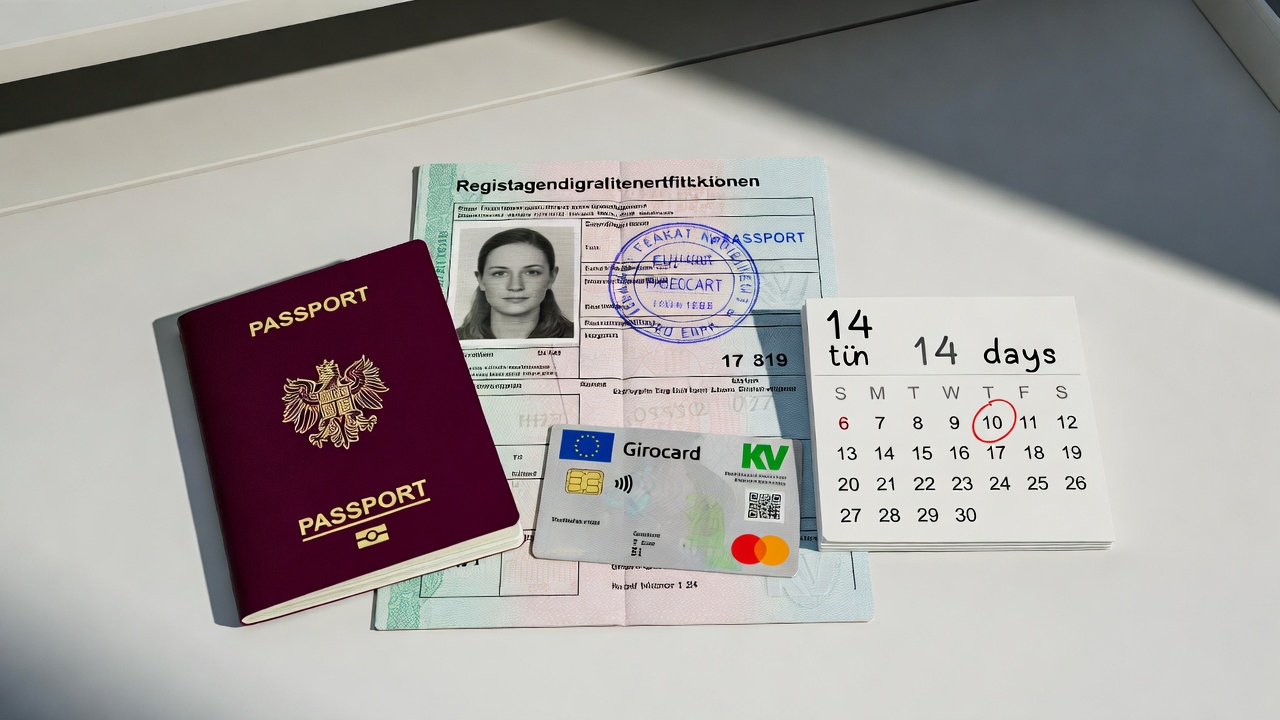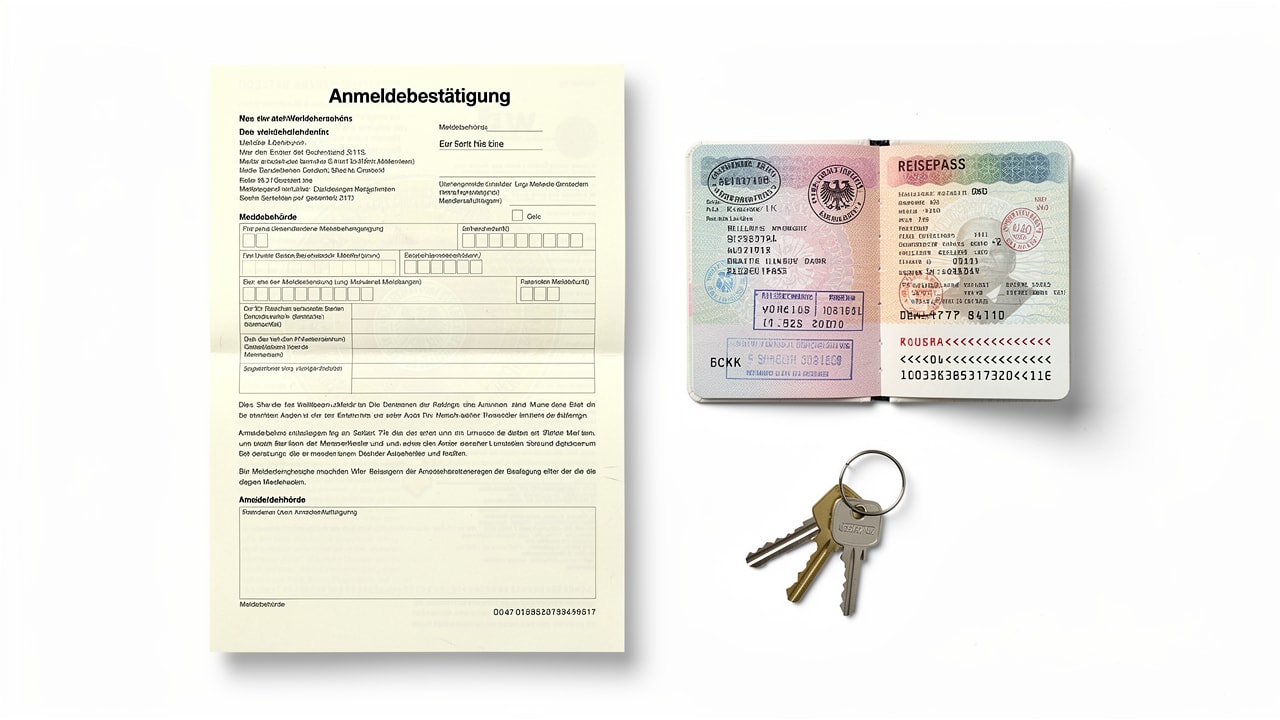
You just landed in Germany. Your suitcase is barely unpacked, your jet lag is brutal, and you have 14 days to complete one of the most important tasks of your entire relocation: registering your address. The Anmeldung, as Germans call it, is the single bureaucratic step that unlocks everything else. Without it, you can't open a bank account, receive your tax ID, enroll at a university, or apply for a residence permit. Skip it, and you're looking at fines of up to €1,000.
Here's the good news: the actual appointment takes about five minutes. The hard part? Getting that appointment in the first place and showing up with the right documents. After helping thousands of internationals through this process on ExpatNav, we've seen every mistake, every workaround, and every city-specific quirk. This guide covers all of it, updated for 2026.
Table of Contents
Quick Answer: What Is the Anmeldung?
Why the Anmeldung Matters for Internationals
Documents You Need (Complete Checklist)
The Wohnungsgeberbestätigung: The Document That Trips Everyone Up
How to Book a Bürgeramt Appointment
City-by-City Booking Tips
What Happens at the Appointment
What You Get After Registering
Anmeldung Without a Permanent Address
Common Mistakes to Avoid
Eligibility and Nationality Considerations
FAQ
Key Takeaways
Quick Answer: What Is the Anmeldung?
The Anmeldung is Germany's mandatory address registration. Under §17 of the Bundesmeldegesetz (Federal Registration Act), every person who moves into a residence in Germany must register their address at the local Bürgeramt (citizens' office) within 14 days of moving in. This applies to everyone: German citizens, EU nationals, and non-EU internationals alike. The process is free, the appointment is short, and the result is a document called the Anmeldebestätigung (also called the Meldebescheinigung), which serves as your official proof of registration.
Key Detail | What You Need to Know |
|---|---|
Deadline | 14 days after moving in |
Where | Your local Bürgeramt (citizens' office) |
Cost | Free |
Appointment length | 5 to 15 minutes |
Key document you receive | Anmeldebestätigung / Meldebescheinigung |
Fine for late registration | Up to €1,000 (§54 Bundesmeldegesetz) |
Legal basis | §17 Bundesmeldegesetz (BMG) |
Why the Anmeldung Matters for Internationals
If you're coming from a country where address registration is informal or linked to something like a driver's license, the German system will feel unfamiliar. Germany tracks where every resident lives through a centralized registration system, and nearly every administrative process depends on it.
Here's what you can't do without completing your Anmeldung:
Open a bank account. Most German banks, including N26 and Commerzbank, require your Meldebescheinigung before they will finalize your account. Some digital banks let you start the process without it, but you'll hit a wall pretty quickly. If you're still waiting for your appointment, check ExpatNav's bank account comparison to see which banks have the most flexible requirements for your nationality.
Receive your tax ID (Steueridentifikationsnummer). This 11-digit number is automatically generated and mailed to your registered address within two to four weeks of your Anmeldung. Without it, your employer withholds income tax at the highest rate, roughly 42%. That's money you won't see for months.
Apply for or extend a residence permit. The Ausländerbehörde (foreigners' office) requires proof of registration as part of every visa and permit application.
Enroll in a university. German universities require your Meldebescheinigung as part of matriculation. No registration, no enrollment, no semester ticket.
Get health insurance. Most providers need your registered address to finalize your membership. If you're still sorting out health coverage, ExpatNav's health insurance comparison filters by visa type and nationality.
Sign contracts. Mobile phone plans, internet service, and even some rental agreements require proof of a registered address.
When we first started building ExpatNav, one of the earliest patterns we noticed was how many users hit a wall trying to compare financial products before they'd completed their Anmeldung. The registration certificate is the key that opens every other door. That's why we always tell new arrivals: get this done first, before anything else.
Documents You Need (Complete Checklist)
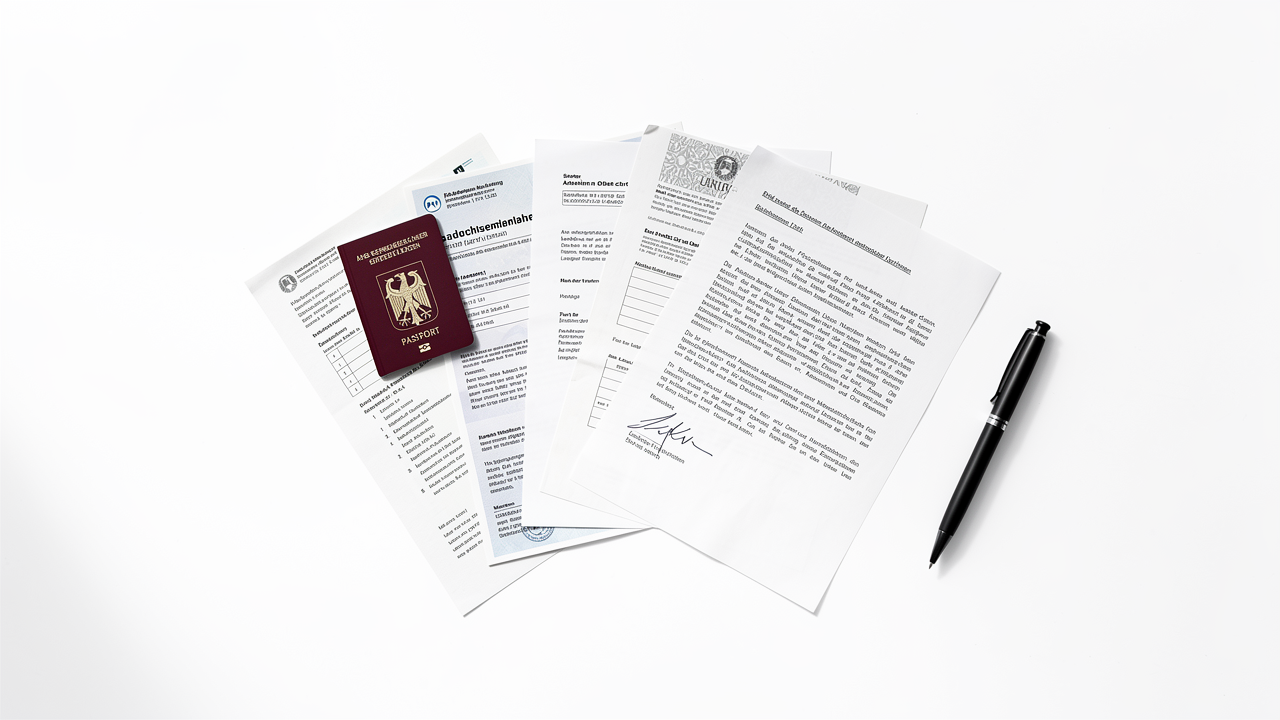
The required documents are the same across all German cities. Missing even one means you'll leave empty-handed and need to book another appointment, which can take weeks in busy cities like Berlin or Munich.
Bring all of the following to your appointment:
A valid passport or national ID card. Bring the original. Copies are not accepted as primary identification. If you're an EU citizen, a national ID card works. Non-EU citizens should bring their passports. If you have an existing residence permit, bring that too.
The Anmeldeformular (registration form). This is the official form titled "Anmeldung bei einer Meldebehörde." You can download it from your city's Bürgeramt website and fill it out in advance, or pick up a paper copy at the office. Filling it out ahead of time saves a few minutes at the appointment.
The Wohnungsgeberbestätigung (landlord confirmation). This is the document that causes the most problems. It's a signed statement from your landlord confirming that you've moved into the address. Your rental contract alone is not enough. More on this in the next section.
Your rental contract (Mietvertrag). Not technically required everywhere, but strongly recommended as a backup document. Some clerks will ask for it.
Marriage certificate (if registering with a spouse). Must be the original or a certified copy. Documents not in German or English typically need a certified translation.
Birth certificates for children (if registering them at the same appointment). The same translation rules apply.
That's it. No photos, no fees, no additional forms for most standard registrations.
The Wohnungsgeberbestätigung: The Document That Trips Everyone Up
If there's one thing that derails an otherwise smooth Anmeldung, it's the Wohnungsgeberbestätigung. Since November 2015, §19 of the Bundesmeldegesetz requires landlords to provide this confirmation for every new tenant. Without it, the Bürgeramt will not process your registration. Period.
The form must contain the following information:
Name and address of the landlord (or main tenant, if you're subletting)
The property address where you're registering
Your full name (as it appears on your passport)
Your move-in date
The landlord's signature
Your landlord is legally required to provide this document. Refusing to do so can result in a fine for the landlord of up to €1,000. In practice, most landlords hand it over without issues, especially if you give them a template. Most city Bürgeramt websites offer a downloadable template, and Hamburg's version at hamburg.de is widely used as a standard.
Who can sign the Wohnungsgeberbestätigung?
Your landlord (most common scenario)
A property management company (Hausverwaltung) acting on behalf of the landlord
The main tenant, if you're subletting or living in a shared flat (WG). In this case, the main tenant needs the landlord's permission to sublet
You, if you own the property
What if your landlord won't provide it?
This is a red flag. In our experience, talking with ExpatNav users, a landlord who refuses to provide the Wohnungsgeberbestätigung is often running an illegal sublet. Before you sign any rental agreement, always ask: "Kann ich mich hier anmelden?" (Can I register here?). If the answer is no or vague, find another place. Without this form, you literally cannot register, and without registering, your entire administrative setup in Germany stalls.
If you've already signed a lease and your landlord is dragging their feet, remind them of the legal requirement under §19 BMG. If that doesn't work, contact a local Mieterverein (tenants' association) for support.
How to Book a Bürgeramt Appointment
In most German cities, you need a pre-booked appointment to complete your Anmeldung. Walk-ins are rarely accepted, especially in larger cities. The booking process varies by city, but the general approach is the same: go online, select "Anmeldung einer Wohnung" (or similar), and pick an available time slot.
Here's the catch that frustrates nearly every newcomer: appointment slots fill up fast. In cities like Berlin, available slots can disappear within minutes of being released. During peak seasons (September and October, when thousands of international students arrive), the wait can stretch to four or more weeks.
Pro tips for getting an appointment faster:
Check the booking portal at midnight or early morning. Many cities release new slots at midnight or around 6:00 AM. Set an alarm.
Refresh frequently. Cancellations open up random slots throughout the day. Checking every 15 to 30 minutes during business hours can pay off.
Try smaller offices. The main Bürgeramt in your district might be booked solid, but a smaller office in a neighboring district often has availability sooner. You can register at any Bürgeramt in your city, not just the one closest to your address.
Call the 115 hotline. In many cities, the 115 government service number can book appointments or access cancellation slots that don't appear on the public website.
Don't panic about the 14-day rule. If you can show that you tried to book an appointment within the 14-day window (even if the earliest available date is weeks later), you generally won't be fined. Save your booking confirmation email as proof.
City-by-City Booking Tips
The Anmeldung process is standardized across Germany, but the booking experience varies wildly depending on where you live.
Berlin: Notoriously difficult. As of 2026, walk-ins are effectively not possible at most district offices. Use the official Berlin Service Portal (service.berlin.de) to book. Appointments are released regularly, but competition is fierce. Districts like Charlottenburg and Mitte tend to have more English-speaking staff. If you can't find a slot within four weeks and your visa timeline is tight, use the digital contact form on your district's Bürgeramt page to request an emergency appointment. This creates a paper trail proving you tried to comply.
Munich: Generally better than Berlin. The city offers online booking through muenchen.de, and many offices have English-speaking staff. Munich also provides the Anmeldung form in English, which is helpful if you're filling it out for the first time.
Frankfurt: As an international financial hub, Frankfurt's Bürgeramt offices typically have good English coverage. Online booking is available through frankfurt.de. Wait times are moderate compared to Berlin.
Hamburg: Book through the hamburg.de portal. Hamburg is generally efficient, and appointment availability is better than in Berlin or Munich. The city's Wohnungsgeberbestätigung template is widely used across Germany.
Smaller cities and towns: If you're registering in a smaller city or university town, you may not need an appointment at all. Many smaller Bürgerämter accept walk-ins during regular office hours. Call ahead to confirm.
What Happens at the Appointment
The appointment itself is surprisingly quick and straightforward. Here's what to expect:
Step 1: Arrive 5 to 10 minutes early. Find the waiting area and look for your ticket number on the digital display screens.
Step 2: Present your documents. The clerk will check your passport, registration form, and Wohnungsgeberbestätigung. They'll enter your details into the system. You may be asked a few basic questions: which floor you live on, how many people are registered at the address, and whether you're registering alone or with family.
Step 3: The religion question. The form asks for your religion. This matters because Germany has a church tax (Kirchensteuer) of 8 to 9% of your income tax, automatically deducted from your salary if you register as Catholic, Protestant, or a member of certain other recognized religious communities. If you don't want to pay church tax, leave this field empty or write "keine" (none). If you accidentally register with a religion, changing it later requires a formal Kirchenaustritt (church exit) process that costs around €30, depending on the state.
Step 4: Receive your Anmeldebestätigung. The clerk prints your registration certificate on the spot. This single piece of paper is your proof of registration. Keep the original safe and make several copies. You'll need it repeatedly over the coming weeks and months.
The whole process takes 5 to 15 minutes if your documents are in order.
Language: The official language at every Bürgeramt is German. In international cities like Berlin, Munich, and Frankfurt, many clerks speak at least basic English. But don't count on it. If your German isn't conversational, consider bringing a German-speaking friend or using a translation app on your phone. In 2026, most officials are comfortable with you pulling up a live-translation app if you get stuck on a specific question.
What You Get After Registering
Completing your Anmeldung triggers several important processes:
Immediately: You walk out with your Anmeldebestätigung (registration certificate). This is the document you'll show to banks, insurance providers, your university, and the Ausländerbehörde.
Within 2 to 4 weeks: The Bundeszentralamt für Steuern (Federal Central Tax Office) automatically generates your Steueridentifikationsnummer (tax ID) and mails it to your registered address. This 11-digit number is yours for life and doesn't change even if you move within Germany or leave and return. During peak registration periods (September and October), delivery can take up to six to eight weeks.
If your tax ID hasn't arrived after four weeks, first check that your name is clearly displayed on your mailbox. Unmarked mailboxes are the most common reason letters go missing. If it's been more than six weeks, you can request a re-issue online through the BZSt website at formulare.bfinv.de, call the BZSt hotline at +49 228 406-1240, or visit your local Finanzamt (tax office) in person with your passport and Meldebescheinigung for same-day retrieval.
Ongoing: Your registration data is shared with relevant authorities. If you're a non-EU citizen, the Ausländerbehörde will have a record of your registered address, which is required for all residence permit applications.
Once your Anmeldung is done, you can move on to the next steps in your financial setup. If you need a Sperrkonto (blocked account) for your visa, a German bank account for daily life, or health insurance for university enrollment, ExpatNav's eligibility filter shows you instantly which providers accept your nationality and visa type.
Anmeldung Without a Permanent Address
This is one of the most stressful situations new arrivals face: you've just arrived in Germany, you're staying in temporary housing (an Airbnb, a hostel, a friend's couch), and you need to register but don't have a proper lease or a landlord willing to provide the Wohnungsgeberbestätigung.
Can you register at a temporary address?
Technically, yes, if you'll be staying there for more than three months and the host or property owner is willing to sign the Wohnungsgeberbestätigung. Hotels and Airbnbs are a different story. Hotels register guests automatically for stays over three months, but short-term vacation rentals typically won't provide the form.
If you're staying with a friend or family member:
Your host can sign the Wohnungsgeberbestätigung as the "Wohnungsgeber" (housing provider), even if you don't have a formal rental contract. The host should be either the leaseholder or the property owner, and the actual landlord should ideally be aware of your stay.
What if you genuinely can't register yet?
If you're between apartments and can't find anyone willing to sign the form, you're in a tough spot. Some practical options:
Search for temporary furnished apartments that explicitly allow Anmeldung. Platforms like HousingAnywhere and Wunderflats often indicate whether registration is possible.
Contact your university's international office. Many universities have partnerships with housing providers that accommodate registration needs.
Reach out to relocation services in your city. For roughly €30 to €50 per hour, a relocation agent can help you navigate the process and sometimes connect you with registration-friendly temporary housing.
The key rule: never sign a lease without confirming that you can register at the address. That single question, "Kann ich mich hier anmelden?" will save you weeks of frustration.
Common Mistakes to Avoid
After years of running ExpatNav and hearing from thousands of internationals going through this process, these are the mistakes we see over and over again:
1. Not booking the appointment immediately. The number one regret we hear: "I thought I'd do it next week." In Berlin, "next week" can turn into "next month." Book your appointment the day you sign your lease, ideally before you even arrive in Germany if you already have your rental contract.
2. Forgetting the Wohnungsgeberbestätigung. Your rental contract is not a substitute. The clerk will send you home without registering if you don't have this specific document. Get it from your landlord the day you get your keys.
3. Accidentally registering with a religion. If you register as Catholic or Protestant (or another recognized denomination), Germany will automatically deduct church tax from your salary. That's 8 to 9% on top of your income tax. Changing it requires a Kirchenaustritt, which involves a separate appointment and a fee. When in doubt, write "keine."
4. Not labeling your mailbox. Your Steueridentifikationsnummer and plenty of other important mail will be sent to your registered address. If your name isn't on the mailbox, the postal carrier won't deliver it. Add your name on the day you move in.
5. Ignoring the 14-day deadline. While fines for first-time offenders who are slightly late are rare, the risk increases the longer you wait. More importantly, every day without your Anmeldung is a day you can't open a bank account, receive your tax ID, or move forward with your residence permit. Don't procrastinate.
6. Not bringing a friend who speaks German. Even in international cities, you might encounter a clerk who speaks no English. A German-speaking friend can make the difference between a five-minute appointment and a confusing 20-minute ordeal.
Eligibility and Nationality Considerations
The Anmeldung process itself is identical regardless of your nationality. EU citizens, non-EU students, Blue Card holders, refugees, and everyone else follow the same steps and bring the same documents. There is no nationality-based restriction on address registration.
That said, the experience can vary by nationality in indirect ways:
EU citizens: You don't need a visa to live in Germany, but you're still required to register within 14 days. The process is slightly simpler because you can use a national ID card instead of a passport.
Non-EU students: Your Anmeldung is typically the first step after arriving, and it triggers your tax ID, which you'll need before starting any student employment. If you arrived on a student visa and need to extend it, the Ausländerbehörde will require your Meldebescheinigung. Make sure you've also sorted out your health insurance and Sperrkonto, as these are often needed around the same time. For a detailed checklist of what to do in your first 14 days in Germany, see our step-by-step guide.
Freelancers and self-employed internationals: Your Anmeldung is required before you can apply for a freelance visa (Freiberufler) or obtain a Steuernummer for invoicing. The registration process is the same, but you'll want to move quickly since your Steuernummer takes an additional two to five weeks after your Anmeldung.
Refugees and asylum seekers: Registration is typically handled as part of the intake process at the initial reception center. If you've been assigned housing and need to re-register at a new address, the standard Anmeldung process applies.
Families: You can register your spouse and children at the same appointment. Each family member needs a completed registration form and an original passport. Multiple people can be listed on a single Wohnungsgeberbestätigung. Marriage and birth certificates should be originals with certified German translations if they're not in German or English.
FAQ
Can I do the Anmeldung before I arrive in Germany?
No. You must have physically moved into the address before you can register. You cannot register for a future move-in date. The form requires an actual move-in date, and the Wohnungsgeberbestätigung confirms that you have already moved in.
Can someone complete the Anmeldung on my behalf?
Yes, with a signed Vollmacht (power of attorney). The person attending on your behalf must bring all your original documents, the signed Vollmacht, and their own ID. However, some cities don't accept proxy registration for first-time registrations from abroad. Check with your local Bürgeramt before relying on this option.
What happens if I miss the 14-day deadline?
Under §54 of the Bundesmeldegesetz, late registration can result in a fine of up to €1,000. In practice, first-time offenders who register as soon as they can get an appointment are rarely fined, especially if they can show proof of booking attempts. The biggest risk isn't the fine but the delay to every other process that depends on your registration.
Do I need to deregister when I move to a new address within Germany?
No. When you register at a new address (Ummeldung), the old registration is automatically canceled. You only need to actively deregister (Abmeldung) when leaving Germany permanently.
Can I register at an Airbnb or hotel?
Hotels automatically register guests who stay longer than three months. Short-term Airbnbs generally won't provide the Wohnungsgeberbestätigung. If you're in temporary accommodation, you'll need the property owner's cooperation, and they're only legally required to provide the form if you're staying more than three months.
Is the Anmeldung free?
Yes, completely free. There are no fees for standard address registration at the Bürgeramt.
I registered with a religion by accident. How do I stop paying church tax?
You need to complete a formal Kirchenaustritt (church exit). The process and cost vary by state, but it typically involves visiting the Amtsgericht (local court) or Standesamt (civil registry) and paying a fee of around €25 to €30. The church tax deduction stops from the following month.
Can I work without completing the Anmeldung?
You can technically start working, but without your tax ID (which is triggered by the Anmeldung), your employer will withhold income tax at the highest possible rate. You'll eventually get this money back when you file a tax return, but it means significantly lower take-home pay in the meantime. Speaking of tax returns, ExpatNav's tax filing comparison can help you find English-language tax software when the time comes.
Key Takeaways
The Anmeldung is the foundation of your entire administrative life in Germany. It's free, it's quick, and it unlocks everything from your bank account to your tax ID to your residence permit. The hardest parts are getting an appointment in busy cities and making sure your landlord provides the Wohnungsgeberbestätigung. Book your appointment as early as possible, double-check your documents before you go, and keep your Anmeldebestätigung somewhere safe once you have it.
Once your registration is done, the next steps happen fast: your tax ID arrives by mail, your bank account can be fully activated, and your health insurance enrollment is finalized. If you're still figuring out which financial products and services are right for your situation, ExpatNav's eligibility filter shows you only the providers that accept your nationality and visa type, so you're not wasting time on applications that'll get rejected.
Affiliate disclosure: ExpatNav may earn a commission if you sign up for a product through our links. This never influences our rankings or recommendations. We include providers regardless of whether they have an affiliate partnership with us.
Last verified: April 2026. Regulations, appointment availability, and provider requirements change frequently. If you notice outdated information, let us know.