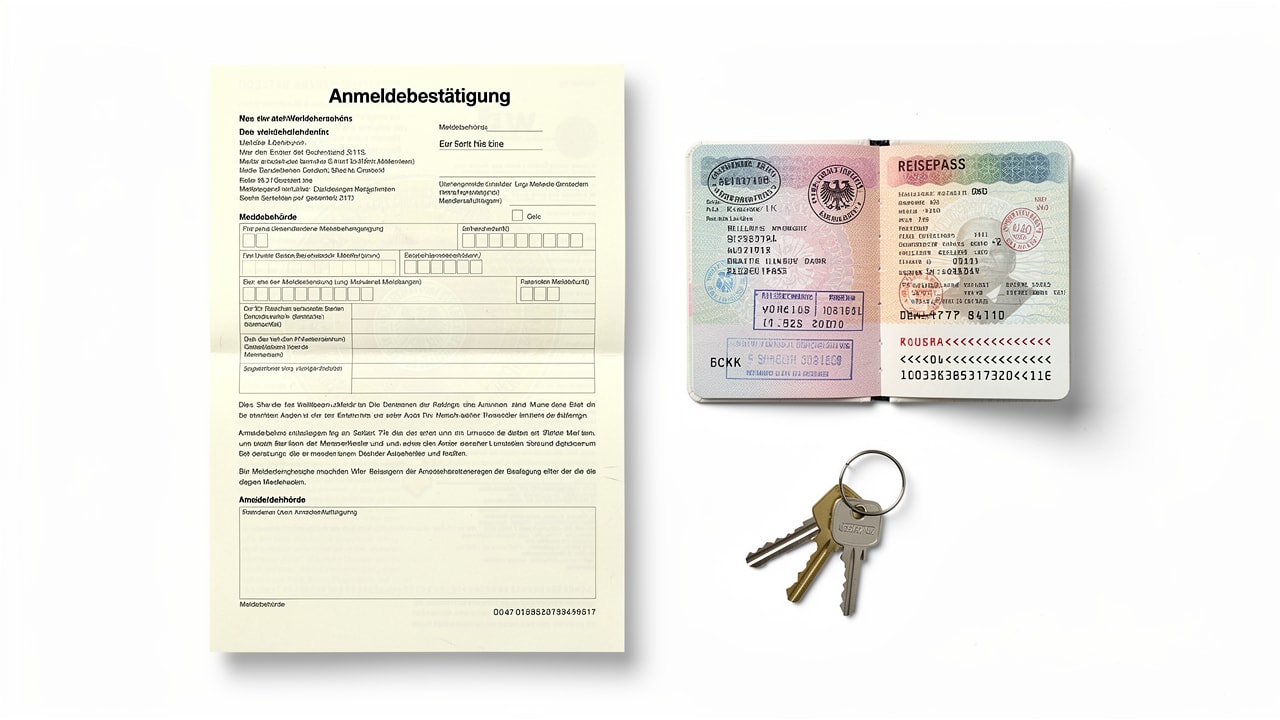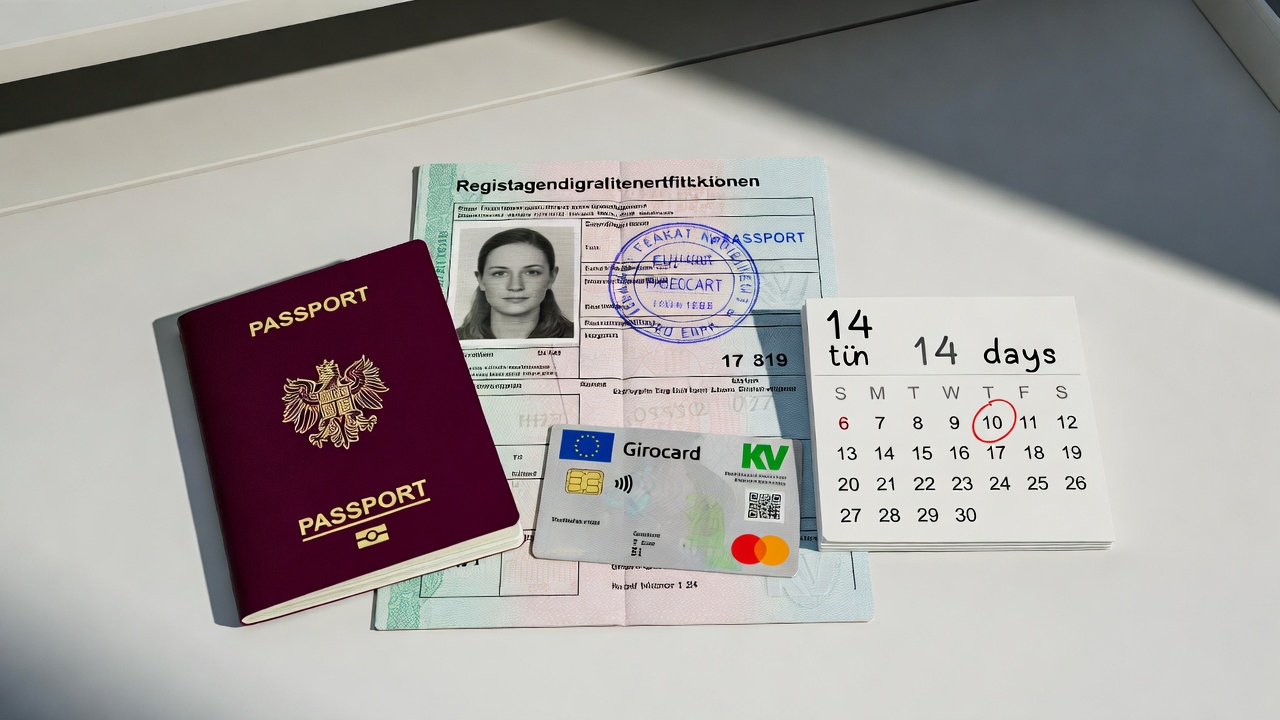
You just landed in Germany. You have a visa stamp, two suitcases, and a to-do list that feels impossible. Register your address. Open a bank account. Get health insurance. Enroll at your university. The problem? Nobody tells you that these tasks have a strict order, and doing them out of sequence can cost you weeks.
Here's what we've learned after helping thousands of internationals through this process on ExpatNav: roughly 40% of new arrivals waste their first week doing things in the wrong order. They show up at a bank without an Anmeldung. They try to enroll at a university without health insurance. They scramble for an appointment at the Burgeramt that's booked out for three weeks.
This guide lays out the exact dependency chain for your first 14 days: what unlocks what, in what order, and what you can do in parallel. Every step builds on the one before it. Follow this sequence, and you'll have your entire financial and administrative setup done before most people have even figured out where to start.
Table of Contents
Quick Answer: The Dependency Chain at a Glance
Every administrative task in Germany depends on completing the one before it. Here's the chain in its simplest form:
Day | Task | What You Need First | What It Unlocks |
|---|---|---|---|
Pre-arrival | Sperrkonto, health insurance, housing | Passport, admission letter | Visa, enrollment |
1-2 | Get a Wohnungsgeberbestätigung from the landlord | Signed rental contract | Anmeldung appointment |
2-3 | Anmeldung (address registration) | Wohnungsgeberbestätigung, Passport | Bank account, tax ID, residence permit |
3-5 | Open a German bank account | Anmeldebestätigung (registration certificate) | Sperrkonto releases, salary deposits |
3-7 | Activate health insurance | Anmeldebestatigung, bank account (for some) | University enrollment |
5-10 | Connect Sperrkonto to bank account | German IBAN from the new bank | Monthly €992 releases |
7-10 | University enrollment | Health insurance certificate, Anmeldung | Semester ticket, student ID |
7-14 | Residence permit appointment | All of the above | Legal right to stay long-term |
The golden rule: if you can't do Step 3 without completing Step 2, don't waste a morning standing in line at Step 3 hoping they'll make an exception. They won't. This is Germany.
Why the Order Matters (The Dependency Chain Explained)
German bureaucracy operates on a principle that frustrates every new arrival: sequential verification. Each institution requires proof from the previous institution before it will process your request. There are no shortcuts, no "I'll bring it later," and very few exceptions.
Think of it like a chain of locks. Your Anmeldung unlocks your bank account. Your bank account unlocks your Sperrkonto releases. Your health insurance certificate unlocks university enrollment. Your enrollment unlocks your semester ticket and student discounts. Break any link in the chain, and everything downstream stalls.
When I first arrived in Germany, I made the classic mistake of heading straight to a bank branch on Day 1, thinking I could get that sorted quickly. The banker was polite but firm: "Do you have your Anmeldebestatigung?" I didn't even know what that was yet. That was a wasted morning I could've spent securing my landlord confirmation instead.
The dependency chain exists for a reason. Germany's administrative system is built on the Bundesmeldegesetz (Federal Registration Act), which requires every resident to have a registered address before accessing most services. Once you accept this reality and plan around it, the process gets significantly smoother.
Before You Fly: Pre-Arrival Setup (Days -30 to -1)
The most effective thing you can do is front-load as much as possible before your flight. Several critical tasks can and should be completed from your home country.
Open Your Sperrkonto (Blocked Account)
If you're a non-EU student, you've probably already done this for your visa application. Your Sperrkonto holds the mandatory €11,904 (€992/month for 12 months, as of 2026) that proves you can support yourself financially. The three main providers are Expatrio, Fintiba, and Coracle, and all three let you open an account online from abroad.
What many people don't realize: you'll need a German bank account to receive your monthly Sperrkonto releases after you arrive. So while your Sperrkonto is ready to go, it won't start paying out until you connect it to a local bank. That's why opening a German bank account is so time-sensitive once you land.
Not sure which Sperrkonto provider fits your situation? ExpatNav's blocked account comparison shows you real fees and eligibility filtered by your nationality.
Arrange Health Insurance
Health insurance is mandatory for everyone in Germany, and you'll need proof of coverage for university enrollment and your residence permit. Students under 30 can usually join a public insurer (gesetzliche Krankenversicherung) like TK, AOK, or Barmer. If you're over 30 or in certain degree programs, you might need private coverage from providers like DR-WALTER, MAWISTA, or Care Concept.
The key detail: you can start the application for most public insurers from abroad, but they'll finalize your membership after you arrive and complete your Anmeldung. Private travel insurance can cover the gap between landing and getting your German policy active.
For a side-by-side comparison of what each insurer offers internationals, check ExpatNav's health insurance comparison.
Secure Housing (Or at Least Temporary Housing)
This is the real bottleneck. You cannot complete your Anmeldung without a permanent address and a Wohnungsgeberbestätigung (landlord confirmation form). If you haven't found long-term housing yet, make sure your temporary housing provider (hostel, Airbnb, student dorm) can give you this form.
Some temporary accommodations won't provide the Wohnungsgeberbestatigung. Before booking anything, ask directly: "Can I register my address (Anmeldung) at this location?" If the answer is no, you'll need to find somewhere else, or you'll be stuck at Step 1 with no way to proceed.
Book Your Burgeramt Appointment
In cities like Berlin, Munich, and Frankfurt, Burgeramt appointments can be booked 2 to 6 weeks out. Start checking availability the moment you have your move-in date confirmed. Most cities allow online booking through their municipal websites. Berlin uses the service.berlin.de portal. München uses muenchen.de/terminvereinbarung.
Pro tip from our team: check for cancellation slots daily, ideally early in the morning. People cancel appointments all the time, and slots open up randomly. In Berlin especially, checking between 7:00 and 8:00 AM often reveals same-day or next-day openings that weren't there the night before.
Prepare Your Document Folder
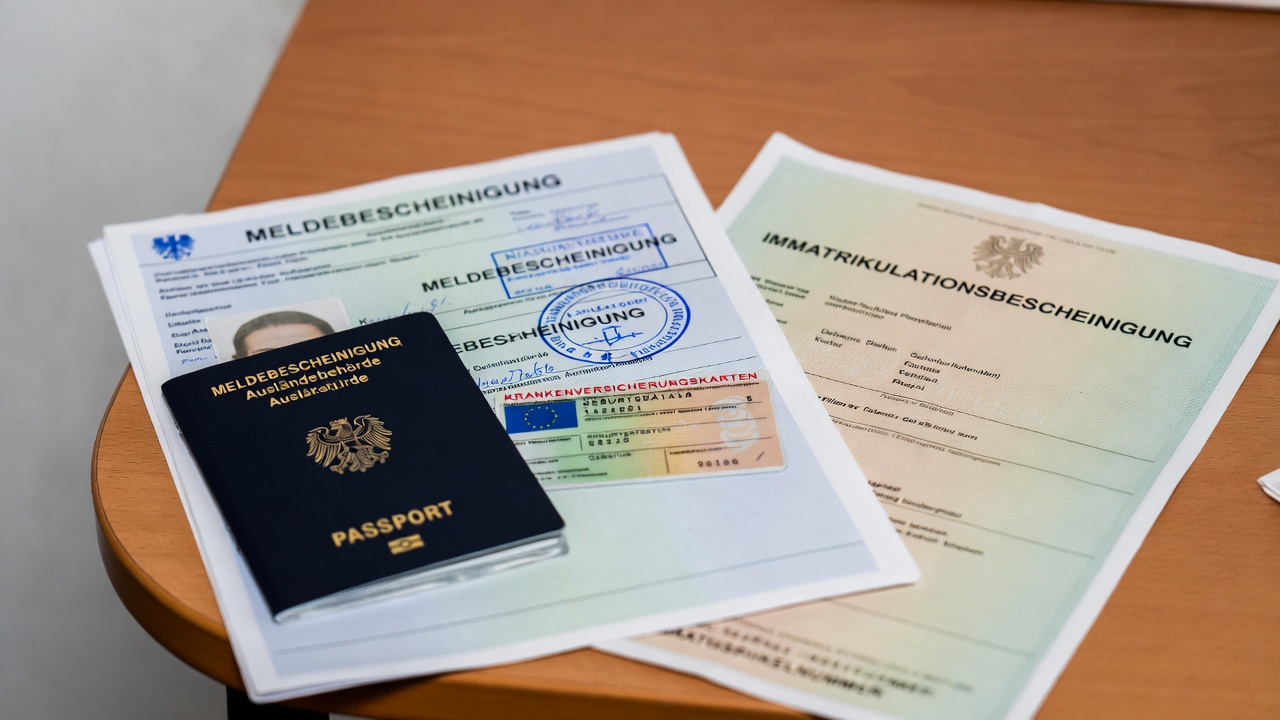
Before you fly, print and organize these documents. Having them ready saves enormous stress in your first days:
Passport (original plus 2 copies)
Visa or visa confirmation
University admission letter
Sperrkonto confirmation
Health insurance confirmation (even if preliminary)
Rental contract or temporary housing confirmation
Wohnungsgeberbestatigung (bring blank copies; your landlord will fill it out)
Biometric photos (take a set of 4 before you leave; they're expensive in Germany)
Anmeldeformular (the registration form, pre-filled if possible; download from your city's website)
Day 1-2: Arrive and Secure Your Housing Confirmation
You've landed. After dealing with jet lag and figuring out the S-Bahn, your first real task is getting the Wohnungsgeberbestatigung signed by your landlord or housing provider. This single document is the gateway to everything else.
What Is the Wohnungsgeberbestatigung?
It's a landlord confirmation form that proves you actually live at the address you're claiming. Under German law (§19 Bundesmeldegesetz), your landlord is legally obligated to provide this form within two weeks of your move-in. In practice, most landlords hand it over on the day you get your keys, but some drag their feet, especially in informal sublet situations.
How to Get It
If you're moving into a student dorm (Studentenwohnheim), the housing office typically provides this automatically. If you're renting from a private landlord, ask for it the moment you sign the contract or pick up keys. If your landlord doesn't know what it is (unlikely in Germany, but it happens with international landlords), download the form from your city's website and hand it to them pre-filled. They just need to sign it.
What If Your Landlord Won't Provide It?
This is a red flag. If your landlord refuses to give you the Wohnungsgeberbestatigung, the sublet may not be legal. You cannot complete your Anmeldung without it, and without your Anmeldung, the entire chain stops. If you're in this situation, consider it an urgent housing problem, not just a paperwork issue, and look for alternative accommodation immediately.
Parallel Tasks for Day 1-2
While you're waiting for your landlord confirmation or your Burgeramt appointment, you can handle a few things that don't depend on the Anmeldung:
Get a German SIM card. You can buy a prepaid SIM at any electronics store (Saturn, MediaMarkt) or even at the airport. You'll need a German phone number for two-factor authentication on banking apps and to contact landlords, offices, and insurers. Providers like Aldi Talk, Lidl Connect, and O2 offer affordable prepaid plans starting around €7-10/month. Compare options on ExpatNav's phone plan comparison.
Pick up essentials. Bedding, kitchen basics, and a transit ticket. Focus on logistics so you can dedicate full days to bureaucracy starting Day 2.
Check in with your university's International Office. Most universities have a welcome desk or orientation program for new international students. They can often help with local tips, buddy programs, and sometimes even Anmeldung support.
Day 2-3: Register Your Address (Anmeldung)
The Anmeldung is the single most important administrative step in Germany. It is legally required within 14 days of moving in, and without it, almost nothing else works. Your bank account, tax ID, health insurance activation, and residence permit all depend on this one appointment.
What Happens at the Appointment
The appointment itself is anticlimactic: about 5 to 10 minutes. You show up at the Burgeramt with your documents, a clerk enters your information, and you walk out with a Meldebescheinigung (registration certificate). That's it. The hard part is getting the appointment in the first place.
Documents You Need
Passport or ID card (original, not a copy)
Completed Anmeldeformular (registration form for your city)
Wohnungsgeberbestatigung (signed by your landlord)
Rental contract (some offices ask for it, some don't)
For non-EU citizens: your visa or residence permit
The Religion Question
The Anmeldeformular asks about your religious affiliation (Religionsgesellschaft). If you declare a recognized religion (Catholic, Protestant, Jewish), you will automatically be enrolled in the Kirchensteuer (church tax), which adds roughly 8-9% on top of your income tax. If you don't want to pay church tax, write "keine" (none) or leave it blank. Changing this later requires a formal Kirchenaustritt (church exit) process at your local court, which costs €20-35 depending on the city.
What the Anmeldung Unlocks
Once you walk out of the Burgeramt with your Meldebescheinigung, several things happen:
Tax ID (Steueridentifikationsnummer): The Bundeszentralamt fur Steuern automatically mails your tax ID to your registered address within 2 to 4 weeks. You don't need to apply for it separately. Without it, your employer withholds tax at the highest rate (roughly 42%), though you can reclaim the overpayment when filing your annual tax return.
Bank account access: Most German banks now accept your Anmeldebestätigung as proof of address.
Residence permit application: The Auslanderbehörde (foreigners' office) requires proof of registration.
Health insurance finalization: Public insurers can now complete your enrollment with a confirmed German address.
What If You Can't Get an Appointment in Time?
In large cities, Burgeramt appointments can be weeks out. If you can't get one within the 14-day window, don't panic. Germany technically allows fines up to €1,000 for late registration, but in practice, authorities are lenient with newcomers, especially if you can show you booked an appointment as soon as possible. Keep your appointment confirmation as proof that you tried.
Some cities, like Berlin, even accept the appointment booking itself as evidence of good faith if the soonest available slot is three weeks away.
Day 3-5: Open a German Bank Account
With your Meldebescheinigung in hand, you can now open a German bank account. This is critical because you need a German IBAN for your Sperrkonto monthly releases, salary payments, rent transfers, and health insurance premiums.
Which Bank Should You Choose?
This depends on your nationality, your Schufa situation (or lack of one), and whether you need in-branch services or are fine with a digital bank.
Bank | Monthly Fee | Schufa Required? | English App/Support | Best For |
|---|---|---|---|---|
N26 | €0 (Standard) | Soft check only | Yes | Digital-first expats, students |
Commerzbank | €0 (with conditions) | Yes | Limited | Those wanting a traditional bank |
bunq | €2.99+ | No | Yes | EU citizens, quick setup |
Revolut | €0 (Standard) | No | Yes | Multi-currency needs |
DKB | €0 (with conditions) | Yes | Partial | Long-term residents |
A note about Schufa: If you just arrived in Germany, you don't have a Schufa score. Schufa is Germany's credit reporting system, and it starts tracking you once you have a German address and financial activity. Some banks reject applicants with no Schufa history. N26 and bunq are generally the most accessible options for newcomers because they run minimal or no Schufa checks.
For a full breakdown filtered by your nationality and visa type, use ExpatNav's bank account comparison. We show you which banks actually accept your profile, so you don't waste time applying to banks that will reject you.
The Application Process
Most digital banks (N26, bunq, Revolut) let you apply through their app with video verification. You'll need your passport and your Anmeldebestätigung. The process typically takes 10 to 30 minutes, and you'll have a working IBAN the same day or within 24 hours.
Traditional banks (Commerzbank, Deutsche Bank, Sparkasse) require an in-branch appointment. Bring your passport, Anmeldebestatigung, university enrollment letter (if available), and visa. Expect the process to take 1 to 3 business days before your account is fully active.
Why Speed Matters
Every day without a German bank account is a day your Sperrkonto release can't reach you. If you're a student living on €992/month from your blocked account, delays in connecting your bank mean delays in accessing your living expenses. Open your bank account as early on Day 3 as possible.
Day 3-7: Activate or Finalize Your Health Insurance
Health insurance is mandatory in Germany. No exceptions. You need it for university enrollment, for your residence permit, and quite frankly, for your own protection. Medical bills without insurance in Germany can run into thousands of euros for even minor treatments.
Public vs. Private: Quick Decision Guide
If you're a student under 30 enrolled in a degree program at a recognized German university, you're eligible for public health insurance (gesetzliche Krankenversicherung). The monthly premium is roughly €110-120 for students in 2026. The major public insurers for students include TK (Techniker Krankenkasse), AOK, Barmer, and DAK.
If you're over 30, enrolled in a language course (not a degree), or on certain visa types, public insurance may not accept you. In that case, private health insurance from providers such as DR-WALTER, MAWISTA, or Care Concept is an alternative. Premiums vary widely based on coverage level, age, and health status.
The Enrollment Catch
Here's where the dependency chain matters: to enroll at most German universities, you need a Krankenversicherungsbestätigung (health insurance confirmation) from a German-recognized insurer. If you arrived with travel insurance from your home country, that likely won't count for enrollment purposes. You need to either join a German public insurer or get an official exemption certificate (Befreiungsbescheinigung) from a public insurer if you're going private.
Students choosing private insurance: you still need to visit a public insurer (such as TK or AOK) to request the exemption certificate. This can take a day or two. Don't skip this step, or your university enrollment will stall.
Timing
If you started your health insurance application before arriving (as recommended), finalizing it after your Anmeldung is straightforward. Bring your Meldebescheinigung to the insurer's local office or upload it through their app. Most public insurers issue the confirmation certificate within 1 to 3 business days.
Day 5-10: Handle Your Sperrkonto Release Setup
Your Sperrkonto has been holding €11,904 since before you arrived. Now that you have a German bank account with an IBAN, you can connect the two so your monthly €992 releases flow into your everyday account.
How to Set Up Releases
The process varies by provider:
Expatrio: Log in to your user portal, navigate to "Blocked Account," and enter your new German IBAN. You'll also need to upload your Anmeldebestätigung. Releases typically begin within 3 to 5 business days after verification.
Fintiba: Similar process through the Fintiba app. Enter your IBAN and upload proof of residence. Fintiba's verification can take slightly longer, sometimes up to 7 business days, based on what we've seen from users on our platform.
Coracle: Submit your German bank details through the Coracle dashboard. Processing times are generally comparable to Expatrio.
For detailed reviews of each provider's release process and real user feedback, check the individual provider reviews on ExpatNav: Expatrio Review and Fintiba Review.
Don't Forget the First-Month Gap
There's an awkward timing issue almost nobody warns you about. Your first Sperrkonto release might not arrive until 1 to 2 weeks after you set up the connection. That means you could go 2 to 3 weeks after arrival before seeing any money from your blocked account. Plan for this by bringing enough cash or having access to funds through an international card (Wise or Revolut works well for this). You can compare international money transfer options on ExpatNav's money transfer page if you need to receive emergency funds from home.
Day 7-10: University Enrollment and Semester Ticket
If you're a student, enrollment (Immatrikulation) is your next milestone. By now, you should have your Anmeldebestatigung, health insurance confirmation, and admission letter ready.
What You Need for Enrollment
University admission letter (Zulassungsbescheid)
Passport
Anmeldebestätigung (from your Anmeldung)
Health insurance certificate (Krankenversicherungsbestatigung) or exemption certificate
Proof of Sperrkonto or other financial proof
Semester fee payment receipt (usually €100-350 depending on the university; this is not tuition, it covers the semester ticket and administrative costs)
High school diploma and/or bachelor's degree (with certified translations if not in German or English)
Enrollment Unlocks
Student ID (Studierendenausweis): Your gateway to discounts on transit, museums, software, and more.
Semester ticket (Semesterticket): Free or heavily discounted public transit in your city and sometimes the entire state. This alone can save you €50-100/month.
University email and IT access: Required for course registration, library access, and many student services.
Student work permit clarification: Non-EU students can work up to 120 full days or 240 half days per year. Your enrollment proves your student status for employers.
The Semester Fee
The semester fee is not tuition (most German public universities are tuition-free for all nationalities). It's an administrative contribution that typically includes the semester ticket, student union fee, and administrative costs. Amounts vary: roughly €150 in many eastern German cities, up to €350+ in cities like Munich. You'll need to transfer this from your German bank account to the university's account before enrollment is complete.
Day 7-14: Residence Permit Appointment (Non-EU Only)
If you're a non-EU citizen, you entered Germany on a national visa (usually valid for 3 to 6 months). Before it expires, you need to apply for a residence permit (Aufenthaltstitel) at the Ausländerbehörde (foreigners' authority).
When to Book
Book this appointment as soon as possible after arriving, ideally in your first week. Wait times at the Auslanderbehorde vary wildly by city: Berlin is notorious for months-long backlogs, while smaller cities might get you in within 2 to 3 weeks. Your initial visa typically covers you while you wait, but don't let the appointment slip through the cracks.
What You'll Need
Passport with a valid visa
Anmeldebestatigung
Biometric photos (35mm x 45mm, front-facing)
University enrollment confirmation
Health insurance certificate
Financial proof (Sperrkonto confirmation or bank statements)
Rental contract
Completed application form (varies by city)
Application fee: typically €50-100 for a student residence permit
What to Expect
The Auslanderbehorde appointment can feel overwhelming. Some offices have English-speaking staff; many don't. If your German isn't strong, bring a German-speaking friend or use the university's International Office for support. Some universities offer to accompany international students to their Ausländerbehörde appointments.
The office will review your documents, take your fingerprints (for the electronic residence card), and either issue a temporary paper permit or schedule a pickup date for your plastic residence card. Processing times vary from 2 weeks to 3+ months, depending on the city and time of year.
Day 10-14: The "Nice to Have" Layer
By Day 10, your core setup should be mostly complete. The remaining tasks aren't urgent, but handling them within your first two weeks puts you ahead of most new arrivals.
Liability Insurance (Haftpflichtversicherung)
This isn't legally required, but it's one of the most universally recommended insurance products in Germany. Haftpflichtversicherung covers accidental damage you cause to other people or their property. Spill coffee on someone's laptop? Accidentally scratch a car with your bike? Break something in your rental apartment? Liability insurance covers it. Premiums start around €3-5/month, making it arguably the best value insurance you'll buy. Compare options on ExpatNav's liability insurance page.
Rundfunkbeitrag (Broadcasting Fee)
Within a few weeks of your Anmeldung, you'll receive a letter from ARD ZDF Deutschlandradio Beitragsservice asking you to register for the Rundfunkbeitrag. This is a mandatory €18.36/month broadcasting fee per household. Everyone in Germany pays for it, regardless of whether you own a TV or a radio. Students living alone pay the full amount; those in shared apartments (WGs) only pay one fee per apartment, so coordinate with your roommates.
Students receiving BAfoG can apply for an exemption. Everyone else pays, no exceptions.
Set Up Online Banking and Direct Debits
Once your bank account is active and your first Sperrkonto release has arrived, set up direct debits (Lastschrift) for recurring payments: rent, health insurance premiums, phone plan, and the Rundfunkbeitrag. Automatic payments prevent missed deadlines, which in Germany can result in surprisingly aggressive Mahnungen (warning letters) and additional fees.
Get Your Schufa Started
Your Schufa credit file starts building the moment you have a German bank account and a registered address. You can request a free Schufa self-assessment (Schufa-Selbstauskunft) once a year through meineschufa.de. It's worth doing this a few months after settling in to make sure your data is correct. A good Schufa score matters for renting apartments, getting phone contracts, and eventually applying for credit.
What to Do When Things Go Wrong
Plans rarely survive first contact with German bureaucracy. Here are the most common derailments and how to recover.
"I can't get a Burgeramt appointment for three weeks."
This happens in every major city. Your options: check for cancellation slots daily (early morning is best), try a Burgeramt in a neighboring district or suburb where demand is lower, or ask your university's International Office if they have a block of reserved appointments for new students. Some universities partner with local authorities to streamline the process.
"My landlord won't give me the Wohnungsgeberbestatigung."
If you're subletting informally, this is a common problem. The sublet might not be legal, which means you can't register there. Short-term fix: find temporary housing that allows registration (some hostels and serviced apartments offer this). Long-term fix: find legal housing with a proper lease.
"The bank rejected my application."
If one bank rejects you, try another. N26 is generally the most accessible for newcomers. If even digital banks reject you, visit a local Sparkasse branch in person. Sparkassen (savings banks) are publicly owned and often more flexible with new arrivals who have limited documentation. They may require an in-person meeting, but they're less likely to reject you outright.
"My health insurance confirmation is delayed."
If you need to enroll at a university before your health insurance is finalized, ask the university admissions office if they'll accept a preliminary confirmation or letter from the insurer. Many universities allow provisional enrollment while you sort out the final paperwork, but this varies by institution.
Nationality-Specific Timing Considerations
The 14-day timeline plays out differently depending on where you're from. Nationality affects which banks accept you, which insurance providers are available, and how long your residence permit processing takes.
Indian Students
India is the largest source of international students in Germany. Based on what we see on our platform, Indian students generally have smooth processes with Expatrio and Fintiba for Sperrkonto, but some face longer bank account verification times with traditional banks. N26 tends to be the fastest option. For the Auslanderbehörde, processing times for Indian passport holders vary significantly by city: Berlin can take 2 to 4 months, while smaller university cities like Chemnitz or Freiburg often take 3 to 4 weeks.
Nigerian Students
Nigerian students report higher-than-average rejection rates at some German banks. From our data on ExpatNav, about 31% of Nigerian users experienced at least one bank rejection before finding a provider that accepted them. Starting with N26 or bunq gives you the best odds of quick approval. For the Auslanderbehorde, bring extra copies of all documents, as some offices request additional financial verification for Nigerian passport holders.
Turkish Citizens
Turkish nationals have some advantages in Germany's administrative system due to the longstanding bilateral agreements between the two countries. Bank account openings tend to be smoother, and several banks have Turkish-speaking staff in cities with large Turkish communities (Berlin-Kreuzberg, Cologne, Duisburg). Health insurance activation is also generally straightforward. The Auslanderbehorde process, however, follows the same timelines as other non-EU nationals.
EU Citizens
If you're an EU citizen, you skip the Sperrkonto and residence permit steps entirely. Your timeline is significantly shorter: Anmeldung, bank account, health insurance (if not covered by EHIC), and enrollment. You can realistically complete your entire setup within 5 to 7 days.
Common Mistakes That Blow Up Your Timeline
After running ExpatNav and talking to thousands of internationals going through this process, these are the mistakes we see over and over again.
Mistake #1: Going to the bank before the Anmeldung. This wastes a full day. Almost every bank requires your Meldebescheinigung. Don't even try without it.
Mistake #2: Not booking the Burgeramt appointment before arriving. In Berlin, you can sometimes book 4 to 6 weeks in advance. If you wait until you land, you might not get an appointment within your 14-day window. Book it from your home country the moment you have a confirmed move-in date.
Mistake #3: Assuming travel insurance counts for enrollment. It doesn't. German universities require a Krankenversicherungsbestätigung from a German-recognized insurer. Travel insurance from your home country, no matter how comprehensive, won't satisfy this requirement.
Mistake #4: Forgetting the health insurance exemption certificate. If you choose private insurance, you still need to visit a public insurer to get the Befreiungsbescheinigung. Without it, the university enrollment system literally won't let you proceed. This step catches people off guard every semester.
Mistake #5: Not bringing enough cash for the first 2-3 weeks. Your Sperrkonto releases don't start instantly. Your bank account takes a day or two to activate. During this gap, you need cash or an international card to cover rent deposits, transit tickets, and groceries. We recommend having at least €500-800 in accessible funds (Wise card, Revolut, or physical euros) when you arrive.
Mistake #6: Ignoring the Wohnungsgeberbestatigung. Your rental contract is not enough. You need the separate landlord confirmation form. They're different documents, and the Burgeramt will turn you away without the Wohnungsgeberbestatigung.
Mistake #7: Skipping the religion field on the Anmeldeformular. If you check a box for a recognized religion, you'll be automatically enrolled in the Kirchensteuer (church tax). That's an extra 8-9% on your income tax. Leaving Germany's church tax system later requires a formal process at the Amtsgericht and costs €20-35, depending on the state.
FAQ
Can I do the Anmeldung online in 2026?
As of 2026, fully online Anmeldung is not available in most German cities. A few pilot programs exist, but the vast majority of registrations still require an in-person appointment at the Burgeramt. Plan for a physical visit.
What happens if I miss the 14-day Anmeldung deadline?
You can technically face a fine of up to €1,000 under the Bundesmeldegesetz. In practice, authorities are lenient with newcomers, especially if you can show an appointment confirmation. Register as soon as you can and keep documentation of your attempts to book.
Can I open a bank account without an Anmeldung?
A few banks, like bunq and Revolut, may allow you to open a basic account using your passport and home address. However, for a full German bank account with an IBAN that works for Sperrkonto releases and salary, most banks require the Meldebescheinigung. N26 requires a German address confirmation.
How long does it take to get my tax ID after the Anmeldung?
The Steueridentifikationsnummer is automatically generated and mailed to your registered address. Expect it within 2 to 4 weeks. If it hasn't arrived after 4 weeks, you can request it through the Bundeszentralamt fur Steuern online portal. Your tax ID is issued for life and doesn't change even if you leave Germany and return.
Do I need a Schufa score to rent an apartment?
Many landlords request a Schufa-Auskunft (credit report) as part of the rental application. Since new arrivals don't have a Schufa score, this creates a chicken-and-egg problem. Some landlords accept a letter from your home country's bank instead, or a written explanation that you're new to Germany. Temporary housing or student dorms typically don't require a Schufa check.
What's the difference between the semester fee and tuition?
German public universities are tuition-free for all nationalities (with the exception of Baden-Württemberg, which charges €1,500/semester for non-EU students). The semester fee (Semesterbeitrag) is a separate administrative charge covering the semester ticket, student union, and university services. It's typically €100-350 per semester.
Should I bring euros in cash or use a card?
Both. Bring €300-500 in cash for immediate expenses (Germany is still more cash-reliant than most countries), and have an international card like Wise or Revolut for larger purchases until your German bank account is active. Many smaller shops, bakeries, and some restaurants in Germany are still cash-only.
How soon can I start working as a student?
Non-EU students can work 120 full days or 240 half-days per year on a student visa. You can technically start working once you have your residence permit or a Fiktionsbescheinigung (temporary permit), your tax ID, and a bank account for salary payments. Realistically, most students start working 4 to 6 weeks after arrival, once all paperwork is in order.
Conclusion: Your 14-Day Checklist
Germany's administrative system is sequential by design. Every step depends on the one before it, and trying to skip ahead or do things out of order will cost you days you don't have. The good news is that once you understand the dependency chain, the process is predictable.
Here's your executive summary:
Before you fly: Sperrkonto, health insurance application, housing, Burgeramt appointment booking, document folder
Day 1-2: Get your Wohnungsgeberbestatigung signed, buy a SIM card
Day 2-3: Complete your Anmeldung at the Burgeramt
Day 3-5: Open a German bank account with your Meldebescheinigung
Day 3-7: Finalize health insurance with your registered address
Day 5-10: Connect your Sperrkonto to your German bank account
Day 7-10: Complete university enrollment with all documents
Day 7-14: Apply for your residence permit at the Ausländerbehörde
Day 10-14: Set up liability insurance, Rundfunkbeitrag, and direct debits
Every link in this chain matters. Break one, and everything downstream stalls.
Not sure which providers fit your specific situation? ExpatNav's eligibility filter shows you only the options that work for your nationality and visa type, so you don't waste time on providers that'll reject you.
--
ExpatNav may earn a commission if you sign up for a product through our links. This never affects our rankings or recommendations. All provider data in this article was verified in March 2026.