
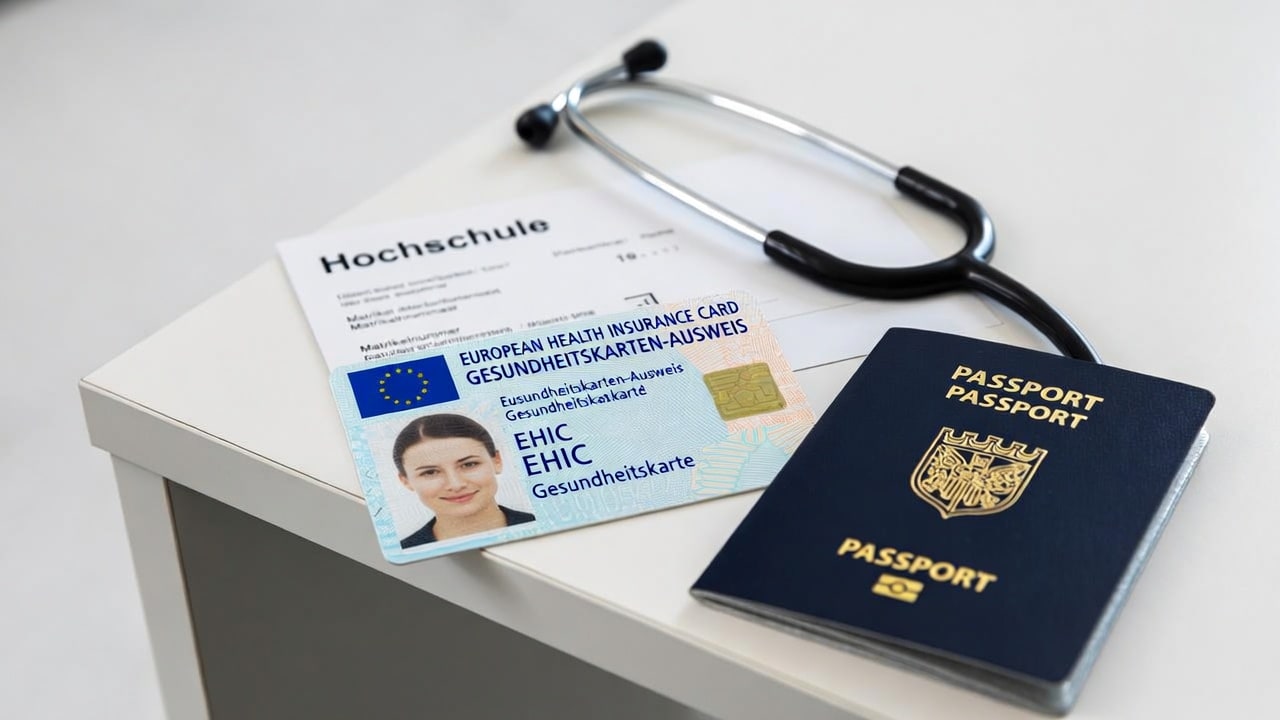
Every student at a German university needs health insurance. No exceptions. Without proof of coverage, your university won't let you enroll, and the immigration office (Ausländerbehörde) won't process your residence permit. But figuring out which type of insurance you actually qualify for, what it costs, and how to sign up? That's where most international students get stuck. Based on thousands of eligibility checks on ExpatNav, we've found that nearly 40% of incoming students pick the wrong insurance type on their first attempt, costing them weeks of delays and unnecessary stress.
This guide breaks down everything: public vs. private, exact 2026 pricing, who qualifies for what, and the step-by-step process to get insured before your semester starts.
Table of Contents
Quick Answer: What Does Student Health Insurance Cost in 2026?
Public Health Insurance (GKV): Costs, Providers, and How to Enroll
Step-by-Step: How to Get Health Insurance as an International Student
Quick Answer: What Does Student Health Insurance Cost in 2026?
If you're under 30, enrolled in a degree program at a state-recognized university, and not from an EU country with valid EHIC coverage, you'll pay roughly €141 to €155 per month for public health insurance (gesetzliche Krankenversicherung, or GKV). This includes both health insurance and mandatory long-term care insurance (Pflegeversicherung).
Here's a quick comparison of typical 2026 monthly costs:
Insurance Type | Monthly Cost (2026) | Best For |
|---|---|---|
Public (GKV), student under 23 or with children | ~€141 | Most degree-program students under 30 |
Public (GKV), student 23+ without children | ~€146 to €151 | Students 23-29, no kids |
Private (PKV), basic student plan | ~€30 to €80 | Language/prep course students, students over 30 |
Private (PKV), comprehensive plan | ~€80 to €150 | Students wanting broader coverage or specialists |
Voluntary public (GKV), over 30 | ~€250 to €270 | Students 30+ who want public coverage |
The exact amount depends on your provider's additional contribution rate (Zusatzbeitrag), your age, and whether you have children. We'll break all of that down below.
Pricing verified as of Q1 2026. Use ExpatNav's health insurance comparison to see current pricing for your specific situation.
Why Health Insurance Is Mandatory for Students in Germany
Health insurance isn't optional in Germany. It's required by law under the Sozialgesetzbuch V (Social Code, Book V) for every resident, including students. You'll need proof of valid health insurance at three critical points:
Visa application. German embassies require proof of health insurance (or a blocked account package that includes it) before issuing a student visa. Travel insurance alone doesn't count.
University enrollment. Your university's enrollment office (Studierendensekretariat) will ask for an insurance certificate (Versicherungsbescheinigung) before completing your matriculation. No certificate, no enrollment.
Residence permit registration. When you visit the Ausländerbehörde to get or extend your residence permit (Aufenthaltstitel), they'll check your insurance status again.
Here's what caught us off guard when we first went through this process: the university doesn't just want any insurance certificate. They need an electronic confirmation sent directly from a German health insurance provider. If you have private insurance, you also need an exemption certificate (Befreiungsbescheinigung) from a public insurer. Missing this step is one of the most common reasons enrollment gets delayed.
Public vs. Private Health Insurance: Which One Do You Need?
This is the most important decision you'll make about health insurance in Germany, and it's binding for the duration of your studies. Once you choose, you can't switch between public and private until your student status changes.
Public health insurance (GKV) is the default for most students. It covers about 90% of residents in Germany. Contributions are income-based (but students pay a fixed discounted rate), and the coverage is standardized across all providers. Your spouse and children can be co-insured for free if they meet certain conditions.
Private health insurance (PKV) is risk-based, meaning your premium depends on your age, health, and the plan you choose. Coverage can be more comprehensive (faster specialist access, private hospital rooms), but there's no free family co-insurance.
You can choose between public and private if you are:
Under 30, enrolled in a degree program at a state-recognized German university
Not already locked into one system from a previous decision
You must go private if you are:
Over 30 years old (or past your 14th semester)
Enrolled in a language course (Sprachkurs) or preparatory college (Studienkolleg)
Attending a non-state-recognized private university
A PhD student with an employment contract (treated as an employee, different rules apply)
A guest auditor (Gasthörer), not formally enrolled
Critical timing rule: If you want to switch from public to private, you must do so within the first three months of your studies. After that, your choice is locked in. Going the other direction (private to public) during your studies is generally not possible.
When we first launched ExpatNav's health insurance comparison tool, we noticed that students from India, Pakistan, and Bangladesh were disproportionately confused about this decision, mostly because the distinction between public and private insurance doesn't exist in the same way in their home countries. If that's you, start with public insurance unless you have a specific reason not to.
Public Health Insurance (GKV): Costs, Providers, and How to Enroll
Public student health insurance is the most straightforward option for the majority of international students under 30 in a degree program.
How Much Does Public Student Insurance Cost in 2026?
Your monthly premium is calculated from three components, all based on the BAföG reference rate of €855/month set by the German government:
General health insurance contribution: 10.22% of the BAföG rate = ~€87.38/month
Additional contribution (Zusatzbeitrag): Set by each insurer individually. The national average is 2.9% in 2026, but it varies. TK charges 2.69%, for example.
Long-term care insurance (Pflegeversicherung): Depends on your age and whether you have children. The rate ranges from 2.6% to 4.2% of the BAföG rate.
Here's what that looks like in practice with some popular providers:
Provider | Monthly Premium (under 23 or with kids) | Monthly Premium (23+, no kids) | Zusatzbeitrag |
|---|---|---|---|
TK (Techniker Krankenkasse) | ~€141 | ~€146 | 2.69% |
BARMER | ~€146 | ~€151 | Higher than TK |
AOK | ~€108 to €115 (base, varies regionally) | Varies | Varies by region |
TK is the most popular choice among international students, and for good reason: they have English-language support, a solid app, and partnerships with services like Expatrio and DR-WALTER that make the sign-up process smoother. That said, all public insurers are required to offer the same baseline coverage. The real differences come down to additional contributions, bonus programs, and customer service quality.
What Does Public Insurance Cover?
Every public health insurer must cover the same legally mandated services:
Doctor visits, specialists, and medical exams
Inpatient hospital stays and surgeries
Prescription medications
Preventive care (vaccinations, screenings)
Emergency care (ambulance, ER)
Mental health treatment and counseling
Basic dental care
Basic vision care
Maternity care
One thing to keep in mind: dental coverage under public insurance is pretty limited. After seeing the out-of-pocket costs for dental work firsthand, many expats (ourselves included) eventually add supplementary private dental insurance (Zahnzusatzversicherung). It's not mandatory, but if you've ever seen a German dental bill, you'll understand why people get it.
How to Sign Up for Public Insurance
You can apply online through your chosen provider's website. If you're using a service like Expatrio or Fintiba for your blocked account (Sperrkonto), they often offer a bundled sign-up with TK or another public insurer.
The process generally goes like this:
Choose your public insurance provider (TK, BARMER, AOK, etc.)
Complete the online application with your personal details, university enrollment info, and payment details
Submit your passport, enrollment certificate, and proof of address (if you've already completed your Anmeldung)
Receive your insurance certificate electronically (your university gets notified automatically)
Get your health insurance card (Gesundheitskarte) in the mail within a few weeks
If you're applying through a partner like DR-WALTER's Provisit Student TK program, you also get free incoming travel insurance for up to 92 days before your studies start. That's a nice perk if you're arriving early and need coverage before your semester officially begins.
Private Health Insurance (PKV): When It's Your Only Option
Private insurance is required for students who don't qualify for public insurance. But it's also a valid choice for students who want broader coverage at a potentially lower price point, especially if you're young and healthy.
Who Needs Private Insurance?
Students on language courses or at a Studienkolleg
Students over 30 (or past the 14th semester)
Students at non-state-recognized private universities
Students who opted out of public insurance within their first three months
Popular Private Insurance Providers for Students
Provider | Plan | Approximate Monthly Cost | Key Feature |
|---|---|---|---|
MAWISTA | Student Classic | From ~€33/month | Budget-friendly, accepted by universities |
MAWISTA | Expatcare Comfort | From ~€55/month | Includes insurance card, broader coverage |
Care Concept | Care College | From ~€30/month | Affordable basic coverage |
DR-WALTER | EDUCARE24 | From ~€39/month | Well-known among international students |
ottonova | Study Secure Premium | From ~€129/month | Full private comprehensive insurance |
Private insurance pricing varies by age and selected coverage level. Prices shown are approximate starting rates for students under 30.
Important Caveats About Private Insurance
Private insurance can look like a bargain compared to public insurance, but there are trade-offs you need to understand:
The upfront payment model. With private insurance, you often pay the doctor's bill yourself first and then submit a claim for reimbursement. With public insurance, your insurer pays the doctor directly. If you're on a tight student budget, waiting weeks for reimbursement can be painful.
Pre-existing conditions. Private insurers can exclude pre-existing conditions from coverage. Public insurers cannot.
No free family insurance. If your spouse or children move to Germany with you, each person needs their own private policy. In public insurance, dependents can be co-insured at no extra cost.
Switching back is hard. Once you go private as a student, returning to public insurance is only possible in specific situations (like starting full-time employment with a salary below the income threshold of €77,400 in 2026). If you plan to stay in Germany long-term after your studies, this is a big deal.
Honestly, for most students under 30 in a regular degree program, we recommend public insurance unless you have a compelling reason to go private. The coverage is solid, the cost is predictable, and you keep your options open for the future. But if you're in a language course or over 30, private is your path, and providers like MAWISTA and Care Concept offer solid plans that are recognized by universities and immigration offices across Germany.
EU Students: Using Your EHIC in Germany
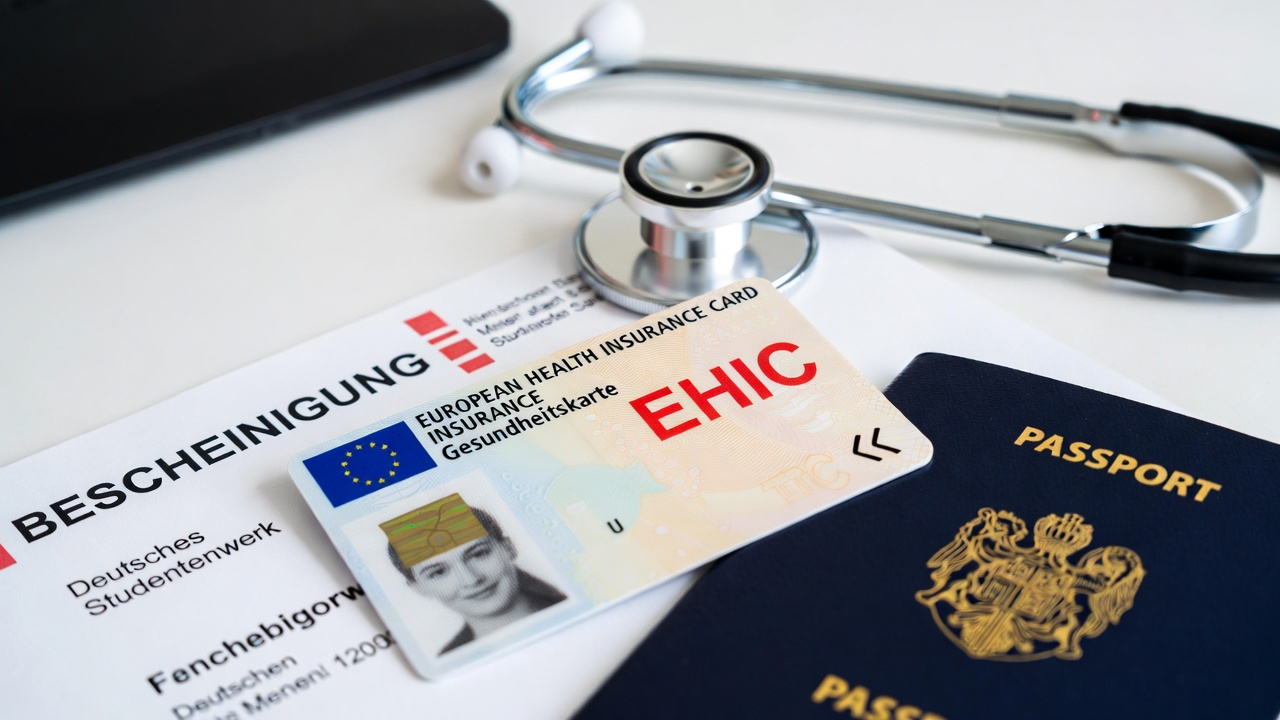
If you're from an EU/EEA country or Switzerland and you have valid statutory health insurance in your home country, you may be able to use your European Health Insurance Card (EHIC) in Germany. This means you don't need to sign up for a separate German policy.
Here's how it works:
Check with your home country's health insurance provider that your coverage is valid in Germany for the duration of your studies
Get an exemption from German public insurance (Befreiung von der Versicherungspflicht) by visiting a German public insurer like TK or AOK. You'll need your EHIC and enrollment certificate
Present the exemption certificate to your university's enrollment office
A few things to keep in mind: your EHIC covers medically necessary treatment, but it follows the rules of the German public system. That means you won't have access to private doctors or premium services. Also, if you start working during your studies (even a Werkstudent position), you may need to switch to German insurance.
One advantage of staying on your EHIC: if you later decide to switch to German public insurance (say, after finishing your studies and starting a job), you haven't "used up" your eligibility. You can join the German public system without complications.
Students Over 30: Your Options and What They Cost
Turning 30 during your studies (or starting a program after 30) changes your insurance situation significantly. The discounted student tariff in public insurance ends at age 30 (or after 14 semesters, whichever comes first).
Your options after 30:
Voluntary public insurance (Freiwillige Versicherung): You can stay in the public system, but you'll pay the regular rate instead of the student discount. In 2026, that's roughly €250 to €270 per month depending on your provider, assuming you have little or no income. If you have a family in Germany, this might still be worth it for the free dependent coverage.
Private insurance: Plans from MAWISTA, Care Concept, or ottonova typically cost €130 to €180 per month for students over 30, depending on age and plan level. That's significantly cheaper than voluntary public insurance, which is why many students over 30 go private.
The long-term catch: If you go private at 30 and later want to stay in Germany and work, getting back into the public system requires specific conditions (employment with a salary under the Jahresarbeitsentgeltgrenze of €77,400 in 2026). If you're planning a long-term future in Germany, think carefully before choosing private, even if it's cheaper right now.
Step-by-Step: How to Get Health Insurance as an International Student
Here's the exact process, broken down into clear steps:
Step 1: Determine your insurance type. Are you under 30 and enrolled in a degree program? Start with public. Over 30, in a language course, or at a Studienkolleg? You'll need private. EU student with EHIC? Get an exemption.
Step 2: Choose your provider. For public insurance, TK, BARMER, and AOK are the most popular with international students. For private, look at MAWISTA, Care Concept, DR-WALTER, or ottonova. ExpatNav's comparison tool filters providers by your nationality, visa type, and language preference.
Step 3: Apply online. Most providers have fully digital applications. You'll need your passport, enrollment or admission letter, and German bank account details (you'll need a German bank account for direct debit).
Step 4: Get your insurance certificate. Public insurers send the certificate electronically to your university. Private insurers issue a policy document you'll need to present, along with the exemption certificate from a public insurer.
Step 5: Complete enrollment. Bring or upload your insurance certificate to your university's enrollment office. For non-EU students, also bring it to your Ausländerbehörde appointment.
Step 6: Receive your insurance card. Public insurers send a physical Gesundheitskarte (with EHIC on the back for EU-wide coverage). Private insurers issue their own card, though some budget plans don't include one.
If you're arriving before your semester starts, make sure you have some form of coverage for the interim period. Services like DR-WALTER's Provisit Student TK include free incoming insurance for up to 92 days before your studies begin. Without this, you'll need separate travel health insurance for your first days in Germany, and that's an extra hassle during your first 14 days when you're already juggling Anmeldung, bank accounts, and settling in.
Common Mistakes Students Make with Health Insurance
After helping thousands of students compare insurance options on ExpatNav, these are the errors we see over and over:
Choosing private just because it's cheaper without thinking long-term. A €35/month private plan looks great compared to €141 for public. But if you stay in Germany after graduating, switching back to public can be extremely difficult. If there's any chance you'll build your career here, public insurance keeps your options open.
Missing the three-month switch window. You have exactly three months from the start of your studies to switch between public and private. After that, you're locked in. We've heard from students who realized too late that their private plan didn't cover what they needed but couldn't switch because the window had closed.
Assuming travel insurance is enough. It's not. German universities and embassies specifically require health insurance, not travel insurance. Travel insurance won't be accepted for enrollment or visa purposes.
Not getting the exemption certificate. If you choose private insurance, you still need to visit a public insurer (like TK or AOK) to get an official exemption from the public insurance requirement. Your university needs both documents: the private insurance policy and the public insurance exemption.
Ignoring the age 30 deadline. If you're 28 or 29 when you start your studies, plan ahead. Once you turn 30, your insurance costs can jump dramatically. Some students rush to enroll before their 30th birthday specifically to lock in the student tariff for as long as possible.
Forgetting to cancel when leaving Germany. When you finish your studies and leave Germany permanently, you need to cancel your health insurance and deregister your address (Abmeldung). If you don't, the insurer may keep charging you. Bring your deregistration confirmation, flight ticket, and exmatriculation certificate to your insurer to close things out.
Eligibility and Nationality Considerations
Your experience with German health insurance varies significantly depending on where you're from:
EU/EEA/Swiss citizens: You likely have the most options. Your EHIC may be recognized, giving you a free pass to skip German insurance entirely (with an exemption certificate). If you prefer German coverage, you can join the public system like everyone else.
Indian, Pakistani, and Bangladeshi students: These are the three largest non-EU student populations in Germany, and based on ExpatNav user data, they also report the most confusion about the public vs. private distinction. The good news: if you're under 30 and in a degree program, you qualify for public insurance with no nationality restrictions. The application process is the same for everyone.
Nigerian students: We see a higher-than-average rate of students arriving with only travel insurance (which doesn't qualify). Make sure you have proper health insurance arranged before you land. Providers like Expatrio bundle Sperrkonto and health insurance together, which simplifies the process.
Turkish citizens: Germany and Turkey have a social security agreement, but it doesn't automatically cover students in the same way an EHIC covers EU citizens. In most cases, you'll still need German health insurance. Check with your Turkish insurer before assuming your home coverage transfers.
Students from countries without social security agreements with Germany: You'll need either German public or private health insurance. There's no shortcut. Start the application process early, ideally as soon as you receive your university admission letter.
Not sure which providers accept your nationality and visa type? ExpatNav's eligibility filter shows you instantly which insurance options work for your specific profile.
FAQ
Can I use travel insurance instead of health insurance for university enrollment?
No. German universities and embassies specifically require health insurance (Krankenversicherung), not travel insurance (Reiseversicherung). Travel insurance won't be accepted for enrollment, visa applications, or residence permit renewals.
What happens if I turn 30 during my studies?
Your discounted student tariff in public insurance ends. You can stay in the public system as a voluntary member at a higher rate (roughly €250 to €270/month), or switch to private insurance (roughly €130 to €180/month depending on your age and plan). Your insurer will notify you before the change takes effect.
Can I switch from private to public insurance during my studies?
Generally, no. The decision you make at the start of your studies is binding until your student status changes. If you complete your studies and start full-time employment with a salary under €77,400 in 2026, you can join the public system at that point.
How do I prove my insurance to the university?
Public insurers send an electronic certificate directly to your university. For private insurance, you'll get a policy document from your insurer and need to also obtain an exemption certificate from a public insurer (like TK or AOK) to present to your university.
I'm a PhD student. Which insurance do I need?
It depends on your employment status. If you have a research position with a salary (like a TV-L E13 contract), you're treated as an employee and must join public insurance. If you're a scholarship-funded PhD student without employment, you may qualify for the student tariff if you're under 30.
Do DAAD scholarship holders need German health insurance?
DAAD scholarships typically include health insurance coverage that meets German requirements. Check your scholarship terms to confirm. If your DAAD insurance is included, you won't need to purchase a separate policy.
What if I work part-time during my studies?
If you work as a Werkstudent (working student) or have a mini-job earning up to €538/month, your student insurance status usually remains unchanged. If you earn more, or work more than 20 hours per week during the semester, your insurance status may change and premiums could increase. Notify your insurer about any employment changes.
Is public or private insurance better for international students?
For most students under 30 in a degree program, public insurance is the safer bet. It offers solid coverage, predictable costs, free family insurance for dependents, and keeps your options open if you stay in Germany after graduating. Private insurance makes sense if you don't qualify for public (language students, students over 30) or if you specifically want premium features like faster specialist access.
Conclusion
Health insurance is one of those non-negotiable parts of student life in Germany. The good news: once you understand the system, it's a one-time decision that takes care of itself for the rest of your studies. If you're under 30 and in a degree program, go with public insurance from a provider like TK or BARMER. If you're in a language course, over 30, or at a Studienkolleg, a private plan from MAWISTA, Care Concept, or DR-WALTER has you covered.
The key is to start early. Don't wait until you're standing in the enrollment office to figure this out. Get your insurance sorted as part of your pre-departure checklist, alongside your blocked account and bank account.
Not sure which insurance option fits your nationality and visa type? Use ExpatNav's health insurance comparison to see only the providers that work for your specific situation, with real pricing, eligibility filtering, and reviews from students who've been through the same process.
ExpatNav may earn a commission if you sign up for a provider through our links. This never affects our rankings or recommendations. We include providers regardless of affiliate status and always recommend what's genuinely best for your situation.
Sources:
Last reviewed: April 2026