Turning 30 as a student in Germany triggers one of the most expensive surprises of your academic career: your cheap student health insurance ends, and your monthly premium can double overnight. If you're an international student who just crossed that threshold, or you're planning to start a degree in Germany after 30, this guide breaks down exactly what changes, what your options cost, and which path makes the most financial sense for your situation.
Table of Contents
- Quick Answer: What Happens to Your Insurance at 30?
- Why Does Student Health Insurance End at 30?
- Your Three Options After Turning 30
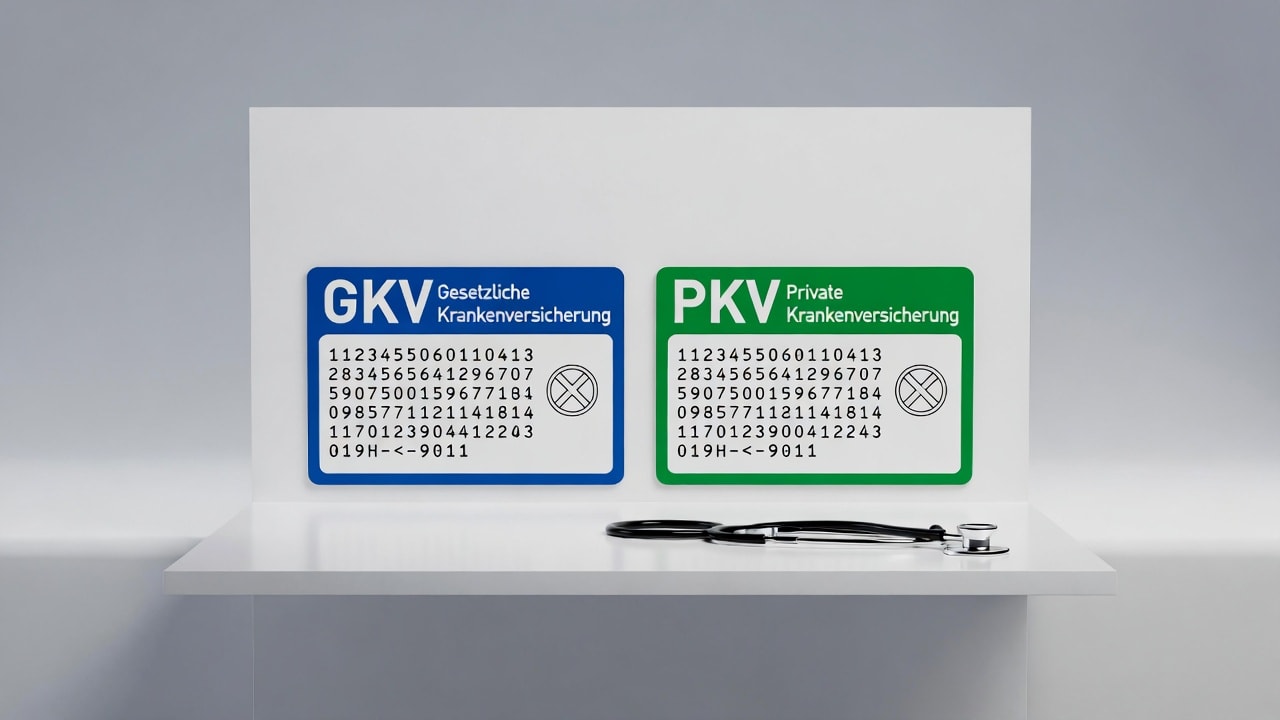
- Option 1: Voluntary Public Health Insurance (Freiwillige Versicherung)
- Option 2: Private Health Insurance (PKV)
- Option 3: Expat Health Insurance
- Cost Comparison Table: All Options Side by Side
- Can You Extend the Student Tariff Beyond 30?
- How the Transition Works: Step-by-Step
- Choosing the Right Option Based on Your Situation
- Common Mistakes Students Over 30 Make
- What Happens After Graduation?
- Eligibility and Nationality Considerations
- FAQ
- Conclusion
Quick Answer: What Happens to Your Insurance at 30?
When you turn 30 as a student in Germany, you lose access to the discounted public student health insurance tariff (Krankenversicherung der Studenten, or KVdS). That tariff costs roughly €148 per month in 2026 and is only available to enrolled students under 30. After your 30th birthday, you have three choices: stay in the public system as a voluntary member at around €275 per month, switch to private health insurance starting at roughly €35 to €128 per month depending on the provider and plan, or opt for expat health insurance if you've been in Germany for fewer than five years.
The transition happens automatically at the end of the semester in which you turn 30. Your public insurer (Krankenkasse) will notify you and move you to voluntary membership status unless you actively opt out.
Option | Monthly Cost (2026) | Best For |
|---|---|---|
Voluntary Public (GKV) | ~€275 | Students with family, planning to stay long-term |
Private Insurance (PKV) | €35 to €128 | Budget-conscious students, healthy individuals |
Expat Insurance | €35 to €90 | Students in Germany fewer than 5 years |
Why Does Student Health Insurance End at 30?
German law (§5 Sozialgesetzbuch V) sets the age limit at 30 for the discounted student tariff. The reasoning is straightforward: the reduced rate exists to make education accessible, not to let people extend student status indefinitely for cheaper insurance. The 14-semester limit was removed in January 2020, so the only hard cutoff now is age.
Specifically, your student insurance coverage (KVdS) ends at the close of the semester in which you turn 30. If you turn 30 on March 15, your student tariff runs until the end of the winter semester (typically March 31). If you turn 30 on October 5, it runs until the end of the summer semester (typically September 30).
This rule applies to everyone, German and international students alike. But for international students, the impact hits harder because the price jump is steeper relative to typical student budgets, and the options can be confusing when you're already dealing with visa requirements and Auslanderamt appointments.
Your Three Options After Turning 30
Once the student tariff expires, German law still requires you to have health insurance. No insurance means no valid residence permit and no continued enrollment. You can't just skip it. Here's what's available.
Option 1: Voluntary Public Health Insurance (Freiwillige Versicherung)
When your student tariff ends, your Krankenkasse automatically enrolls you as a voluntary member (freiwillig Versicherter) under §188 Abs. 4 SGB V. You don't need to do anything for this to happen. If you want to stay in the public system, just keep paying the new, higher premium.
What it costs in 2026:
The premium for voluntary public insurance is calculated on a minimum assumed monthly income of €1,318.33, even if you actually earn less than that. Here's the breakdown:
Health insurance contribution (Krankenversicherung): 14.0% of €1,318.33 = €184.57 per month
Additional contribution (Zusatzbeitrag): Varies by insurer. The national average in 2026 is 2.9%, which adds roughly €38.23 per month. Barmer charges 3.29%, TK charges 2.45%, and other Kassen vary.
Long-term care insurance (Pflegeversicherung): 4.0% for childless students over 23 = €52.73 per month. Students with one child pay 3.4% (€44.82). Two or more children reduce it further.
Total for a childless student over 30 (2026 average): approximately €275 per month. The exact amount depends on your Krankenkasse's individual Zusatzbeitrag. At Barmer, it's closer to €280. At TK, it's slightly lower because TK's Zusatzbeitrag of 2.45% is below the national average.
Advantages:
Every doctor in Germany accepts public insurance. No worrying about whether a practice takes your card.
Your non-working spouse and children can be insured for free through family insurance (Familienversicherung). If you have a partner and kids in Germany, this alone can make public insurance the better deal.
Pre-existing conditions are fully covered with no exclusions or waiting periods.
Chronic disease treatment, mental health care, and maternity services are included without extra cost.
Switching to employer-based public insurance after graduation is seamless, with no gaps or new applications.
Disadvantages:
At roughly €275 per month, it costs almost double the old student tariff and significantly more than most private options.
You don't get sick pay (Krankengeld) as a voluntary member at the reduced 14.0% rate. If you need that, you'd pay the full 14.6% rate.
Dental coverage is limited. Crowns, bridges, and dentures are only partially reimbursed.
Wait times for specialist appointments can be longer compared to those of private patients.
Option 2: Private Health Insurance (PKV)
Private insurance is where most international students over 30 end up because the monthly premiums are considerably lower than voluntary public insurance. Several providers specialize in student and academic tariffs for internationals in Germany.
Provider comparison for students over 30 (prices verified April 2026):
Provider | Plan | Monthly Premium (Age 30-39) | Deductible | Max Duration | Key Notes |
|---|---|---|---|---|---|
MAWISTA | Student Classic | €38 | 20% copay, max €250/year | 60 months | Basic coverage, no liability included |
MAWISTA | Student Classic Plus | €50 | 20% copay, max €250/year | 60 months | Includes liability insurance |
MAWISTA | Student Comfort | €89 | None for health | 60 months | Insurance card included, home visits covered |
EDUCARE24 (DR-WALTER) | S (Small) | €34.50 (€52.50 after month 18) | None | 60 months | Health insurance only |
EDUCARE24 (DR-WALTER) | M (Medium) | €39 (€57 after month 18) | None | 60 months | Includes accident + liability |
EDUCARE24 (DR-WALTER) | L (Large) | €43.50 (€61.50 after month 18) | None | 60 months | Adds expanded dental coverage |
EDUCARE24 (DR-WALTER) | XL (Extra Large) | €63 (€90 after month 18) | None | 60 months | Adds preventive care up to €500/year |
Care Concept | Care Student (30+) | €127.60 (incl. nursing care) | €300/year | 60 months | Full private comprehensive insurance |
Prices sourced directly from provider websites. MAWISTA premiums from their published tariff tables. EDUCARE24 premiums from educare24.com/premiums. Care Student premiums from care-concept.de. All verified in April 2026. Prices can change, so always confirm directly with the provider before signing up.
Important things to understand about private student insurance:
These plans are technically classified as expat or travel health insurance, not full German private health insurance (Vollversicherung). That distinction matters because:
Coverage varies significantly between basic and comprehensive plans. A €35/month plan covers emergencies and essential medical treatment, but dental work beyond pain relief, preventive screenings, and some mental health treatments may not be included.
Some plans require you to pay the doctor upfront and then submit invoices for reimbursement. MAWISTA Comfort and EDUCARE24 offer direct billing options or insurance cards that simplify this process.
Pre-existing conditions are typically excluded or subject to waiting periods. If you have a chronic condition requiring ongoing treatment, read the fine print carefully.
Maximum coverage duration is usually 60 months (5 years). After that, you need to find a different solution.
Advantages:
Significantly cheaper than voluntary public insurance, saving you €100 to €240 per month.
Faster access to specialist appointments. Doctors in Germany often prioritize privately insured patients.
Flexible plan selection. You can choose the coverage level that fits your budget and health needs.
Accepted by immigration authorities (Auslanderamt) for visa renewals when the plan meets minimum requirements.
Application is usually quick and online. MAWISTA and EDUCARE24 both issue documents within 24 hours.
Disadvantages:
Switching back to public insurance during your studies is generally not possible. This decision is binding.
Family members (spouse, children) each need their own separate policy. There's no free family coverage like in the public system.
Coverage gaps for dental, mental health, and preventive care on basic plans.
You may need to pay up front and wait for reimbursement on some plans.
After graduation, transitioning to employer-based insurance can be more complicated if you were privately insured. If your starting salary is below the annual income threshold of €77,400 (as of 2026), you'll be enrolled in public insurance anyway, but the transition requires paperwork.
Option 3: Expat Health Insurance
If you've been in Germany for fewer than five years, expat health insurance (like MAWISTA Expatcare or Care Concept Care Expatriate) is another option. These plans are designed for temporary residents and offer broader geographic coverage, including trips home.
Expat insurance typically costs between €58 and €150 per month depending on age and coverage level. It sits somewhere between basic private student insurance and full comprehensive PKV in terms of benefits.
The catch: expat insurance has a hard time limit. Most plans max out at five years. And if you start working in Germany and earn more than €520 per month, you'll need to switch to German public or private insurance tied to your employment.
This option works best for students who arrived recently, plan to finish their degree within a few years, and may not stay in Germany permanently afterward.
Cost Comparison Table: All Options Side by Side
Here's what you're actually paying over the course of a year and a two-year master's program, based on 2026 figures:
Option | Monthly Cost | Annual Cost | 2-Year Total | Family Coverage |
|---|---|---|---|---|
Voluntary GKV (avg.) | ~€275 | ~€3,300 | ~€6,600 | Free for spouse + kids |
MAWISTA Classic (30-39) | €38 | €456 | €912 | Separate policy needed |
MAWISTA Comfort (30-39) | €89 | €1,068 | €2,136 | Separate policy needed |
EDUCARE24 L (30-39) | €43.50 (→€61.50) | ~€630 | ~€1,260 | Separate policy needed |
Care Student (30+) | €127.60 | €1,531 | €3,062 | Separate policy needed |
The cost difference is dramatic. Over a two-year program, choosing MAWISTA Classic over voluntary GKV saves you roughly €5,688. Even the more comprehensive Care Student plan saves about €3,538 compared to public insurance.
But cost isn't everything. If you have a spouse and children in Germany, public insurance's free family coverage could make it cheaper overall than buying three or four separate private policies.
Can You Extend the Student Tariff Beyond 30?
In certain situations, yes. German law allows extensions of the student tariff past age 30 for specific, documented reasons. According to Barmer, AOK, and the GKV-Spitzenverband, the following qualify:
Second educational pathway (Zweiter Bildungsweg): You earned your university entrance qualification later in life and started studying promptly afterward.
Preparatory language course: You completed a DSH (Deutsche Sprachprufung fur den Hochschulzugang) language course or attended a Studienkolleg with a Feststellungsprüfung as preparation for your degree.
Illness during studies: You were unable to study for at least three consecutive months due to documented illness.
Family care responsibilities: You cared for a child or a family member during your studies.
Delayed study placement: University admission was delayed through no fault of your own.
Voluntary service: You completed a federally regulated voluntary service (Bundesfreiwilligendienst, FSJ, or similar).
University committee work: You served in official university governance roles (e.g., student parliament, AStA).
Even with valid reasons, the absolute maximum extension is until age 37. The Federal Social Court (Bundessozialgericht) ruled that the student tariff can't extend beyond what would be possible for someone who started studying at 30 and used the full standard study period of roughly seven years.
To apply for an extension, contact your Krankenkasse before your 30th birthday. You'll need documentation proving your reason for the delay. Each Kasse evaluates cases individually, so start the conversation early.
How the Transition Works: Step-by-Step
Step 1: Know your deadline. Your student tariff ends at the close of the semester in which you turn 30. Mark this date clearly.
Step 2: Receive the notification. Your Krankenkasse will send you a letter (Hinweis) explaining that your student insurance is ending and that you're being moved to voluntary membership. This letter also informs you of your right to opt out.
Step 3: Decide within two weeks. If you want to leave the public system (for example, to switch to private insurance), you must declare your exit within two weeks of receiving the notification from your Kasse. You can only opt out if you can prove you have alternative coverage.
Step 4: If staying in GKV, do nothing. The transition to voluntary membership happens automatically. Your new, higher premium kicks in immediately.
Step 5: If switching to private, apply first. Before opting out of your public Kasse, make sure your new private insurance is confirmed. You'll need a certificate from your private insurer to complete the exit process. Your public insurer may also need to issue an exemption certificate (Befreiungsbescheinigung) to confirm you're covered elsewhere.
Step 6: Inform your university. Your university's enrollment office needs updated proof of insurance. Whether you switch to voluntary GKV or private insurance, get a new Versicherungsbescheinigung and submit it to your Studierendensekretariat.
If you need help figuring out which health insurance providers accept your nationality and visa type, ExpatNav's eligibility filter shows you this instantly so you're not wasting time on applications that will be rejected.
Choosing the Right Option Based on Your Situation
Choose voluntary public insurance (GKV) if:
You have a spouse and/or children in Germany who need coverage. The free family insurance alone can save you hundreds per month compared to buying separate private policies for each family member.
You have pre-existing conditions or chronic illnesses that require ongoing treatment. Public insurance covers everything without exclusions.
You plan to stay in Germany long-term after graduation and want a simple transition into the employed workforce. Staying in the public system means your future employer just continues your coverage.
You're close to finishing your degree (one semester or less). Some Kassen offer transitional arrangements, and the price difference over a short period may not justify the hassle of switching.
Choose private student insurance (PKV) if:
You're healthy, don't have significant pre-existing conditions, and want to minimize costs.
You're studying alone in Germany without dependents who need coverage.
You have at least one to two years left in your program and the savings over that period are substantial.
You understand and accept the limitations: possible upfront payments, limited dental and mental health coverage on basic plans, and the complexity of switching back to public after graduation.
Choose expat insurance if:
You've been in Germany for fewer than five years and may leave after your degree.
You want coverage that also works during trips home or in other EU countries.
You need a flexible plan with monthly cancellation options.
Common Mistakes Students Over 30 Make
After running ExpatNav's comparison tools and talking to students in our community, we keep seeing the same mistakes. Here are the ones that cost people the most time and money.
Mistake 1: Not preparing before turning 30. The two-week window to opt out of voluntary public insurance goes by fast. If you want private insurance, start researching and applying at least a month before your birthday. Getting caught off guard means defaulting into the expensive voluntary GKV rate.
Mistake 2: Choosing the cheapest private plan without reading the coverage. A €35/month plan sounds great until you need a root canal and discover dental treatment beyond basic pain relief isn't covered. Or until you need a specialist referral and find out the plan has a 20% copay that adds up fast. Match the plan to your actual health needs, not just your budget.
Mistake 3: Assuming you can switch back to public insurance later. Once you opt for private insurance during your studies, you generally cannot switch back to public insurance while you're still a student. This decision sticks until your status changes (typically after graduation when you start working). If your post-graduation salary is below the annual income threshold of €77,400 in 2026, you'll be enrolled in public insurance through your employer, but the transition is not always smooth.
Mistake 4: Forgetting to tell the Auslanderamt. Your residence permit requires valid health insurance. If you switch providers, bring the new insurance confirmation to your next Auslanderamt appointment. Gaps in coverage can cause problems with your visa.
Mistake 5: Not checking whether your plan meets visa requirements. Not every private plan is accepted by immigration authorities. Plans must provide minimum coverage of €30,000 and meet the requirements of the European Parliament and Council. Established providers like MAWISTA, EDUCARE24, and Care Concept specifically design their plans to meet these requirements and provide the necessary documentation (Bescheinigung fur Behorden). But always verify with your local Auslanderamt, as standards can vary.
What Happens After Graduation?
Your insurance situation changes again when you finish your degree. The path depends on what you do next and what insurance you had during your studies.
If you start a job in Germany:
Earning under €77,400/year (2026 threshold): You'll be enrolled in mandatory public health insurance (GKV) through your employer, regardless of what you had before. Your employer pays half the premium.
Earning above €77,400/year: You can choose between public and private insurance.
If you had public insurance during your studies: The transition to employer-based public insurance is seamless. Same system, same card, same coverage.
If you had private insurance during your studies: You'll switch to public insurance once you start working (assuming your salary is below the threshold). This requires paperwork, but it's a routine process.
If you're job hunting after graduation: On a job-seeker visa (§20 Abs. 3 AufenthG), you need continuous health insurance for the full 18-month search period. The Auslanderamt will check. If you were in the public system, you can continue as a voluntary member. If you were privately insured, you'll need to maintain or arrange new coverage.
Planning ahead matters. If you're in your final semester, start thinking about post-graduation insurance at least three months before your Exmatrikulation date. A single month without coverage creates problems with the Auslanderamt and can complicate future applications.
Eligibility and Nationality Considerations
Your nationality and visa type affect your insurance options in ways that aren't always obvious.
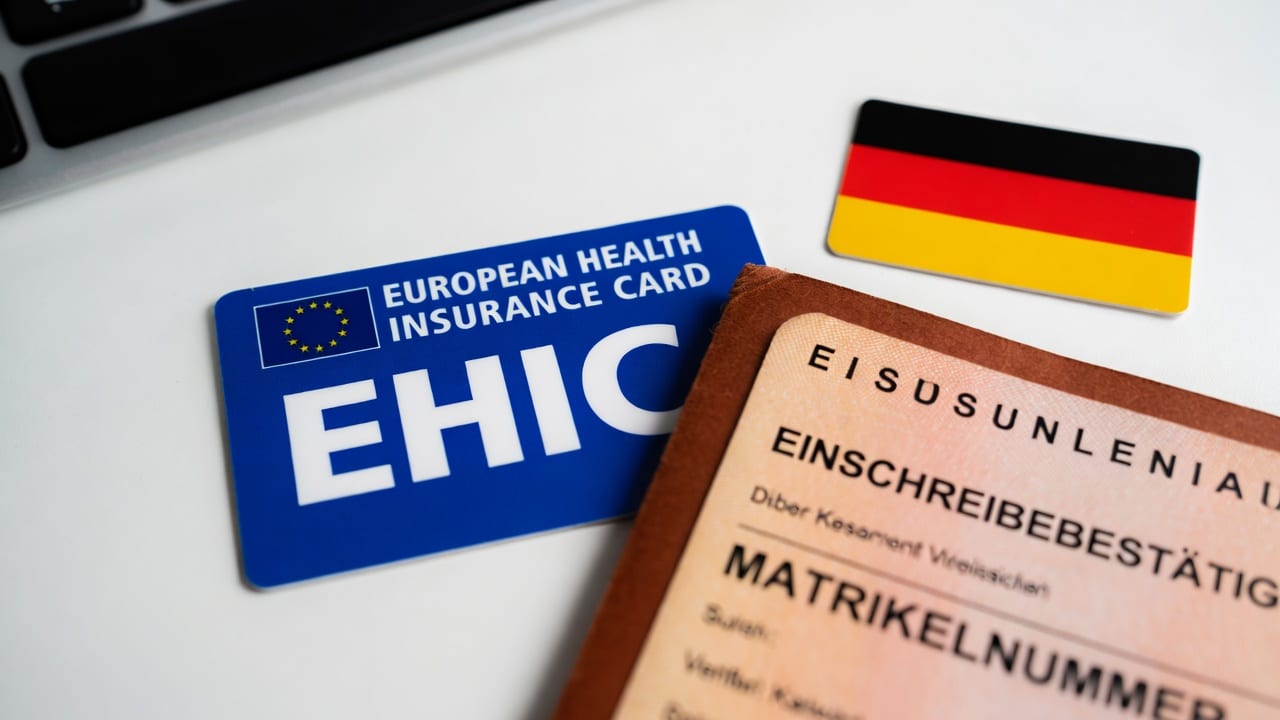
EU/EEA citizens: If you have a valid European Health Insurance Card (EHIC) from your home country, check whether it provides sufficient coverage in Germany. Some EU public insurance plans are recognized for enrollment purposes, but the coverage may not be comprehensive enough for long-term study. Your university's enrollment office can confirm what they accept.
Non-EU students starting studies after 30: If you arrive in Germany over 30 and have never had German health insurance before, you typically cannot join the public system at the student rate. Your only options are voluntary public insurance at the full rate or private insurance. In practice, most international students over 30 go private because of the cost difference.
Students from countries with bilateral social security agreements: Germany has social security agreements with Turkey, Tunisia, Morocco, and several other countries. If your home country has such an agreement, you may be able to get your home insurance recognized. Contact a German public insurer to check.
Indian, Nigerian, Pakistani, and Bangladeshi students: These nationalities represent some of the largest groups of international students in Germany. Based on what we see through ExpatNav's health insurance comparison, private providers like MAWISTA, EDUCARE24, and Care Concept accept students from these countries without nationality restrictions. Public Krankenkassen also accept all nationalities for voluntary membership, but the cost is the same high rate regardless.
Important for visa renewals: When you visit the Auslanderamt for your appointment, bring your current insurance certificate. If you've switched providers, the updated documentation is essential. Some offices ask for the specific Bescheinigung fur Behorden that private insurers provide.
FAQ
How much does health insurance cost for students over 30 in Germany?
Voluntary public insurance costs approximately €275 per month in 2026. Private student insurance ranges from about €35 to €128 per month, depending on the provider and plan level. The exact public insurance amount varies by Krankenkasse due to different Zusatzbeitrag rates.
Can I still get the student tariff if I start studying at 31?
No. The student tariff (KVdS) is only available to enrolled students under 30. If you begin your studies at 31 or older, you must choose voluntary public insurance at the full rate or private insurance from the start.
Is private health insurance accepted for university enrollment?
Yes, but you need an exemption from public insurance first. When you choose private insurance, you or your provider must request a Befreiungsbescheinigung from a public Krankenkasse. This exemption is submitted electronically (M10 notification) to your university. Established providers like MAWISTA, EDUCARE24, and Care Concept handle this process for you.
Can I switch from private back to public insurance during my studies?
Generally no. The choice between public and private insurance at the start of your studies is binding for the entire duration of your enrollment. Switching back is only possible after a major status change, such as starting full-time employment after graduation.
What happens if I turn 30 during my final semester?
You'll still lose the student tariff. However, if you're genuinely close to graduation, talk to your Krankenkasse. Some insurers show flexibility in borderline cases. You may also qualify for an Examenstarif (exam tariff) from some public Kassen, which can reduce the cost to roughly €100 to €115 per month during your final stretch.
Do private insurance plans cover dental treatment?
It depends on the plan. Basic plans (like MAWISTA Classic or EDUCARE24 S) typically only cover dental treatment for acute pain relief, with annual caps. Comprehensive plans like MAWISTA Comfort, EDUCARE24 L or XL, and Care Student include broader dental coverage. If dental care matters to you, choose a higher-tier plan.
What if I have a part-time job while studying?
If your student job income stays within mini-job limits (€538/month in 2026), your insurance situation doesn't change. If you earn above that threshold and are still enrolled, things get complicated. Working students (Werkstudenten) may qualify for employer-based insurance. Talk to your insurer and your employer's HR department.
I receive a DAAD scholarship. Does it help with insurance costs after 30?
DAAD scholarship holders receive a health insurance subsidy. For students over 30, the subsidy is €168 per month for health insurance and €38 per month for nursing care insurance. This won't cover the full cost of voluntary public insurance, but it significantly offsets it. Contact DAAD directly for the latest subsidy amounts, as these figures are based on published 2024/2025 rates and may be updated.
Conclusion
Turning 30 as a student in Germany forces you into a decision that affects your budget every single month until you graduate. The good news is that you have real options, and the right choice depends on your family situation, health needs, long-term plans, and budget.
For most international students studying solo, private insurance from established providers like MAWISTA, EDUCARE24, or Care Concept is the most cost-effective path, saving €100 or more each month compared to voluntary public insurance. But if you have family in Germany or significant health needs, the public system's comprehensive coverage and free family insurance could actually save you money overall.
Whatever you choose, start preparing at least a month before your 30th birthday. The transition window is tight, and getting caught off guard means defaulting to the most expensive option.
Not sure which insurance provider works for your nationality and visa type? Use ExpatNav's health insurance comparison to filter by eligibility and see real costs side by side. You can also check our detailed guide on public vs. private health insurance for a deeper breakdown of how the two systems work, or read the full health insurance guide for students in Germany if you're still in the earlier stages of figuring this out.
ExpatNav may earn a commission if you sign up for a provider through our links. This never affects our rankings or recommendations. We include all relevant providers regardless of affiliate status.
Pricing and eligibility data in this article were verified in April 2026. Insurance premiums, contribution rates, and regulations change periodically. Always confirm current rates directly with your insurer or Krankenkasse before making decisions.