You're earning a solid salary in Germany, your employer is deducting hundreds of euros every month for health insurance, and you keep hearing that private insurance could save you money. Or maybe you just arrived as a freelancer and someone told you private is "the obvious choice." But is it?
Choosing between public health insurance (Gesetzliche Krankenversicherung, or GKV) and private health insurance (private Krankenversicherung, or PKV) is one of the biggest financial decisions you'll make as an international in Germany. Get it wrong, and you could end up locked into a system that costs you thousands more over your lifetime. Get it right, and you'll have the coverage you need at a price that actually makes sense for your situation.
After helping thousands of users compare health insurance options on ExpatNav, we've seen firsthand how often people make this choice based on incomplete information. This guide breaks down exactly how both systems work in 2026, what they cost, who qualifies, and which one fits your specific situation as an expat, student, or foreign professional in Germany.
Table of Contents
- Quick Answer: Public or Private?
- How the Two Systems Actually Work
- Who Is Eligible for Private Health Insurance in 2026?
- Cost Comparison: Real Numbers for 2026
- What Each System Covers
- The Trap Nobody Warns You About: Switching Back
- Public vs Private for Specific Situations
- How Nationality and Visa Type Affect Your Choice
- Common Mistakes Expats Make with Health Insurance
- How to Choose the Right System for You
- FAQ
- Key Takeaways
Quick Answer: Public or Private?
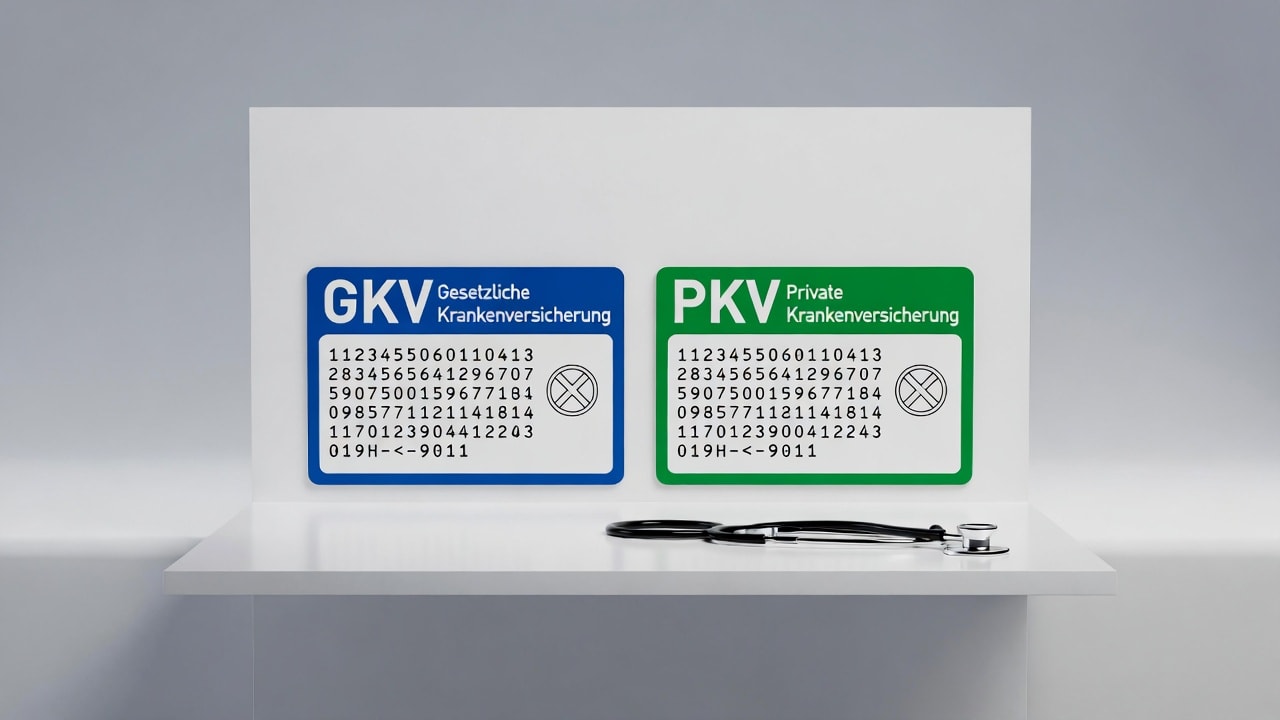
For most internationals in Germany, public health insurance (GKV) is the safer, smarter choice. It's income-based, covers your family for free, requires no health checks, and you can always switch providers. Private insurance (PKV) can offer better coverage and lower premiums for young, healthy, high-earning individuals without dependents, but it comes with serious long-term risks that many expats don't fully understand until it's too late.
Here's the high-level comparison:
Feature | Public (GKV) | Private (PKV) |
|---|---|---|
Who can join | Almost everyone (mandatory for employees under €77,400/year) | Employees earning over €77,400/year, freelancers, self-employed, students |
Monthly cost (employee, 2026) | 8.75% of gross salary (your share), max ~€520/month | €250-€500+/month depending on age, health, and plan |
How premiums are calculated | Percentage of income | Based on age, health status, and coverage level |
Family coverage | Free for unemployed spouse and children | Each family member needs a separate policy |
Pre-existing conditions | No health checks, no exclusions | Health questionnaire required, conditions may be excluded or surcharged |
Switching back | N/A | Very difficult; nearly impossible after age 55 |
Best for | Families, people with pre-existing conditions, anyone uncertain about long-term plans | Young, healthy, high-earning singles without kids who plan to stay long-term |
Affiliate disclosure: ExpatNav may earn a commission if you sign up for a provider through our links. This never affects our rankings or recommendations. We include non-affiliate providers when they deserve a spot.
How the Two Systems Actually Work
Germany has a dual healthcare system that's unlike what most internationals are used to. Understanding the fundamental difference between public and private insurance isn't just academic; it directly affects your wallet and your access to care for years to come.
Public Health Insurance (GKV): The Solidarity System
Public health insurance operates on what Germans call the Solidaritätsprinzip (solidarity principle). Everyone pays a percentage of their income, and everyone gets the same core coverage regardless of how much they pay. A software engineer earning €70,000 pays more than a barista earning €25,000, but they both get the same medical treatment.
There are around 95 public health insurance providers (Krankenkassen) in Germany, and roughly 87% of all residents are covered by this system. The big names you'll hear about include Techniker Krankenkasse (TK), AOK, Barmer, DAK-Gesundheit, and IKK. While their core coverage is virtually identical (about 95% of benefits are mandated by law), they differ in supplementary benefits like osteopathy coverage, dental cleanings, travel vaccinations, and bonus programs.
The system is straightforward: you show your insurance card at the doctor's office, and they bill your Krankenkasse directly. No upfront payments, no reimbursement forms, no surprise bills. It just works.
Private Health Insurance (PKV): The Individual System
Private insurance works more like what you might be used to from the US or other countries. You choose a plan based on the coverage level you want, and your premium is calculated based on your age, health, and selected benefits, not your income.
Only about 13% of residents in Germany have private health insurance, roughly 8.7 million people. That's not because it's bad; it's because most people don't qualify. You need to earn above a specific income threshold, be self-employed, or fall into certain other categories.
PKV is run by for-profit (and some mutual) insurance companies. You typically pay for medical services upfront and then submit receipts for reimbursement. Some providers now offer direct billing with certain doctors, but the reimbursement model is still standard. The upside? Shorter wait times, access to chief physicians, private hospital rooms, and more comprehensive dental and vision coverage.
Who Is Eligible for Private Health Insurance in 2026?
Not everyone can choose between the two systems. Your eligibility depends on your employment status and income.
For 2026, the annual income threshold (Jahresarbeitsentgeltgrenze, or JAEG) is €77,400 gross per year (€6,450 per month). This is up from €73,800 in 2025, a significant jump that means fewer people qualify than last year. Here's who can access PKV:
Employees earning over €77,400/year: If your gross annual salary exceeds the JAEG, you can opt out of the public system and switch to private insurance. You need to have earned above this threshold for one full calendar year before switching.
Freelancers and self-employed individuals: You can choose PKV regardless of income. This is a big deal for the growing number of international freelancers in Germany. However, if your income is low or unstable, the costs can become a serious burden since premiums don't decrease when your earnings drop.
Civil servants (Beamte): They receive a state subsidy (Beihilfe) covering 50-70% of medical costs, making PKV significantly cheaper. This is the one group where private insurance is almost always the better financial choice.
Students: Students under 30 can choose to opt out of the public student insurance and join PKV. But this is a decision most students should think very carefully about (more on that below).
Everyone else: If you're an employee earning under €77,400, you're required to be in the public system. No exceptions.
The 2026 Threshold Increase Matters
The jump from €73,800 to €77,400 is worth paying attention to. If you were just above the old threshold and got a modest raise, you might still qualify. But if you were right at the line, the higher JAEG in 2026 might push you back below eligibility. This affects a meaningful number of mid-level professionals, especially in cities like Berlin, where salaries tend to be lower than in Munich or Frankfurt.
Cost Comparison: Real Numbers for 2026
Let's cut through the vague "it depends" answers and look at actual numbers. This is where it gets interesting for expats.
Public Health Insurance Costs in 2026
Your GKV premium is calculated as a percentage of your gross salary, up to a cap. Here's how it breaks down:
General contribution rate: 14.6% of gross salary (split 50/50 between you and your employer, so you pay 7.3%)
Supplementary contribution (Zusatzbeitrag): This varies by provider. The average for 2026 is 2.9% (up from 2.5% in 2025), also split 50/50. The cheapest providers like BKK firmus charge around 2.18%, while some charge over 4%.
Long-term care insurance (Pflegeversicherung): 3.6% if you have children, 4.2% if you don't (with an additional 0.6% surcharge for childless individuals over 23). Your employer pays half if you have kids.
The cap: You only pay contributions on income up to €69,750/year (€5,812.50/month). Earn more than that? Your contributions don't increase further.
Here's what employees actually pay per month in 2026 (your share only, after employer contribution):
Gross Monthly Salary | Your GKV Share (with TK, 2.69% Zusatzbeitrag) | Your GKV Share (cheapest, 2.18% Zusatzbeitrag) |
|---|---|---|
€3,000 | ~€260 | ~€252 |
€4,000 | ~€346 | ~€336 |
€5,000 | ~€433 | ~€420 |
€5,812.50+ (cap) | ~€503 | ~€488 |
Note: These figures include long-term care insurance for someone with children. Childless individuals over 23 pay roughly €17-35 more per month. Figures calculated as of April 2026 and may vary slightly by provider.
For students: Public health insurance costs around €140-150/month for students under 30. After 30 (or after your 14th semester), you lose the student rate and must pay the standard voluntary rate, which is significantly more expensive.
For self-employed individuals: You pay both the employee and employer shares, meaning the full percentage comes out of your pocket. The minimum monthly contribution is around €220-250, scaling up with income. At higher income levels, this can exceed €1,000/month.
Private Health Insurance Costs in 2026
PKV premiums depend on your age at entry, health status, and the coverage tier you choose. Unlike GKV, your income doesn't directly affect your premium. Here are typical ranges:
Profile | Estimated Monthly Premium (2026) |
|---|---|
Young employee (mid-20s, healthy) | €250-€350 (after employer contribution) |
Employee, age 35, healthy | €301-€430 (after employer contribution) |
Self-employed, age 35 | €563-€830 (no employer contribution) |
Civil servant with 50% Beihilfe | €325-€440 |
Child (insured separately) | €98-€200 |
Sources: Germanpedia PKV cost estimates, verified April 2026. Actual premiums vary by provider and health status.
The employer contribution for PKV: Your employer pays half of your private insurance premium, but only up to the maximum they'd pay for public insurance. In 2026, that employer cap is €613.20/month. If your PKV premium is €800/month, your employer still only pays €613.20, and you cover the rest.
The Hidden Cost: Premium Increases Over Time
Here's something that catches a lot of expats off guard. GKV premiums are tied to your income, so if you earn less (job change, retirement, part-time), your premiums drop accordingly. PKV premiums are not tied to income. They go up over time as you age and as healthcare costs rise. Some providers increased premiums by 7-12% for 2026 alone. Long-term care insurance for PKV members is also set to increase by around 10%.
To be fair, GKV hasn't been cheap lately either. The average Zusatzbeitrag jumped from 1.7% in 2024 to 2.5% in 2025 to 2.9% in 2026. That's a 70% increase in the supplementary rate in just two years. But the key difference is that GKV increases are capped and tied to income, while PKV increases are theoretically unlimited.
What Each System Covers
Public Insurance Coverage
GKV covers all medically necessary treatment. The specifics are defined by the Federal Joint Committee (Gemeinsamer Bundesausschuss) and include:
Doctor visits (general practitioners and specialists)
Hospital stays (standard room, ward physician)
Prescription medications (with small co-pays, usually €5-10)
Mental health treatment
Maternity care (fully covered)
Preventive screenings
Dental treatment (basic, with fixed subsidies for crowns and bridges)
Rehabilitation
Sick pay (Krankengeld) after 6 weeks of illness
What GKV typically doesn't cover well: private hospital rooms, chief physician treatment, extensive dental work (implants, cosmetic dentistry), alternative medicine, and single-occupancy rooms.
One thing we hear from ExpatNav users constantly: the coverage is solid but the wait times can be frustrating. Specialist appointments in the public system can take weeks or even months, especially in cities like Berlin and Munich.
Private Insurance Coverage
PKV coverage depends on your specific plan, but comprehensive policies typically include everything GKV covers plus:
Chief physician treatment in hospitals
Private or semi-private hospital rooms
More extensive dental coverage (implants, cosmetic work)
Alternative medicine and treatments (homeopathy, osteopathy, acupuncture)
Better vision coverage (glasses, contacts)
Faster specialist access (privately insured patients often get appointments within days)
No referral needed for specialists
The difference in day-to-day experience is noticeable. Privately insured patients report significantly shorter wait times because doctors earn more from private patients and prioritize them accordingly. Whether that's fair is debatable, but it's reality.
The catch: PKV benefits are contractually locked in. Your insurer can't reduce your coverage once you've signed up. But if you want to downgrade your plan later to save money, you might lose benefits permanently.
The Trap Nobody Warns You About: Switching Back
This is the single most important thing most expats don't know about German health insurance, and it's the reason we wrote this section in bold, capital-letter energy.
Once you leave public health insurance for private, getting back is extremely difficult. After age 55, it's essentially impossible.
Under Section 5 of the German Social Code Book V (SGB V), you can only return to GKV from PKV if:
Your income drops below the JAEG threshold (€77,400 in 2026), AND
You are under 55 years old, AND
You become an employee (not self-employed)
If you're over 55 and in PKV, there is virtually no way back. Germany implemented this restriction specifically to prevent people from enjoying lower PKV premiums when young and healthy, then switching to the solidarity-based GKV system when older and more expensive to insure.
Why This Matters So Much for Expats
When we first started building ExpatNav's health insurance comparison tools, this was the number one issue users didn't understand. A 28-year-old software engineer earning €85,000 looks at PKV and sees lower premiums, better coverage, and faster doctor access. Sounds like a no-brainer, right?
But fast-forward 20 years. That engineer is now 48, may have a family, and possibly earns less after a career change. PKV premiums have been increasing every year. Each child needs a separate policy at €150-200/month. The spouse needs their own policy too (in GKV, both would be covered for free). The total family cost in PKV could be €1,500-2,000/month while a GKV family with one earner might pay €500-600.
And if that engineer decides at 56 that PKV is too expensive? Tough luck. The door back to GKV is closed.
The Safety Nets Inside PKV
To be fair, private insurance does have built-in protections for people who can't afford their premiums later in life:
Basistarif: Available to all PKV members. Provides coverage equivalent to public insurance at a capped premium of roughly €850/month in 2026. No health checks required to switch. You keep some of your age-related reserves.
Standardtarif: For members who joined PKV before 2009 and have been insured for at least 10 years (or are over 65). Premiums are capped at the public insurance maximum, and you keep all your aging reserves.
These safety nets exist, but they're a downgrade from what you originally signed up for. Think of them as parachutes, not upgrades.
Public vs Private for Specific Situations
International Students
Recommendation: Public (GKV) in almost every case.
Students under 30 enrolled at a German university get a heavily subsidized public insurance rate of about €140-150/month through providers like TK, AOK, or Barmer. This is one of the best deals in the German healthcare system.
Private insurance for students can be cheaper (some plans start around €100/month), especially for very young, healthy students. But opting out of the public system as a student means you can't easily get back in later. If you stay in Germany after graduation and take an employed position under the JAEG, you'd need to join GKV anyway, and having been privately insured can create complications.
The exception: students over 30 or those in language courses/preparatory programs (Studienkolleg) who don't qualify for the student GKV rate. For this group, private insurance is often the only affordable option. Providers like DR-WALTER and Care Concept offer expat-specific plans. You can compare student health insurance options on ExpatNav's health insurance comparison page to see which providers accept your nationality and visa type.
Employed Expats Earning Under €77,400
Recommendation: Public (GKV). You don't have a choice, but it's a good system.
If your salary is below the JAEG, you're required to be in the public system. This is the situation for most employed internationals in Germany, and honestly, it's not a bad place to be. Your employer covers half the cost, your family is covered for free, and you get solid healthcare without paperwork headaches.
Pro tip: Don't just default to whatever Krankenkasse your employer suggests. Compare the Zusatzbeitrag rates. In 2026, the difference between the cheapest provider (around 2.18%) and the most expensive (over 4%) on a €4,000 monthly salary is roughly €36/month, or over €430/year. TK is the most popular among expats because of its English-language service and solid supplementary benefits.
High-Earning Employees (Over €77,400)
Recommendation: It depends on your age, family plans, health, and how long you plan to stay in Germany.
This is the one group where the decision actually gets complicated. If you're a single, healthy, 28-year-old engineer earning €90,000, PKV can save you real money now while giving you better coverage. But you need to think at least 20 years ahead.
PKV makes more sense if you:
Are under 35 and healthy
Are single or in a dual-income couple without kids (or with plans for no more than one child)
Plan to stay in Germany long-term and can commit to the system
Earn well above the threshold and expect a continued high income
Value faster specialist access and premium hospital care
GKV makes more sense if you:
Have or plan to have multiple children (free family coverage is huge)
Have pre-existing health conditions
Are you uncertain about your long-term plans in Germany
Are over 40 (PKV entry premiums are higher, and the years of savings are fewer)
Value simplicity and predictable costs over premium perks
Freelancers and Self-Employed
Recommendation: Carefully evaluate both, but GKV is often underrated for this group.
Freelancers get no employer contribution, so they pay the full cost of either system. In GKV, the minimum monthly premium for self-employed individuals is around €220-250 in 2026, but it scales up quickly with income. At higher income levels, you'll hit the cap of around €1,000/month.
PKV can be significantly cheaper for young, healthy freelancers, especially those just starting out. A comprehensive plan for a healthy 30-year-old freelancer might cost €563-830/month, compared to potentially more in GKV at the same income level.
But here's what we've learned from freelancers in the ExpatNav community: income as a freelancer is unpredictable. When you have a bad month or take time off, your PKV premium stays the same. In GKV, your contributions adjust based on your most recent tax assessment. If your income drops, so does your premium.
Families
Recommendation: Public (GKV) is almost always better for families.
This one isn't even close for most families. GKV's Familienversicherung (family insurance) covers your non-working spouse and all children for free. In PKV, every family member needs a separate policy. For a family with two children, the additional PKV cost for dependents alone can be €400-600/month.
The math only flips when both partners earn well above the JAEG. Two individual PKV policies for high-earning partners without children can sometimes cost less combined than two maximum GKV contributions, with significantly better coverage.
How Nationality and Visa Type Affect Your Choice
This is something generic health insurance guides never talk about, but it matters enormously for internationals.
EU/EEA Citizens
You have the most flexibility. You can join GKV or PKV based on the same rules as German citizens. If you previously had public insurance in another EU country, the transition to German GKV is usually smooth. Your European Health Insurance Card (EHIC) provides temporary coverage during the transition period.
Non-EU Employees on a Work Visa or Blue Card
You'll typically be enrolled in GKV through your employer unless your salary exceeds the JAEG. If you're on a Blue Card (which requires a minimum salary of €45,300 for shortage occupations or €56,400 for others in 2026), you might or might not hit the PKV threshold depending on your specific salary and field.
Keep in mind: if you switch to PKV and later lose your job, you'll need to switch back to GKV (which is possible as long as you're under 55 and become unemployed). But this can create gaps and bureaucratic headaches with the Ausländerbehörde during visa renewals.
Student Visa Holders
You're required to have health insurance for visa issuance and university enrollment. Public student insurance through TK or AOK is the standard choice. If you opt out of GKV for a private plan, you typically cannot switch back to public student rates during your studies. Many universities strongly prefer or require proof of GKV enrollment, especially for non-EU students.
We've seen this cause real problems on ExpatNav. International students, particularly from India, Nigeria, and Pakistan, sometimes arrive with travel insurance or short-term private plans that aren't recognized by their university's enrollment office. Starting with proper GKV enrollment from day one avoids this headache entirely. Check your eligibility on ExpatNav's health insurance comparison page before you arrive.
Freelance Visa Holders
As a freelancer, you choose between GKV and PKV regardless of income. But your visa renewal at the Ausländerbehörde requires proof of adequate health insurance. Some immigration offices are more skeptical of private insurance plans, especially cheaper ones, so having a reputable provider with comprehensive coverage matters.
Common Mistakes Expats Make with Health Insurance
After years of running ExpatNav and talking to thousands of internationals about their insurance experiences, these are the mistakes we see over and over:
1. Choosing PKV purely because of lower premiums right now. A 27-year-old might save €100/month with PKV compared to GKV. Over 35 years, those savings disappear as PKV premiums rise with age, while GKV stays proportional to income. Run the numbers for your entire expected time in Germany, not just the first year.
2. Not understanding family implications. We've talked to expats who switched to PKV as singles, then had kids and were shocked that each child costs €150-200/month for insurance. In GKV, those same kids would be covered for free.
3. Assuming they can switch back later. The rules for returning to GKV from PKV are strict and get stricter as you age. After 55, the door closes permanently. Don't treat PKV as a temporary upgrade you can reverse whenever you want.
4. Ignoring pre-existing conditions. GKV accepts everyone with no health questionnaire. PKV insurers conduct thorough health assessments and can exclude conditions, add surcharges, or outright reject applicants. If you have any ongoing health issues, GKV is safer.
5. Not comparing GKV providers. Many expats just sign up with whatever Krankenkasse their employer's HR department mentions. But the Zusatzbeitrag difference between providers can save you €300-600/year. It takes 15 minutes to compare.
6. Arriving in Germany with inadequate travel insurance. Travel insurance and expat health insurance are not the same as proper German health insurance (GKV or comprehensive PKV). You need recognized German health insurance for your visa, university enrollment, and Anmeldung. Plan this before you arrive. Our guide on health insurance for students in Germany walks through the process step by step.
How to Choose the Right System for You
Here's a decision framework based on what we've seen work for thousands of ExpatNav users:
Step 1: Check your eligibility. Are you even allowed to choose PKV? If you're an employee earning under €77,400, you're in GKV. Decision made.
Step 2: Evaluate your family situation. Do you have (or plan to have) children or a non-working spouse? If yes, GKV's free family coverage is extremely valuable. PKV would need to offer significantly better individual rates to offset the cost of insuring each family member separately.
Step 3: Assess your health. Do you have any pre-existing conditions? If yes, GKV is the safer choice. PKV might exclude those conditions or charge significantly higher premiums.
Step 4: Think about your long-term plans. Are you staying in Germany for 5 years or 30? If you're unsure or planning a shorter stay, GKV is more flexible. You can leave the system cleanly when you leave Germany. PKV has more complications around international moves and returning to GKV.
Step 5: Run the numbers over 20+ years, not just year one. If you're young, healthy, single, high-earning, and committed to Germany long-term, PKV might be the right call. But model the costs at age 45, 55, and 65, not just at 28.
Step 6: Get professional advice. For a decision this significant, it's worth talking to an independent insurance broker (Versicherungsberater) who can model your specific situation. Emphasis on independent, meaning someone who isn't paid commission by a specific insurer. You can also use ExpatNav's health insurance comparison tool to see which providers accept your nationality and visa type before committing.
FAQ
Can I switch from public to private health insurance at any time?
No. Employees must earn above €77,400/year (the 2026 JAEG threshold) for at least one full calendar year before they can switch to PKV. Freelancers and self-employed individuals can switch at any time. Students can opt out of public insurance when they first enroll, but can't switch back and forth.
What happens to my health insurance if I lose my job in Germany?
If you were in GKV, you would remain insured. The employment agency (Agentur für Arbeit) covers your contributions while you receive unemployment benefits. If you were in PKV, you'll typically be switched back to GKV automatically, provided you're under 55 and receiving unemployment benefits.
Is private health insurance cheaper than public?
It can be, especially for young, healthy individuals without dependents. A 28-year-old might pay €250-350/month in PKV versus €400+ in GKV at higher salary levels. But PKV premiums increase with age and healthcare inflation, while GKV premiums adjust with income. Over a lifetime, the total cost can be comparable or even higher with PKV.
Do I need a Schufa score for health insurance?
No. Neither GKV nor PKV requires a Schufa credit check. Health insurance is a legal requirement in Germany, and providers cannot refuse coverage based on creditworthiness. However, PKV providers can and do refuse applicants based on health status.
Can my employer force me to choose public or private?
No. If you're above the JAEG threshold, the choice between GKV and PKV is yours. Your employer is required to contribute to whichever system you choose. However, their contribution to PKV is capped at what they'd pay for the maximum GKV rate (€613.20/month in 2026).
What's the best public health insurance provider for expats?
Techniker Krankenkasse (TK) is the most popular among internationals because of its English-language support, solid app, and competitive Zusatzbeitrag of 2.69% for 2026. But providers like Barmer and AOK also offer good services for expats. Compare options based on your specific needs, including supplementary benefits, service quality, and the Zusatzbeitrag rate.
I'm leaving Germany. What happens to my health insurance?
If you're in GKV, you simply deregister (Abmeldung), and your insurance ends. If you're in PKV, you'll need to formally cancel your contract, which usually requires proof that you're leaving Germany. Any aging reserves (Altersrückstellungen) you've built up in PKV are partially portable to a new private insurer but may be lost if you leave the country.
Can I have both public and private health insurance?
Not exactly. You can't have dual full coverage. But if you're in GKV, you can purchase supplementary private insurance (Zusatzversicherung) for things like private hospital rooms, better dental coverage, or faster specialist access. This gives you the stability of GKV with some PKV perks.
Key Takeaways
The public vs private health insurance decision in Germany isn't about which system is "better" in absolute terms. It's about which system is better for your specific situation, income, health, family plans, and timeline.
For the majority of internationals in Germany, public health insurance (GKV) is the right choice. It's simpler, more flexible, covers your family, and doesn't penalize you for pre-existing conditions or aging. The trade-off of slightly longer wait times and basic hospital rooms is worth the long-term financial security and peace of mind.
Private insurance (PKV) can be a genuinely good option for young, healthy, high-earning individuals without dependents who understand the long-term commitment and have modeled the costs 20-30 years into the future. If that's you, go in with open eyes.
Whatever you choose, don't default into a decision. Compare providers, understand the rules, and think beyond year one. Your future self will thank you.
Not sure which health insurance providers accept your nationality and visa type? Use ExpatNav's health insurance comparison tool to see your eligible options instantly, with real pricing and community reviews from people in your exact situation.