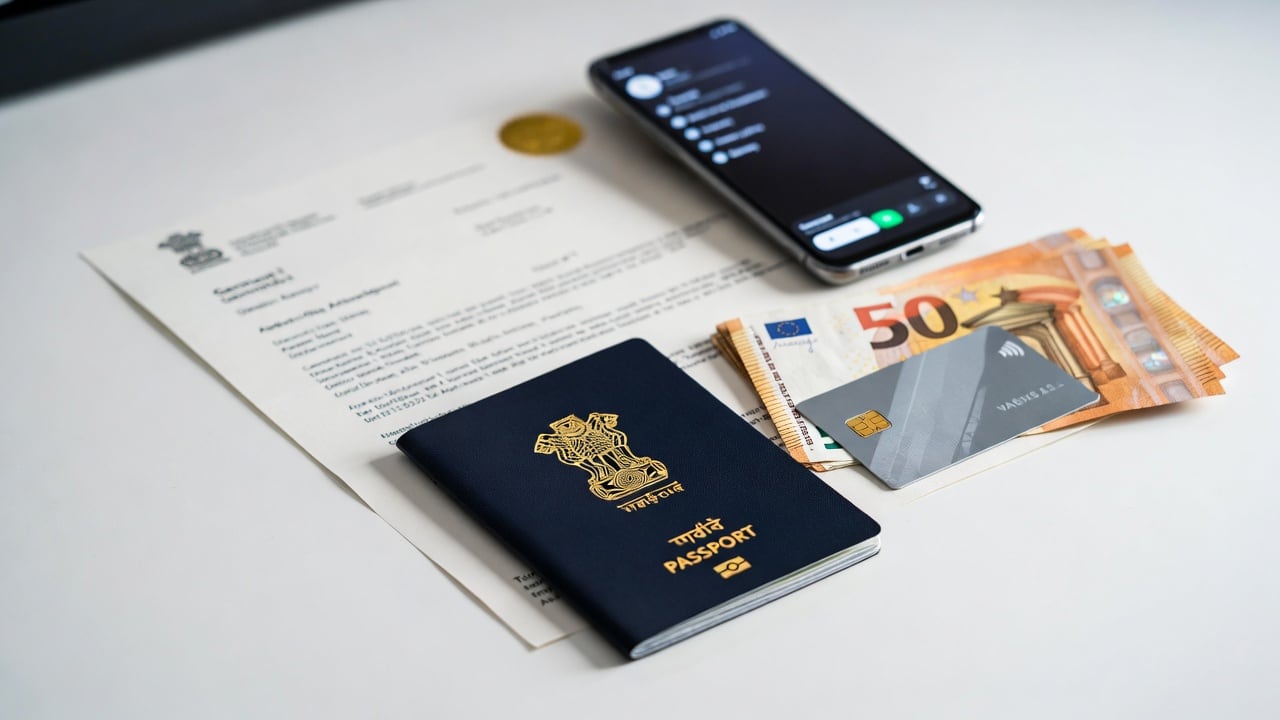
You just landed in Germany with a job contract, a suitcase, and zero credit history. Back home, you had a stellar credit score. Here? You're invisible. SCHUFA, Germany's credit bureau, has never heard of you, and that blank file is about to make renting an apartment, signing a phone contract, and opening certain bank accounts much harder than it needs to be.
Here's the good news: building a SCHUFA score from scratch isn't complicated. It just requires knowing the system, taking the right steps early, and avoiding a few common traps that trip up thousands of internationals every year. And as of March 2026, SCHUFA overhauled its entire scoring model, making the process more transparent than it's ever been.
This guide breaks down exactly how SCHUFA works after the 2026 reform, what the 12 new scoring criteria mean for you as an expat, and how to build a strong score from day one.
Table of Contents
- Quick Answer: How Long Does It Take to Build a SCHUFA Score?
- What Is SCHUFA and Why Should You Care?
- The 2026 SCHUFA Reform: What Changed
- The 12 Scoring Criteria (And How Each Affects Expats)
- Step-by-Step: Building Your SCHUFA Score from Zero
- How to Check Your SCHUFA Score for Free
- The Expat SCHUFA Problem: No History Is Not the Same as Bad History
- Common Mistakes Expats Make with SCHUFA
- Nationality-Specific Considerations
- Services That Don't Require a SCHUFA Check
- FAQ
- Conclusion
Quick Answer: How Long Does It Take to Build a SCHUFA Score?
Building a usable SCHUFA score typically takes 3 to 6 months of consistent financial activity in Germany. Reaching a strong score (776+ points in the new system) takes 12 to 24 months. The key actions are: open a German bank account, register your address (Anmeldung), sign a postpaid phone contract, pay every single bill on time, and avoid unnecessary credit applications. That's the short version. Read on for the strategy that actually gets you there faster.
What Is SCHUFA and Why Should You Care?
SCHUFA (Schutzgemeinschaft fur allgemeine Kreditsicherung) is Germany's largest and most influential credit bureau. It holds data on roughly 68 million individuals and processes around 140 million queries per year. Despite functioning almost like a public institution, SCHUFA is actually a private company based in Wiesbaden.
Your SCHUFA score affects almost every financial interaction you'll have in Germany. Landlords check it before offering you a lease. Banks review it when you apply for a credit card or loan. Phone companies, internet providers, and even some insurance companies run SCHUFA checks before approving postpaid contracts.
Think of it as Germany's version of a credit score, but with a few critical differences from systems in the US, UK, or other countries:
Your income and employment status are not part of your SCHUFA record. A CEO and a student with identical payment histories can have the same score.
SCHUFA doesn't track your savings, investments, or assets.
Nationality, religion, and marital status are explicitly excluded under GDPR Article 9.
Your score is based purely on how reliably you've handled financial obligations like bill payments, loan repayments, and contract commitments within Germany.
The catch for expats? Your credit history from your home country doesn't transfer. Whether you had an 850 FICO score in the US or a flawless credit record in India, Germany's system starts you at zero.
When we built ExpatNav, one of the most common frustrations we heard from users was this exact problem. People with years of responsible financial behavior in their home countries were getting rejected for apartments and phone contracts in Germany because SCHUFA had no data on them. Based on thousands of eligibility checks on our platform, we've seen firsthand how this "credit invisibility" creates real barriers, especially in the first few months after arrival.
The 2026 SCHUFA Reform: What Changed
On March 17, 2026, SCHUFA rolled out the biggest overhaul of its scoring system in decades. If you've read older guides about SCHUFA, a lot of that information is now outdated. Here's what's different.
New Points Scale: 100 to 999
The old system used a percentage score from 0 to 100%, with different industry-specific scores for banks, telecom companies, and retailers. That's gone. The new system uses a single unified score from 100 to 999 points. Higher is better. Everyone, including banks, landlords, and phone companies, now sees the same number.
Only 12 Criteria Instead of 250+
Previously, SCHUFA used over 250 opaque data points to calculate your score. Nobody outside SCHUFA knew exactly what they were or how they were weighted. The new model uses just 12 clearly defined criteria, each with a published maximum point value. You can literally add up your points yourself.
Free Online Access
For the first time, you can view your SCHUFA score for free through a digital account at app.schufa.de or through the SCHUFA app. Previously, seeing your score required either paying €29.95 for a Bonitatsauskunft or waiting weeks for a free annual data copy by mail.
Score Simulator
SCHUFA introduced a Score Simulator that lets you test how specific actions (like taking out a new loan or closing a credit card) would affect your score before you actually do them. This is a huge advantage for expats trying to plan their financial moves strategically.
Shorter Deletion Periods
One-time payment delays are now deleted after 18 months instead of the previous 36 months. Serious negative entries like bankruptcy still remain for 3 years. This is particularly relevant if you made mistakes early on during the chaos of settling in.
Why This Matters for Expats
The reform is genuinely good news for internationals. The old system was a black box, and the opacity hurt expats disproportionately because they couldn't tell what was helping or hurting their score. Now you can see exactly which of the 12 criteria you're strong or weak on and take targeted action. The reform was partly driven by a 2023 European Court of Justice ruling demanding more transparency in automated scoring decisions, plus years of pressure from consumer advocates.
The 12 Scoring Criteria (And How Each Affects Expats)
Here's the complete breakdown of the 12 criteria in the new SCHUFA scoring model, with the maximum points each criterion can contribute and what it means for you as a newcomer to Germany.
# | Criterion | Max Points | What It Means for Expats |
|---|---|---|---|
1 | Payment disruptions (defaults, collections, insolvency) | 264 | The single most important factor. No disruptions = automatic 264 points. |
2 | Inquiries and new accounts for bank accounts/credit cards (past 12 months) | 117 | Opening too many accounts at once hurts you. Be strategic. |
3 | Inquiries outside the banking sector (past 12 months) | 99 | Phone contracts, internet, leasing inquiries. Limit unnecessary applications. |
4 | Age of current address | 94 | Staying at the same registered address helps. Frequent moves hurt. |
5 | Age of oldest credit card | 81 | Get a credit card early and keep it. The longer you hold it, the better. |
6 | Age of oldest bank contract | 68 | Your first Girokonto (checking account) starts this clock. Open one immediately. |
7 | Installment loans taken in the past 12 months | 66 | Avoid taking multiple loans in your first year if possible. |
8 | Longest remaining term of all installment loans | 61 | Short-term or no loans is better for your score. |
9 | Mortgage/property loan | 55 | Having a mortgage slightly helps. Not relevant for most new arrivals. |
10 | Identity verification completed | 38 | Register for your free SCHUFA Account and verify your identity. Free points. |
11 | Age of newest revolving credit line | 36 | Don't keep opening new credit lines. |
12 | Credit status | 19 | Whether your existing credits are in good standing. |
Total possible: 999 points
The score classes under the new system work like this:
776 to 999 (Excellent): Very low default risk. Best terms on loans and contracts. Roughly 62% of people in Germany fall here.
709 to 775 (Good): Average default risk. Still solid for most applications.
642 to 708 (Acceptable): Slightly elevated risk. Some lenders may offer less favorable terms.
100 to 641 (Elevated Risk): Significantly reduced chances for credit and contracts.
If you have unresolved payment disruptions, SCHUFA doesn't calculate a score at all. You just get a note saying "No score available, open payment disruptions exist."
What This Means for Your Strategy
Look at where the big points are. Payment disruptions (264 points) and the inquiry/new account criteria (117 + 99 = 216 points combined) account for nearly half the maximum score. As an expat, your strategy is straightforward: pay everything on time, don't open a bunch of accounts at once, and stay at the same address as long as you can. The age-based criteria (oldest credit card, oldest bank contract, address age) reward patience and stability, which means the earlier you start, the better off you'll be a year from now.
Step-by-Step: Building Your SCHUFA Score from Zero
Here's your action plan for the first 12 months in Germany, in the order you should do things.
Step 1: Complete Your Anmeldung (Address Registration)
Do this within 14 days of moving into your apartment. The Anmeldung itself doesn't directly create a SCHUFA record, but it's the foundation for everything else. You need a registered German address to open bank accounts, sign contracts, and request your SCHUFA data.
Go to your local Burgeramt (citizens' office) with your passport, rental contract, and the Wohnungsgeberbestatigung (landlord confirmation form). You'll receive a Meldebestatigung (registration certificate) on the spot in most cities.
Step 2: Open a German Bank Account (Girokonto)
This is the single most important step for your SCHUFA history. Opening a checking account creates your first SCHUFA entry and starts the clock on criterion #6 (age of oldest bank contract, worth up to 68 points).
For expats without an existing SCHUFA history, not every bank will accept you easily. Some traditional banks run SCHUFA checks that will come back empty, which can lead to rejection or limited account features.
Banks that are generally accessible for new arrivals without a SCHUFA history include N26, bunq, Revolut, and Trade Republic. N26 reserves the right to run a SCHUFA check but in practice opens most accounts without one. Commerzbank and Deutsche Bank are also options if you have a work contract and can visit a branch in person.
ExpatNav tip: Our bank account comparison shows you which banks accept your specific nationality and visa type, so you don't waste time applying to ones that will reject you.
Keep this account open long-term. Don't switch banks after a few months chasing a better deal. Stability matters more than a few euros in monthly fees.
Step 3: Sign a Postpaid Phone Contract
Postpaid mobile contracts (Handyvertrag) report to SCHUFA. Prepaid SIM cards do not. Signing a postpaid contract creates another data point that helps build your profile.
Major carriers like Telekom, Vodafone, and O2 all run SCHUFA checks when you apply for a postpaid plan. If you're brand new and have no SCHUFA data yet, some carriers may decline you or require a deposit. In that case, start with a carrier that's more flexible with new arrivals and switch later if needed.
If you're comparing phone options, our phone plan comparison filters by language support and eligibility.
Step 4: Set Up Direct Debits (Lastschrift) for All Bills
This is the most underrated step. Set up automatic direct debit (SEPA-Lastschrift) for every recurring bill: rent, electricity, internet, phone, insurance, streaming services, all of it. This ensures you never miss a payment, which protects the most valuable criterion in your score: zero payment disruptions (264 points).
In Germany, most utility and service providers actually prefer Lastschrift. It's the standard payment method, and setting it up usually just requires giving the provider your IBAN and signing a SEPA mandate.
Step 5: Get a Credit Card (and Use It Responsibly)
Getting a credit card in Germany as a new expat is harder than in countries like the US, where credit card offers flood your mailbox. But it's worth pursuing because criterion #5 (age of oldest credit card) is worth up to 81 points, and the clock only starts when you actually have one.
Options for expats with little or no SCHUFA history:
Charge cards (like American Express Germany): These settle the full balance monthly and report to SCHUFA. They're often easier to get than revolving credit cards.
Secured credit cards: Some banks offer cards with a deposit-backed credit limit.
Your bank's credit card: If you've had a Girokonto for a few months and your salary has been depositing regularly, your bank may offer you a credit card.
The rule here is simple: get the card, use it for small recurring purchases, and pay the full balance every month without exception. Never carry a balance you can't pay off.
Step 6: Verify Your Identity with SCHUFA
This one is free and easy, and most expats don't even know about it. Criterion #10 (identity verification) is worth up to 38 points. All you have to do is register for a SCHUFA Account at app.schufa.de and verify your identity, either digitally using Germany's eID function on your Personalausweis (if you have one) or by mail with a PIN code.
If you have a German ID card with an activated eID function, verification takes minutes. If not, the postal verification route works too; it just takes a few extra days.
Step 7: Stay at the Same Address
Criterion #4 (age of current address) is worth up to 94 points. That's a lot. Every time you move and re-register at a new address, this counter resets. If you can avoid moving within your first year or two, your score will thank you.
This is a real tension for expats because many people arrive in Germany with a temporary sublet or shared apartment and plan to move once they find something permanent. If possible, try to make your first "real" apartment your longer-term home. WG-hopping every few months doesn't just waste time and energy; it also quietly chips away at your SCHUFA score.
Step 8: Avoid Unnecessary Credit Applications
Every "hard" credit inquiry (Kreditanfrage) shows up on your SCHUFA record and can temporarily lower your score. This includes loan applications, credit card applications, and some contract applications.
When you're shopping for loans or comparing rates, ask the lender to submit a Konditionsanfrage (rate inquiry) instead of a Kreditanfrage (credit inquiry). A Konditionsanfrage is SCHUFA-neutral, meaning it doesn't affect your score. Under the new 2026 rules, multiple credit inquiries within a 28-day window are counted as just one inquiry, which helps if you're genuinely comparing offers.
How to Check Your SCHUFA Score for Free
You have three options:
Option 1: Free SCHUFA Account (new in 2026). Register at app.schufa.de or download the SCHUFA app (iOS/Android). After identity verification, you can see your score, all stored data, and the breakdown by criterion at any time. This is the best option and it costs nothing.
Option 2: Free annual data copy (Datenkopie). Under GDPR Article 15, you're entitled to one free copy of all data SCHUFA holds on you per year. Request it at meineschufa.de. This arrives by mail and takes 1 to 4 weeks. Note: this is a comprehensive data dump for your personal use, not the formatted certificate landlords want to see.
Option 3: Paid Bonitatsauskunft (€29.95). This is the formatted creditworthiness certificate that landlords, employers, and other third parties recognize. It contains a "trusted" summary section you can share and a "detailed" section only for your eyes. Available for instant download at meineschufa.de.
Important: Checking your own score, whether through the free account, the data copy, or the paid certificate, is a "soft inquiry" and does not affect your score at all. Check it as often as you want.
After helping users on ExpatNav figure out their financial setup, we always recommend checking your SCHUFA data within the first 3 months of arriving in Germany. Errors happen, and catching them early is much easier than correcting them after they've affected a loan application or apartment search.
The Expat SCHUFA Problem: No History Is Not the Same as Bad History
This is the single biggest misconception that hurts internationals in Germany. Having no SCHUFA history is technically neutral, but in practice, banks and landlords often treat a "thin file" as a risk signal. The logic is straightforward: if SCHUFA has no data on you, there's nothing to prove you're reliable. And when a landlord has 50 applicants for one apartment, the person with no SCHUFA report is an easy rejection.
Based on what we've seen from ExpatNav users, students and professionals from non-EU countries are hit hardest by this. EU citizens often have an easier time because some financial institutions within the EU share data or treat EU citizens more favorably in their internal risk models. But if you're arriving from India, Nigeria, Pakistan, Turkey, or Bangladesh, the "blank SCHUFA" problem is very real.
Workarounds While You Build Your Score
While your SCHUFA history is still thin, here are some alternatives that can help:
Proof of income: A work contract, salary slips, or bank statements showing regular deposits can reassure landlords and service providers.
Employer letter: A letter from your German employer confirming your position and salary carries weight.
Guarantor (Burge): For apartment applications, having a German resident vouch for you financially can be decisive.
Larger deposits: Some landlords and service providers will accept an extra security deposit in lieu of a SCHUFA report.
Expat-friendly providers: Some companies and platforms specifically cater to internationals who don't have a German credit history yet. This is exactly the kind of filtering we built ExpatNav's comparison tools to handle.
Common Mistakes Expats Make with SCHUFA
When we first started building ExpatNav, our team went through this process ourselves. We made some of these mistakes firsthand, and we've since seen thousands of users repeat them. Here are the most damaging ones.
Mistake 1: Applying to Multiple Banks and Providers at Once
It's tempting to fire off applications to five banks, three phone companies, and a handful of landlords all in the same week. Each of those applications can trigger a hard SCHUFA inquiry. Under the new system, the inquiry criteria (#2 and #3) account for up to 216 points combined. Too many inquiries in a short time tells SCHUFA you're either desperately seeking credit or financially unstable.
What to do instead: Research which providers are most likely to accept your profile before you apply. Submit applications sequentially, not all at once.
Mistake 2: Missing a Bill Payment (Even a Small One)
One missed electricity bill, one forgotten gym membership payment, one overlooked internet invoice. It doesn't matter how small the amount is. If it escalates to a formal reminder (Mahnung) and then to a collection agency (Inkasso), it becomes a negative entry on your SCHUFA record. And the payment disruptions criterion is worth 264 points: more than a quarter of the entire maximum score.
What to do instead: Set up Lastschrift for every single recurring payment. If you can't set up direct debit, create calendar reminders for due dates. Check your bank account weekly during your first few months to make sure nothing slipped through.
Mistake 3: Moving Too Often
Every time you register at a new address, your "age of current address" counter resets. This criterion is worth up to 94 points. We've seen expats who moved three times in their first year because they started in a temporary Airbnb, moved to a short-term sublet, and then found a permanent apartment. Each move cost them points.
What to do instead: If possible, try to secure a longer-term apartment from the start, even if it takes a few extra weeks of searching.
Mistake 4: Not Signing Contracts That Report to SCHUFA
Prepaid phone plans, informal sublets without a contract, and paying cash for everything might feel simpler, but they do nothing for your SCHUFA history. Your score builds through formal contractual relationships: bank accounts, postpaid phone plans, utility contracts, credit cards.
What to do instead: Even if it's slightly more effort, choose the options that create SCHUFA data points. A postpaid phone plan instead of prepaid. A formal rental contract instead of an informal sublet. A bank account with a German IBAN instead of just using your home country's card.
Mistake 5: Canceling Old Accounts and Cards
In the new scoring model, the age of your oldest credit card (81 points) and oldest bank contract (68 points) reward longevity. Canceling your first German bank account to switch to a "better" one after 6 months doesn't save you money. It costs you SCHUFA points.
What to do instead: Keep your first bank account open even if you open a second one later. If your first credit card has no annual fee, keep it active.
Nationality-Specific Considerations
SCHUFA itself doesn't factor in nationality. Your score is based purely on financial behavior within Germany. But the reality is that your experience building a SCHUFA score varies significantly depending on where you come from.
EU Citizens
EU citizens generally have the smoothest path. You can open bank accounts more easily, some cross-border financial data may be considered by individual lenders (though not by SCHUFA directly), and visa-related complications don't block your access to services.
Non-EU Students (India, Nigeria, Pakistan, Bangladesh, Turkey)
If you arrived on a student visa, you likely already went through the Sperrkonto (blocked account) process. The bank you used for your Sperrkonto might be your first SCHUFA-relevant relationship. However, student visa holders sometimes face rejections from traditional banks and postpaid phone providers because of their visa type and income level.
Priority actions: Open an N26 or similar fintech account immediately, sign up for a postpaid SIM with a flexible carrier, and get your health insurance sorted through a provider that handles the Auslanderamt paperwork.
Blue Card and Work Visa Holders
You're in a strong position because you have a verifiable employer and salary. Use this to your advantage. A work contract from a reputable German employer can compensate for a thin SCHUFA file in apartment applications. Your bank is also more likely to offer you a credit card after a few months of salary deposits.
Freelancers (Freiberufler) and Self-Employed
This is the hardest path. Without a fixed salary from a German employer, banks and landlords are more cautious. Your SCHUFA score becomes even more important because it's one of the few standardized trust signals available. Prioritize building it aggressively from day one.
Services That Don't Require a SCHUFA Check
While you're building your score, you're not completely stuck. Several providers and services operate without SCHUFA checks or are known to be more flexible with new arrivals:
Banking: N26, bunq, Revolut, and Trade Republic generally open accounts without a SCHUFA check or with minimal requirements. These are ideal for your first account while you build history.
Phone: Prepaid SIM cards from Aldi Talk, Lidl Connect, and similar discount carriers don't require a SCHUFA check. You won't build SCHUFA history with them, but they get you a working German number immediately.
Housing: Some property management companies and platforms cater specifically to expats and accept alternative documentation. Private landlords are also generally more flexible than large housing corporations.
Insurance: Most health insurance providers for internationals, including DR-WALTER, MAWISTA, and Care Concept, don't run SCHUFA checks. Public health insurers (TK, AOK, Barmer) also don't require one.
FAQ
Does the Anmeldung (address registration) automatically create a SCHUFA record?
Q: Can I transfer my credit score from my home country to Germany? No. SCHUFA only tracks financial activity within Germany. Your credit history from the US (FICO), UK (Experian/Equifax), India (CIBIL), or any other country does not carry over. You start from scratch.
Does checking my own SCHUFA score lower it?
Q: How long do negative entries stay on my SCHUFA record? Under the 2026 reform, one-time payment delays are deleted after 18 months (previously 36 months). Settled debt collection entries are removed after 3 years. Insolvency records are cleared 3 years after discharge. Loan inquiries (Kreditanfragen) are stored for 12 months but are only visible to companies for 10 days.
What's the difference between Datenkopie and Bonitatsauskunft?
Q: I was rejected by a bank or landlord because of SCHUFA. What can I do? First, check your SCHUFA data for errors. Mistakes happen, and incorrect entries can tank your score. If you find errors, dispute them directly with SCHUFA. Under GDPR, they're legally obligated to investigate and correct inaccurate data. If your data is accurate but your score is simply low because you're new, provide alternative proof of financial reliability: work contract, salary slips, bank statements, or a guarantor (Burge).
Do expat-friendly neobanks like N26 and Revolut report to SCHUFA?
Q: Will the new Score Simulator help me plan my financial moves? Yes. The Score Simulator, available for free through your SCHUFA Account since late March 2026, lets you test how actions like taking out a loan, closing a credit card, or opening a new account would affect your score before you actually do them. It's a valuable planning tool, especially for expats who are unfamiliar with which moves help or hurt in the German system.
Conclusion
Building a SCHUFA score in Germany is a marathon, not a sprint. The 2026 reform made the system significantly more transparent, and that's a genuine win for internationals who were previously flying blind. You now know exactly which 12 factors matter, how many points each one is worth, and what actions to take (and avoid) in your first year.
The core strategy is simple: open a German bank account early, pay every bill on time through direct debit, sign contracts that report to SCHUFA, avoid unnecessary credit applications, and stay put at the same address as long as you can. Do those five things consistently, and you'll have a respectable score within 6 to 12 months.
Not sure which bank, phone plan, or insurance provider will actually accept your nationality and visa type? ExpatNav's eligibility filter shows you only the options that work for your specific profile, so you can skip the rejections and start building your SCHUFA history right away.
ExpatNav may earn a commission if you sign up for a product through our links. This never affects our rankings or recommendations. All provider data was verified in April 2026.